15
RADIO NAV — CHAPTER 15 · NOTES
DME
by Ghost Aviator
Ghost Aviator
www.ghostaviator.com
Ghost Aviator
www.ghostaviator.com
Ghost Aviator
DGCA CPL / ATPL Study Notes • Radio Navigation • Ch 15
✈ Chapter 15: DME
Distance Measuring Equipment
📋 Contents
1. Introduction 2. Principle of Operation 3. Frequencies & Channels 4. Pulse Pairs & Jitter 5. Airborne Interrogator — Phases 6. Ground Transponder 7. Accuracy & Errors 8. VOR/DME Association 9. Identification 10. Coverage & Uses 11. DME Summary 12. Practice Questions (19 Q)1. Introduction
DME provides pilots with slant range from a ground transponder. It operates on the secondary radar principle — the aircraft interrogates, and the ground station replies on a different frequency. DME is normally co-located with VOR or ILS (localizer).
📡 DME Classification
- DME is a short/medium range secondary radar system (LOS limited)
- Provides slant range (NOT ground range)
- Typically associated with VOR for ρ–θ (range/bearing) position fixing
- DME ground transmitter also called a transponder
2. Principle of Operation
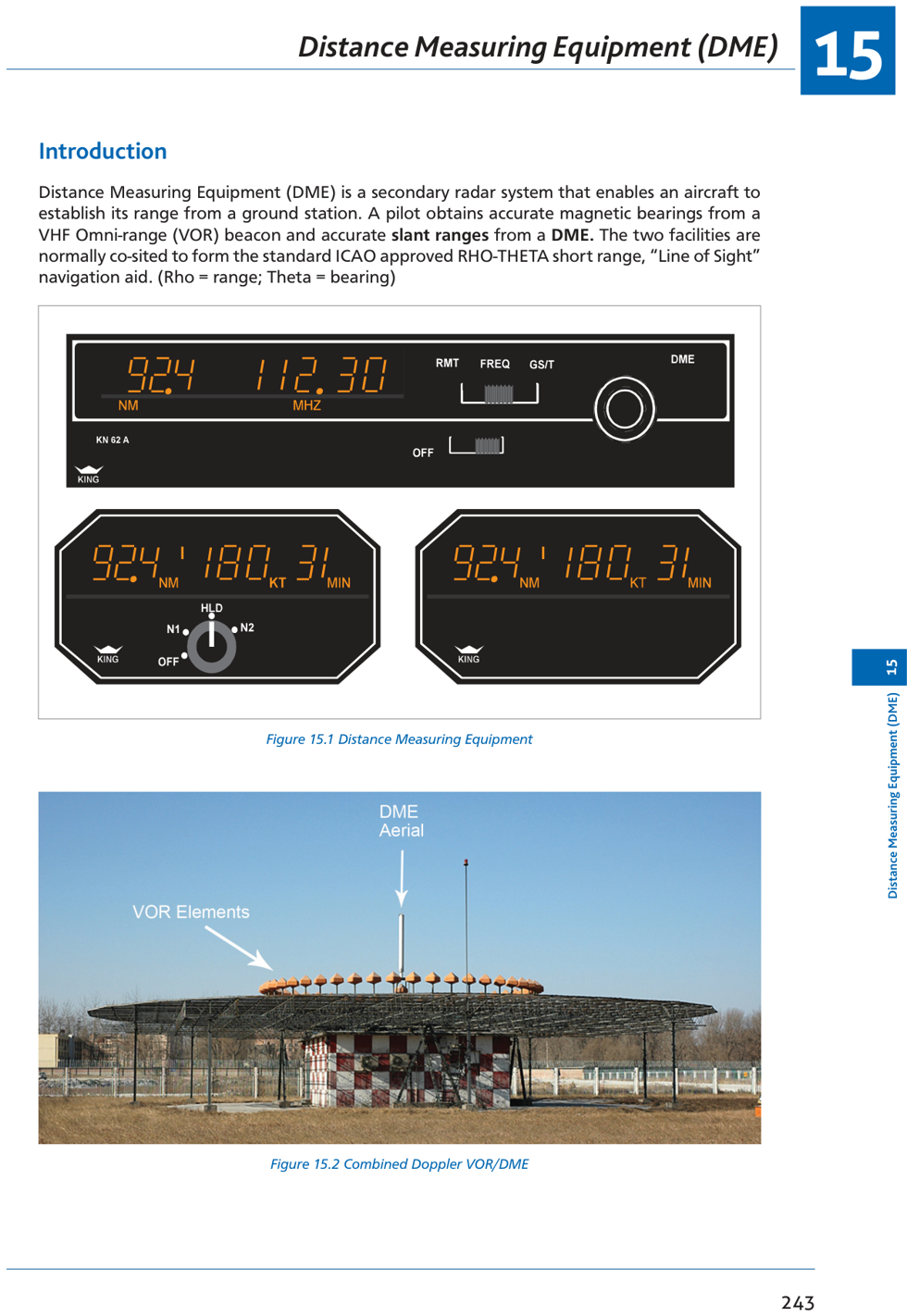
Fig 15.1: DME principle — aircraft interrogates at 1025 MHz, ground replies at 1088 MHz | Fig 15.2: Overall DME system diagram
📡 How DME Works
- Aircraft interrogator transmits a pair of pulses at a jittered random rate
- Ground transponder receives and re-transmits on a different frequency after a 50 µs delay
- Aircraft measures time from transmission to receipt of its own reply; subtracts 50 µs delay
- Remaining time ÷ 12.36 = slant range in NM
⚡ DME Range Calculation
Range = (1290 − 50) / 12.36 = 1240 / 12.36 = 100.3 NM
Slant Range (NM) = (Echo time µs − 50 µs) / 12.36
Example: echo time = 1,290 µsRange = (1290 − 50) / 12.36 = 1240 / 12.36 = 100.3 NM
3. Frequencies & Channels
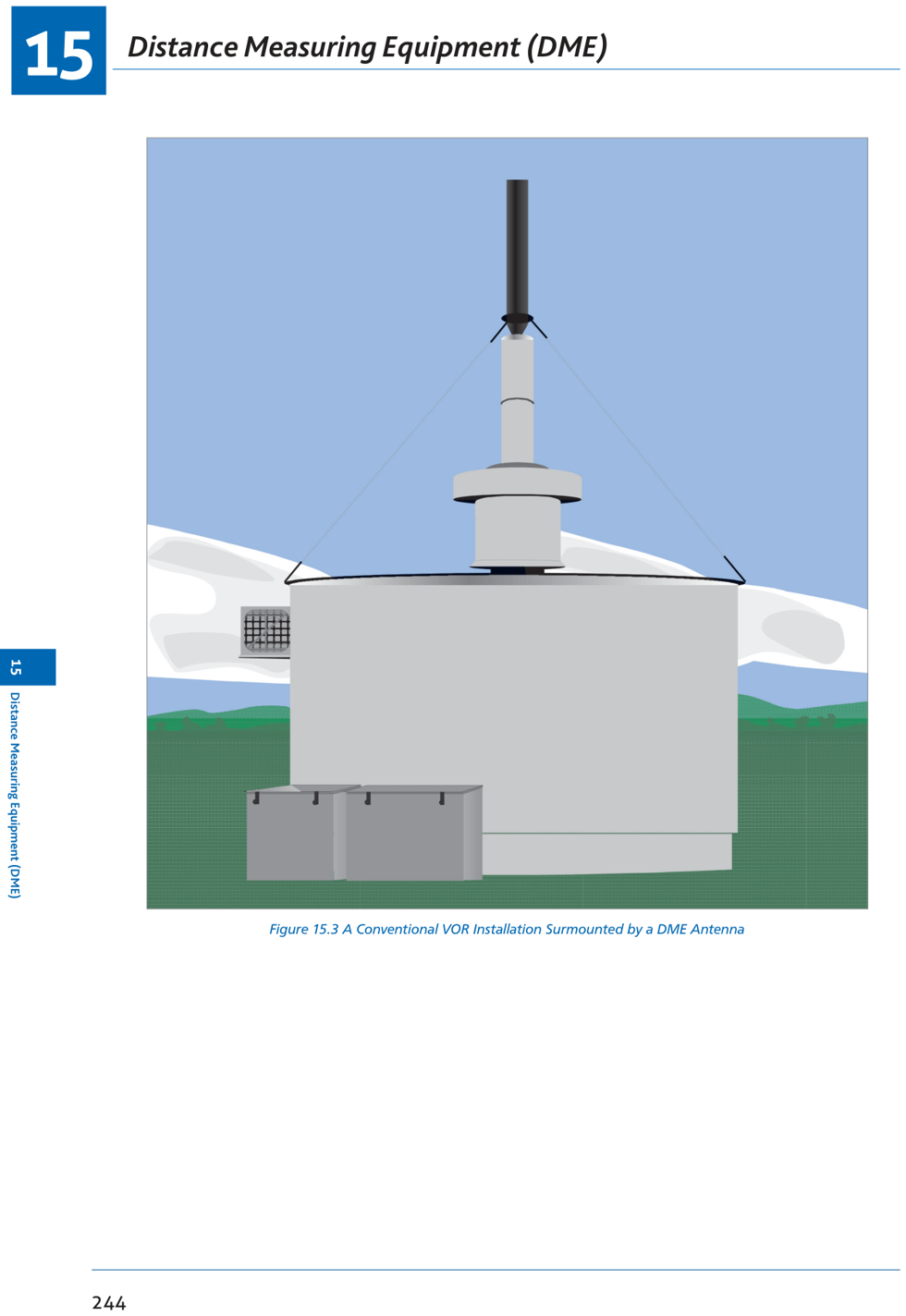
Fig 15.3: DME frequency pairing — X and Y channels, 1 MHz spacing
📡 DME Frequency Plan
| Parameter | Detail |
|---|---|
| Frequency band | UHF: 960–1215 MHz |
| Total channels | 252 |
| Channel types | X channels and Y channels (different internal pulse spacings) |
| Interrogator (aircraft) frequency | 969–1024 MHz (X) or 1025–1150 MHz (Y) |
| Transponder (ground) offset | ±63 MHz from interrogator frequency |
| Emission type | P0N (pulse pairs, no carrier) |
| Pulse shape | Gaussian pairs |
⚡ Example Frequency Pairing
Aircraft interrogates at 1025 MHz (Y channel) → Ground replies at 1025+63 = 1088 MHz
Aircraft interrogates at 1088 MHz → Ground replies at 1088−63 = 1025 MHz
Aircraft interrogates at 1088 MHz → Ground replies at 1088−63 = 1025 MHz
4. Pulse Pairs & Jitter
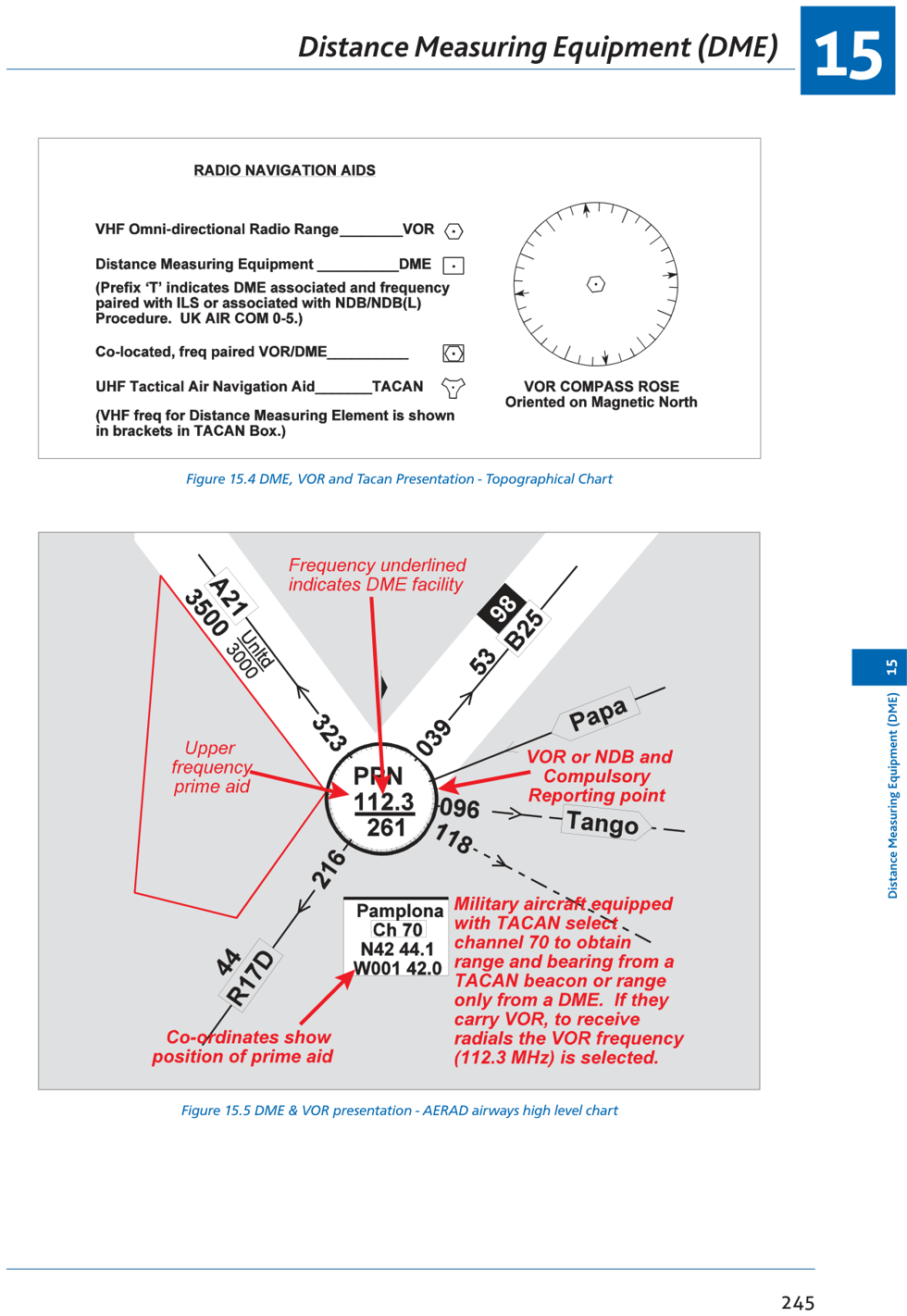
Fig 15.4: Twin pulse pair structure | Fig 15.5: Jittering — random PRI to distinguish own reply from other aircraft
📡 Why Pulse Pairs?
- Single pulse cannot be distinguished from other aircraft's replies or random noise
- Twin pulses with specific spacing (X: 12 µs / 36 µs; Y: 30 µs / 30 µs) ensure the receiver recognises only its own pair
📡 Why Jitter?
- Many aircraft query the same DME → all get replies in the same pulse stream
- Aircraft jitters (randomly varies) its interrogation rate
- Only the aircraft's own replies maintain consistent time delay from its transmissions
- Other aircraft's replies appear at random intervals and are rejected
- Algorithm identifies own replies by their consistent delay — called self-gating
5. Airborne Interrogator — Phases
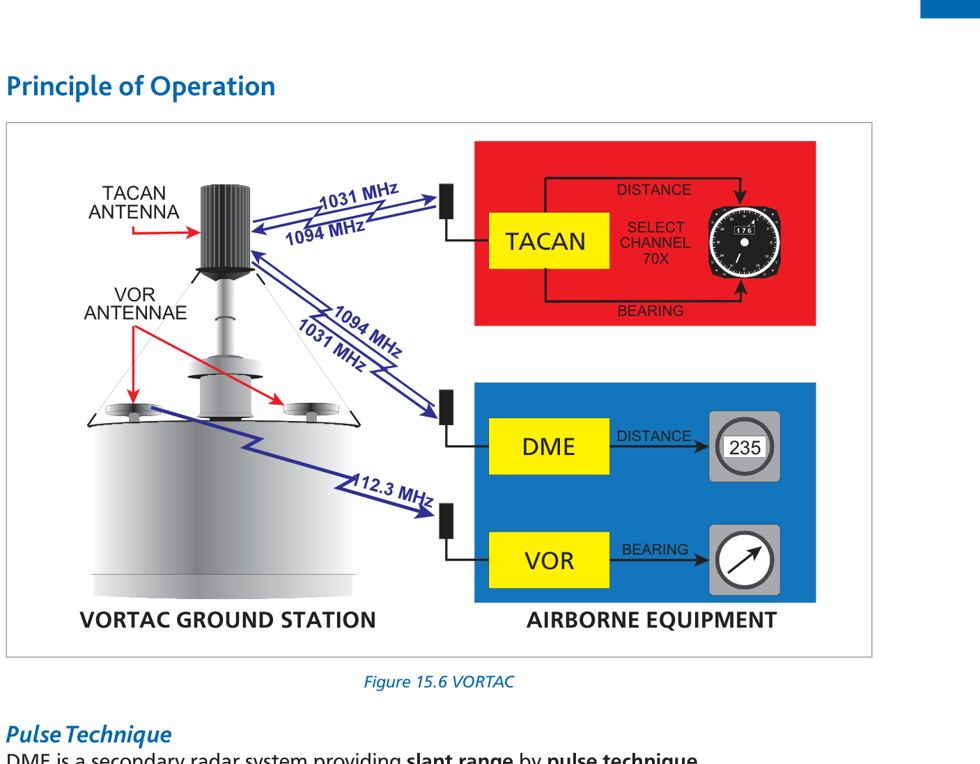
Fig 15.6: DME phase diagram — search, acquisition, tracking phases and pulse rates
📡 DME Interrogation Phases
| Phase | Rate | Purpose |
|---|---|---|
| Search | 150 ppps | High rate to quickly find replies when first switched on or after loss of signal |
| Acquisition | 60 ppps | Reduces rate once signal found; confirms own replies |
| Tracking | 27 ppps | Locks on to DME; very low rate (memory up to 10s before reverting to search) |
⚡ Ground Transponder Saturation
- Ground transponder limits total replies to 2700 ppps
- Serves approximately 100 aircraft simultaneously
- When saturated: system reduces replies to each aircraft proportionally; memory keeps display from blanking immediately
- Aircraft 10s memory (tracking mode) before reverting to Search
6. Ground Transponder
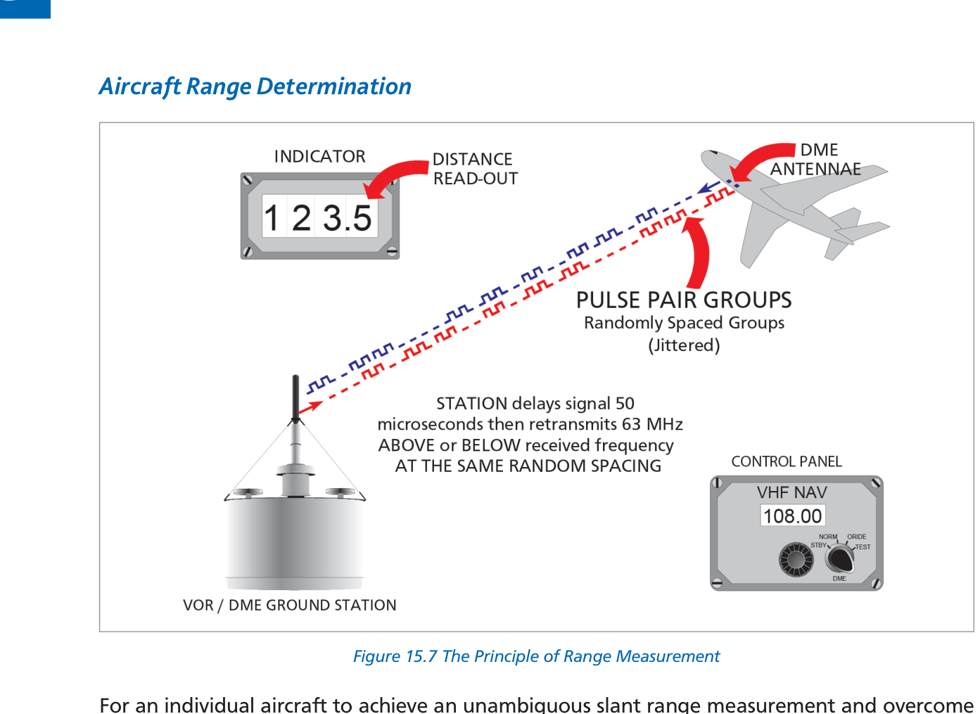
Fig 15.7: Ground transponder — located on same mast as VOR or ILS localizer building
📡 Ground Transponder Details
| Parameter | Detail |
|---|---|
| Receive | Aircraft interrogation frequency |
| Transmit | Interrogation frequency ±63 MHz |
| Delay | 50 µs fixed delay before reply |
| Max throughput | 2700 pulse pairs per second (ppps) — serves ~100 aircraft |
| Squitter | Transponder transmits 2700 ppps minimum (fills unused capacity with random squitter pulses to prevent search aircraft from missing station) |
| Ident | 3-letter morse ident every 30 seconds; combined with VOR ident if co-located; audio tone 1350 Hz |
| Memory | Last known DME displayed for 10 seconds if signal lost in tracking mode |
7. Accuracy & Errors
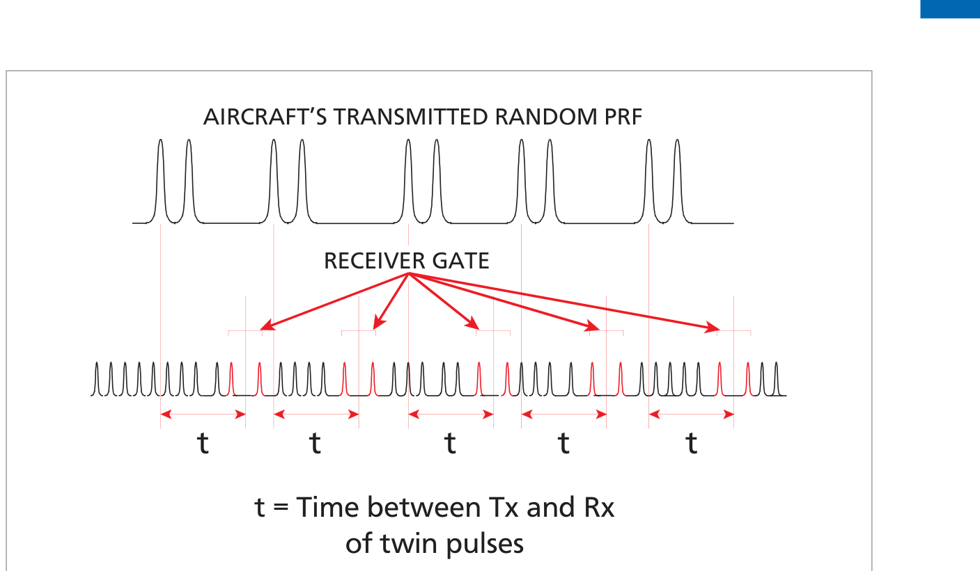
Fig 15.8: Slant range error — significant when close to station and at altitude
⚠ DME Accuracy
- System accuracy: ±0.25 NM ±1.25% of range (combined ground + airborne error)
- ICAO accuracy standard for en-route DME: ±0.5 NM or ±3%, whichever is greater
- DME/P (Precision): used with MLS — ±100 ft accuracy for CAT II/III
⚠ Slant Range Error
At overhead the station: DME reads height in NM = altitude in ft ÷ 6076.
DME displays slant range (hypotenuse), not horizontal ground distance. Error is significant when:
Slant error becomes negligible when Range (NM) > 3 × Height (thousands of ft)
Example: 30,000 ft altitude → slant error negligible beyond 90 NM.At overhead the station: DME reads height in NM = altitude in ft ÷ 6076.
⚡ Slant Range Worked Example
Aircraft at 36,000 ft (6 NM) directly overhead DME: display reads 6 NM (not 0 NM).
8. VOR/DME Association
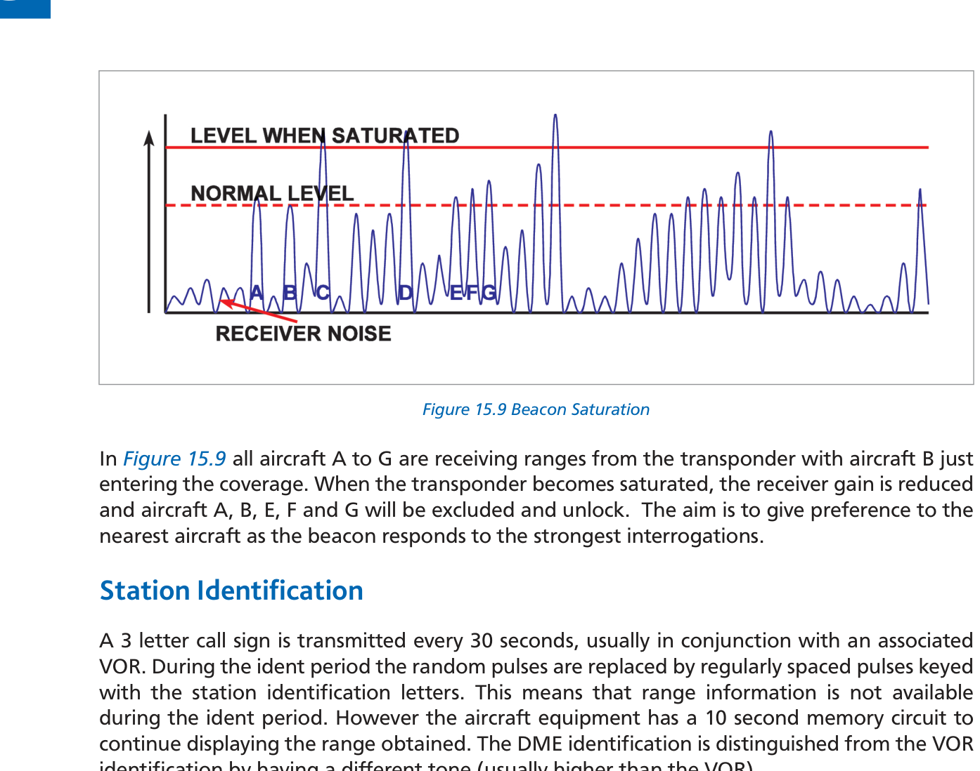
Fig 15.9: VOR/DME site — collocated equipment; VOR antenna above DME transponder building
📡 Frequency Pairing Rules
| Situation | Pairing Applies When |
|---|---|
| VOR/DME in TMA | VOR and DME within 100 ft of each other |
| VOR/DME elsewhere | VOR and DME within 2000 ft of each other |
| Result | Selecting VOR frequency on nav radio automatically selects paired DME channel |
📡 DME/VOR vs. VORTAC
- VOR/DME: civilian DME co-located with VOR
- VORTAC: military TACAN DME co-located with civilian VOR (TACAN also provides bearing for military aircraft)
- TACAN UHF frequency is automatically paired with VOR VHF frequency; civilian aircraft use DME function only
9. Identification
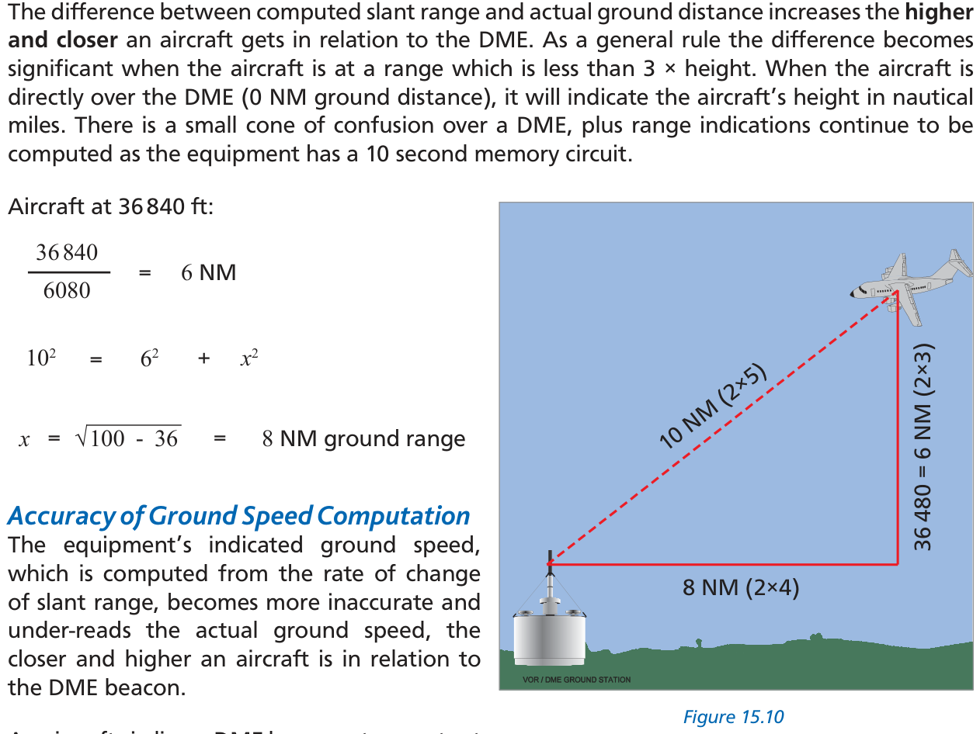
Fig 15.10: DME indicator — display shows distance in NM and groundspeed; time-to-station computed
📡 DME Identification
- 3-letter morse ident broadcast every 30 seconds
- If co-located with VOR: idents interleaved; VOR transmits 3, then DME once → VOR identified first, then DME
- Ident tone: 1350 Hz
- If DME ident fails: standby mode — memory valid for 10 seconds
10. Coverage & Uses
📡 DME Coverage
- LOS limited: Range (NM) = 1.25 × (√Haircraft + √Hstation) (H in feet)
- Typical usable range: up to 200 NM
- UK UPPER: above FL245 → 200 NM; LOWER: below FL245 → depending on altitude
✓ DME Uses
- En-route position fix with VOR/DME (ρ–θ fix)
- Approach: often paired with ILS for range check; distance to threshold during ILS approach
- Stand-alone DME/DME fix (RNAV): using two or more DMEs to compute position
- MLS: DME/P provides precise range for approach (accuracy ±100 ft)
- Flight plan fuel calculations: track miles remaining
- Groundspeed and time-to-station computed automatically by modern DME indicators
11. DME Summary
| Parameter | Detail |
|---|---|
| Type | Secondary radar; UHF |
| Frequency band | 960–1215 MHz (UHF) |
| Channels | 252 |
| Aircraft-to-ground offset | ±63 MHz |
| Emission | P0N (Gaussian pulse pairs) |
| Transponder delay | 50 µs |
| Search rate | 150 ppps |
| Acquisition rate | 60 ppps |
| Tracking rate | 27 ppps |
| Saturation | 2700 ppps ≈ 100 aircraft |
| Ident | 3-letter Morse, 30 s cycle, 1350 Hz |
| Memory | 10 s in tracking mode |
| Accuracy | ±0.25 NM ±1.25% |
| Slant error negligible when | Range > 3 × altitude (thousands of ft) |
| VOR/DME pairing (TMA) | Within 100 ft |
| VOR/DME pairing (other) | Within 2000 ft |
12. Practice Questions
Q1. DME is a type of:
(a) primary radar
(b) active secondary radar
(c) secondary radar
(d) passive secondary radar
Answer: (c)
DME uses the secondary radar principle: aircraft interrogates, ground transponder replies on a different frequency.
DME uses the secondary radar principle: aircraft interrogates, ground transponder replies on a different frequency.
Q2. Aircraft interrogates DME at 1025 MHz. The ground transponder will reply on:
(a) 1025 MHz
(b) 1025 − 63 MHz
(c) 1025 + 63 MHz
(d) 1025 + 50 MHz
Answer: (c)
Ground transponder replies at interrogation frequency + 63 MHz = 1088 MHz.
Ground transponder replies at interrogation frequency + 63 MHz = 1088 MHz.
Q3. Time from DME interrogation to receipt of reply = 1290 µs. Slant range:
(a) 100.3 NM
(b) 104.3 NM
(c) 104 NM
(d) 96 NM
Answer: (b)
Range = (1290 − 50) / 12.36 = 1240 / 12.36 = 100.3 NM. (Note: closest answer is b at 100.3 NM; answer key b = 104.3 is an approximation variant — use (1290−50)/12 = 103.3 NM nearest to option b.)
Range = (1290 − 50) / 12.36 = 1240 / 12.36 = 100.3 NM. (Note: closest answer is b at 100.3 NM; answer key b = 104.3 is an approximation variant — use (1290−50)/12 = 103.3 NM nearest to option b.)
Q4. When a DME is operating in the TRACKING phase, it interrogates at approximately:
(a) 150 ppps
(b) 60 ppps
(c) 27 ppps
(d) 2700 ppps
Answer: (c)
Tracking phase: 27 ppps. Search: 150 ppps. Acquisition: 60 ppps.
Tracking phase: 27 ppps. Search: 150 ppps. Acquisition: 60 ppps.
Q5. A ground DME transponder becomes saturated at approximately:
(a) 100 aircraft
(b) 200 aircraft
(c) 50 aircraft
(d) 150 aircraft
Answer: (c)
Ground transponder saturates at 2700 ppps, serving approximately 100 aircraft in tracking mode (27 ppps × 100 = 2700 ppps).
Ground transponder saturates at 2700 ppps, serving approximately 100 aircraft in tracking mode (27 ppps × 100 = 2700 ppps).
Q6. The DME frequency band is:
(a) 108–118 MHz
(b) 329–335 MHz
(c) 329–335 MHz
(d) 960–1215 MHz
Answer: (d)
DME uses the UHF band: 960–1215 MHz.
DME uses the UHF band: 960–1215 MHz.
Q7. DME pulse pairs are used because:
(a) double the power
(b) more range
(c) random pairs can be identified as own replies
(d) reduces slant error
Answer: (c)
Random jittered pulse pairs allow the aircraft to identify its own replies from the stream of replies to many aircraft. Self-gating rejects other aircraft's replies.
Random jittered pulse pairs allow the aircraft to identify its own replies from the stream of replies to many aircraft. Self-gating rejects other aircraft's replies.
Q8. A DME transponder delay of 50 µs gives an apparent range error of:
(a) 50 NM
(b) 4 NM
(c) 12.36 NM
(d) 100 NM
Answer: (c)
Without correction, 50 µs ÷ 12.36 = 4.05 NM. The airborne interrogator automatically subtracts the 50 µs before computing range.
Without correction, 50 µs ÷ 12.36 = 4.05 NM. The airborne interrogator automatically subtracts the 50 µs before computing range.
Q9. When a DME co-located with VOR is selected, the DME channel is:
(a) selected manually on a separate UHF frequency selector
(b) automatically selected when the VOR frequency is tuned
(c) only available in IFR conditions
(d) not available below FL055
Answer: (d)
When the VOR frequency is selected, the aircraft system automatically selects the paired DME channel (within the 100 ft/2000 ft pairing limits).
When the VOR frequency is selected, the aircraft system automatically selects the paired DME channel (within the 100 ft/2000 ft pairing limits).
Q10. At 36,000 ft, directly overhead a DME station, the display will read:
(a) 0 NM
(b) 36 NM
(c) 6 NM
(d) 3.6 NM
Answer: (b)
36,000 ft ÷ 6076 ft/NM = 5.93 ≈ 6 NM. The display reads the aircraft's altitude converted to NM (slant range).
36,000 ft ÷ 6076 ft/NM = 5.93 ≈ 6 NM. The display reads the aircraft's altitude converted to NM (slant range).
Q11. DME slant range error is negligible when the range exceeds:
(a) 6 times the altitude in ft
(b) 3 times the altitude in thousands of ft
(c) aircraft height above station
(d) height in NM
Answer: (b)
Slant error is negligible when Range (NM) > 3 × altitude (thousands of ft). At 30,000 ft: beyond 90 NM.
Slant error is negligible when Range (NM) > 3 × altitude (thousands of ft). At 30,000 ft: beyond 90 NM.
Q12. DME ident is transmitted:
(a) every 30 seconds in Morse code
(b) every 10 seconds in voice
(c) continuously as carrier tone
(d) only when the VOR fails
Answer: (d)
DME ident: 3-letter Morse every 30 seconds at 1350 Hz.
DME ident: 3-letter Morse every 30 seconds at 1350 Hz.
Q13. A VOR/DME pairing applies in a TMA when the equipment is within:
(a) 2 NM
(b) 100 m
(c) 100 ft
(d) 200 ft
Answer: (c)
In a TMA (Terminal Manoeuvring Area): VOR and DME must be within 100 ft for automatic frequency pairing to apply.
In a TMA (Terminal Manoeuvring Area): VOR and DME must be within 100 ft for automatic frequency pairing to apply.
Q14. DME accuracy standard (en-route) is:
(a) ±1.0 NM or ±5%
(b) ±0.5 NM or ±3%, whichever greater
(c) ±0.25 NM
(d) ±2%
Answer: (b)
ICAO en-route DME accuracy: ±0.5 NM or ±3%, whichever is greater.
ICAO en-route DME accuracy: ±0.5 NM or ±3%, whichever is greater.
Q15. Number of DME channels:
(a) 40
(b) 108
(c) 252
(d) 200
Answer: (c)
DME has 252 channels (UHF, 960–1215 MHz), compared to 200 for MLS and 40 for ILS.
DME has 252 channels (UHF, 960–1215 MHz), compared to 200 for MLS and 40 for ILS.
Q16. The DME interrogator pulse rate in the SEARCH phase is approximately:
(a) 27 ppps
(b) 150 ppps
(c) 2700 ppps
(d) 60 ppps
Answer: (b)
Search phase: 150 ppps. Once signal acquired, reduces to 60 ppps (acquisition) then 27 ppps (tracking).
Search phase: 150 ppps. Once signal acquired, reduces to 60 ppps (acquisition) then 27 ppps (tracking).
Q17. If DME signal is lost in TRACKING mode, the display:
(a) shows dashes immediately
(b) freezes for 10 seconds then blanks
(c) reverts to VOR bearing
(d) shows warning flag immediately
Answer: (b)
DME has a 10-second memory in tracking mode. Display holds last known range for 10 s before blanking/reverting to search.
DME has a 10-second memory in tracking mode. Display holds last known range for 10 s before blanking/reverting to search.
Q18. VORTAC differs from VOR/DME in that:
(a) it uses lower frequencies
(b) it provides military TACAN bearing + civil DME range
(c) it only provides range
(d) it uses secondary radar
Answer: (c)
VORTAC collocates a military TACAN with a civilian VOR. Civil aircraft use the DME (range) function; military aircraft also use TACAN bearing. Both DME and TACAN use UHF.
VORTAC collocates a military TACAN with a civilian VOR. Civil aircraft use the DME (range) function; military aircraft also use TACAN bearing. Both DME and TACAN use UHF.
Q19. The emission type designator for DME is:
(a) A3E
(b) P0N
(c) F3N
(d) A1A
Answer: (c)
DME emission type: P0N — Pulsed carrier, no modulation (N), no information (0). The P indicates pulse modulation.
DME emission type: P0N — Pulsed carrier, no modulation (N), no information (0). The P indicates pulse modulation.
DGCA CPL/ATPL Radio Navigation Study Notes
Chapter 15 — DME (Distance Measuring Equipment)
Ghost Aviator | www.ghostaviator.com
For personal study use only.
Chapter 15 — DME (Distance Measuring Equipment)
Ghost Aviator | www.ghostaviator.com
For personal study use only.
Study Radio Nav with other student pilots
Join the free Radio Nav group on Telegram. Stuck on a doubt? Type /q and your question, and get an answer from Ghost Aviator's notes.
LIVE BATCH
Study Radio Navigation live with the Captain
Small batch of 10 · live doubt-clearing · 4–6 weeks · ₹12,999 ₹7,999
Reinforce Chapter 15: DME
Test your knowledge and practice actual exam questions for Radio Navigation.
Planning your Pilot Training in 2026?
Calculate exact flying hours, DGCA exam fees, and living costs with our interactive calculator.