14
RADIO NAV — CHAPTER 14 · NOTES
SSR
by Ghost Aviator
LECTURE PARTS
Ghost Aviator
www.ghostaviator.com
Ghost Aviator
www.ghostaviator.com
Ghost Aviator
DGCA CPL / ATPL Study Notes • Radio Navigation • Ch 14
✈ Chapter 14: Secondary Surveillance Radar
SSR — Mode A, Mode C & Mode S
📋 Contents
1. Introduction & Principle 2. Ground Equipment 3. Airborne Transponder 4. Interrogation Modes 5. Transponder Codes 6. SSR Problems — Garbling & Fruiting 7. Mode S 8. SSR Summary 9. Practice Questions (5 Q)1. Introduction & Principle
Secondary Surveillance Radar (SSR) is a secondary radar system: instead of relying on echoes, the ground station interrogates airborne transponders which transmit their own coded replies. This gives much more information than primary radar.
📡 SSR Advantages Over Primary Radar
- Identity (callsign equivalent code)
- Altitude (Mode C, no need for R/T)
- Strong, reliable signal (transponder active transmitter, not a passive reflector)
- Works regardless of aircraft size or material (no 4th power law limitation)
- Not affected by weather, ground clutter or sea return
- Mode S: Data link — downlinked aircraft data; uplinked ATC messages
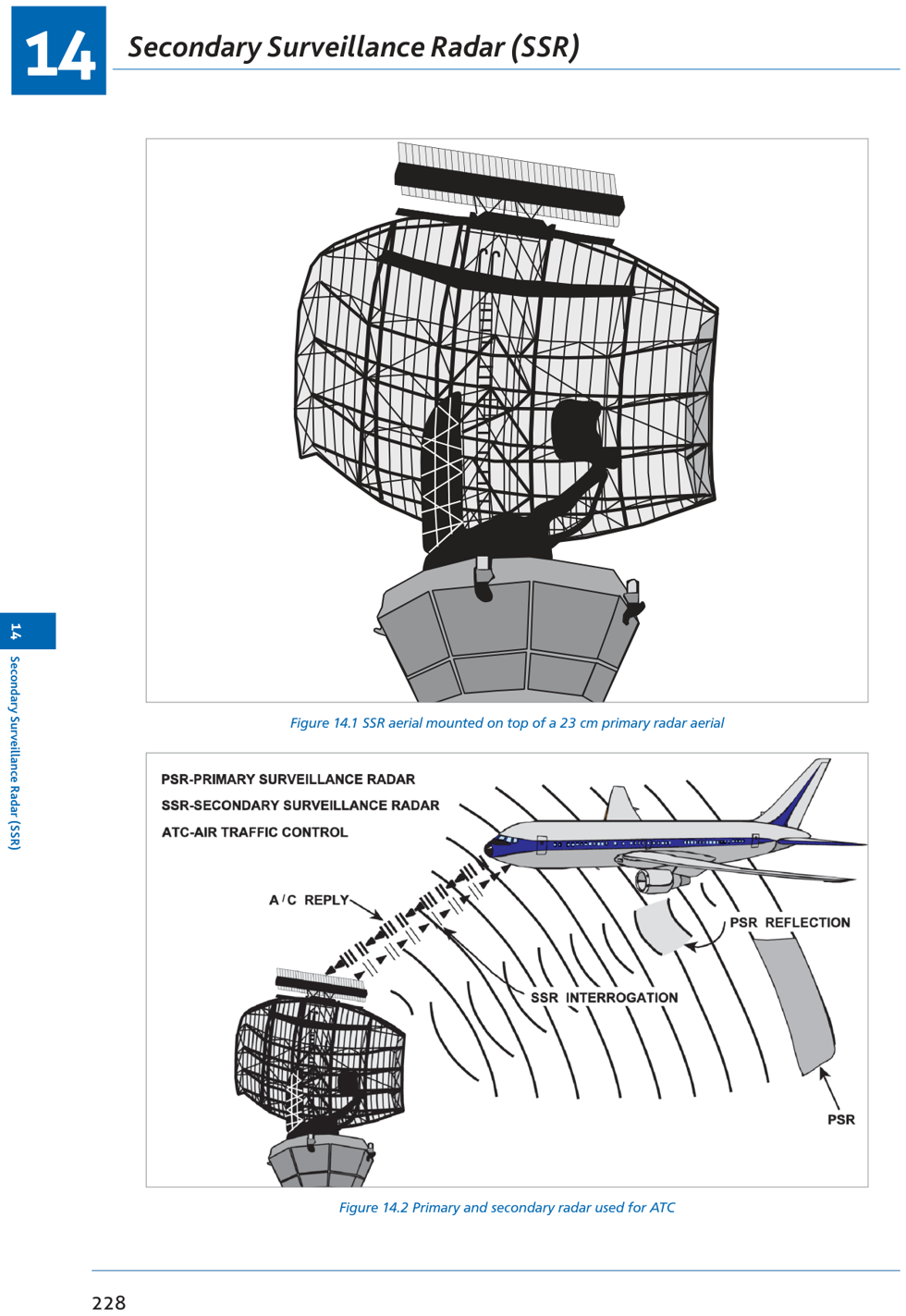
Fig 14.1 & 14.2: SSR antenna (rotates with primary head) and overall principle of operation
2. Ground Equipment
📡 SSR Ground Station
| Parameter | Detail |
|---|---|
| Transmit frequency | 1030 MHz (UHF) |
| Receive frequency | 1090 MHz (UHF) |
| Antenna type | Mounted on top of primary radar antenna; co-rotates |
| Antenna beam | Narrow in azimuth (1–3°) |
| SLS (Side Lobe Suppression) | Omnidirectional pulse P2 transmitted simultaneously with P1; if transponder sees P2 > P1, it suppresses reply → prevents side-lobe interrogations |
| Processor | Decodes replies, displays on PPI alongside primary return |
3. Airborne Transponder
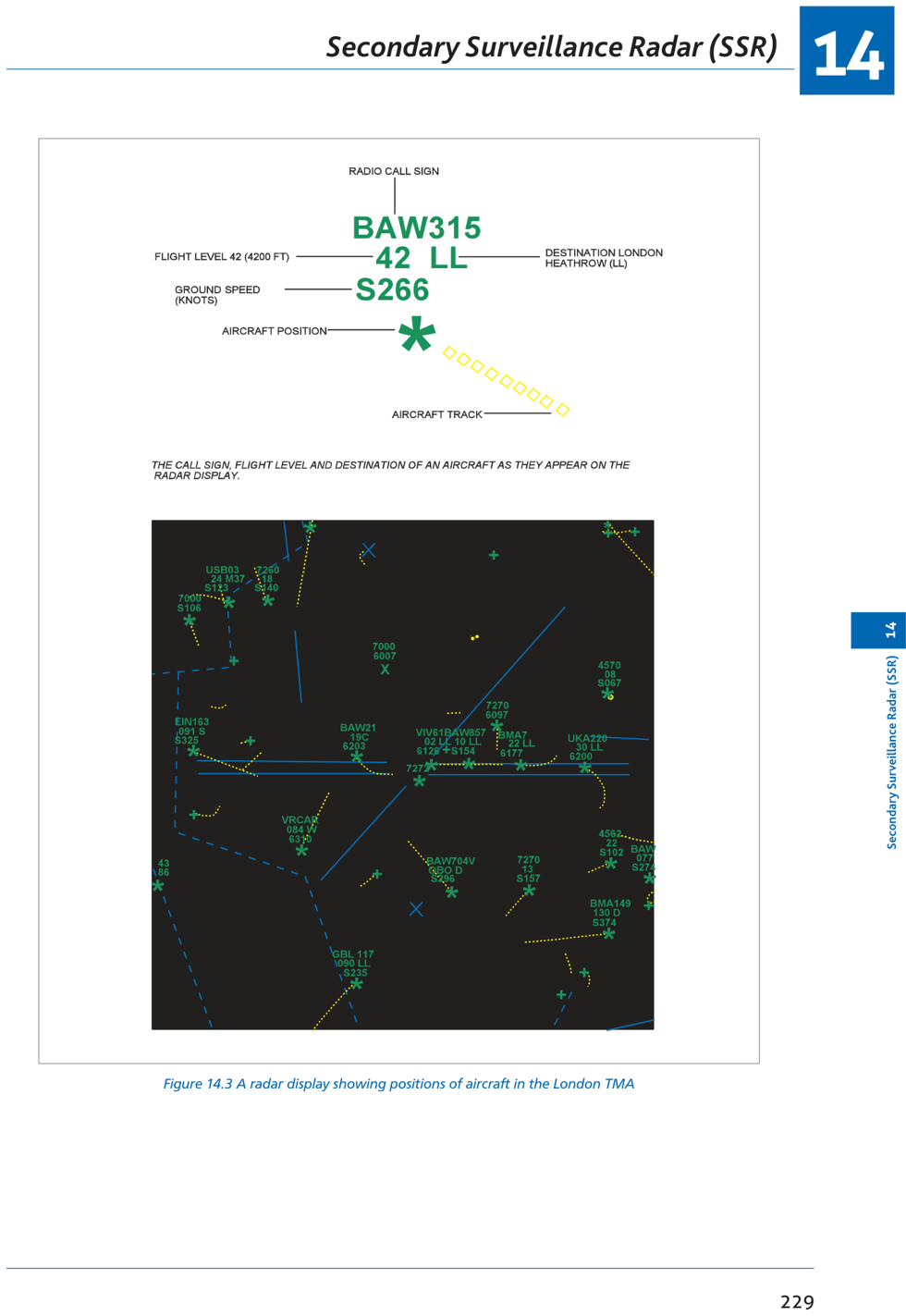
Fig 14.3: Transponder control panel — STBY, ON, ALT, IDENT positions, mode selector, code display
📡 Transponder Operation
| Parameter | Detail |
|---|---|
| Receive frequency | 1030 MHz |
| Transmit frequency | 1090 MHz |
| Reply delay | 50 µs (transponder receives and delays before replying, to allow distance measurement) |
| Antenna | Omni-directional (top and bottom fuselage) |
| STANDBY | System active, will NOT respond to interrogations (used on ground when not required) |
| ON | Mode A (identity) only |
| ALT | Mode C (altitude encoding) + Mode A |
| IDENT / SPI | Special Position Identification pulse — flashes radar blip for 20 seconds |
4. Interrogation Modes
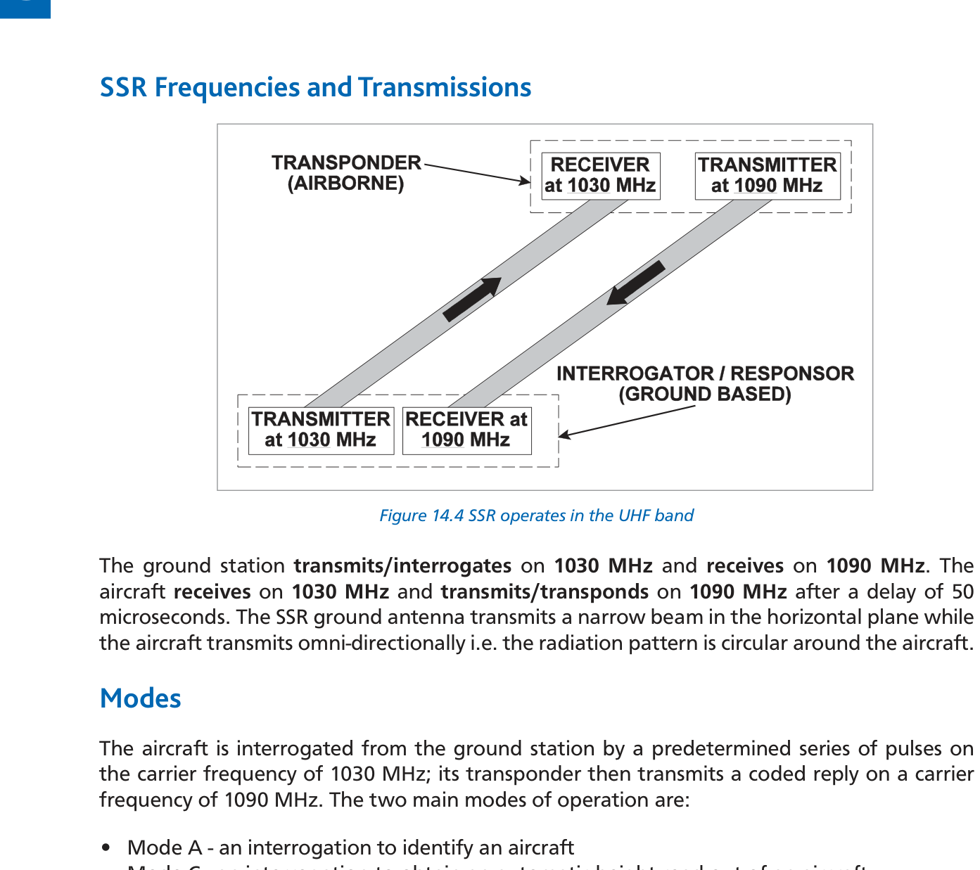
Fig 14.4: Pulse spacings for Mode A (8 µs) and Mode C (21 µs) | Fig 14.5: Reply pulse train (F1...SPI...F2)
📡 Mode Comparison
| Mode | P1–P3 Spacing | Reply Contains | Info Provided |
|---|---|---|---|
| A (Identity) | 8 µs | 4096 identity codes | Aircraft identity (4-digit squawk) |
| B | 17 µs | Identity codes | Aircraft identity (alternate) |
| C (Altitude) | 21 µs | Altitude in 100 ft increments | Pressure altitude (re: 1013.25 hPa) |
| D | 25 µs | Future use | — |
⚡ Key Mode Details
- Mode A provides 4096 identity codes (0000–7777 octal, with 1200, 7000, 7700 reserved/restricted)
- Mode C altitude: encoded in 100 ft increments using Gillham code; referenced to 1013.25 hPa regardless of QNH set
- Mode C displayed separately on PPI — ATC can read altitude without R/T
- Transponder replies with framing pulses F1, F2 spaced 20.3 µs, with information pulses between
⚠ Required Actions
- When ATC say “SQUAWK IDENT”: press IDENT button → SPI for 20 seconds
- HIJACK: squawk 7500
- Loss of R/T: squawk 7600
- Emergency: squawk 7700
- Military conspicuity: squawk 7000
- VFR conspicuity (no ATC unit): squawk 7000
5. Transponder Codes
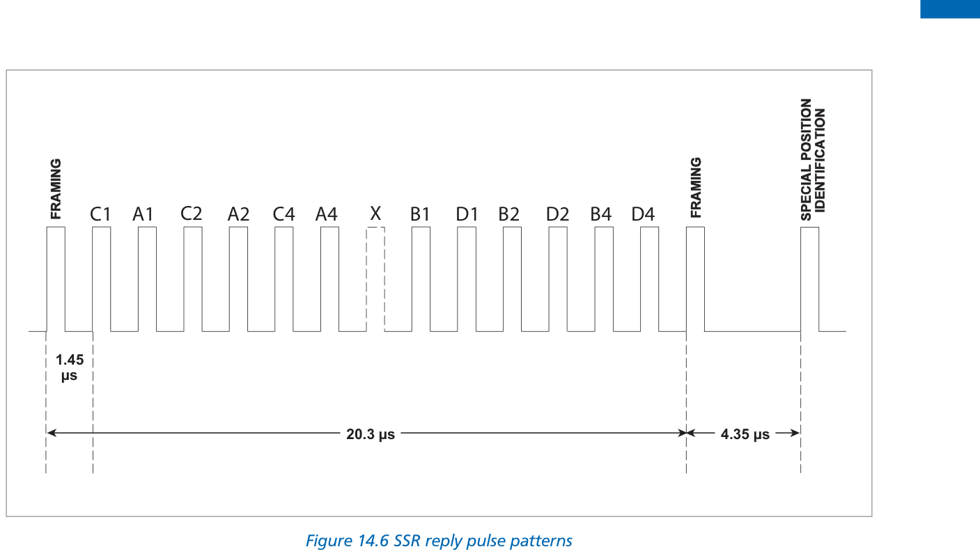
Fig 14.6: Reply codes — 4096 combinations of 4 digits 0-7 in Mode A
📡 Code Summary
| Code | Meaning |
|---|---|
| 7700 | Emergency |
| 7600 | Radio failure |
| 7500 | Unlawful interference (hijack) |
| 7000 | Military conspicuity / VFR conspicuity (UK) |
| 2000 | Entering controlled airspace without ATC clearance |
| Assigned | Four-digit code assigned by ATC |
6. SSR Problems
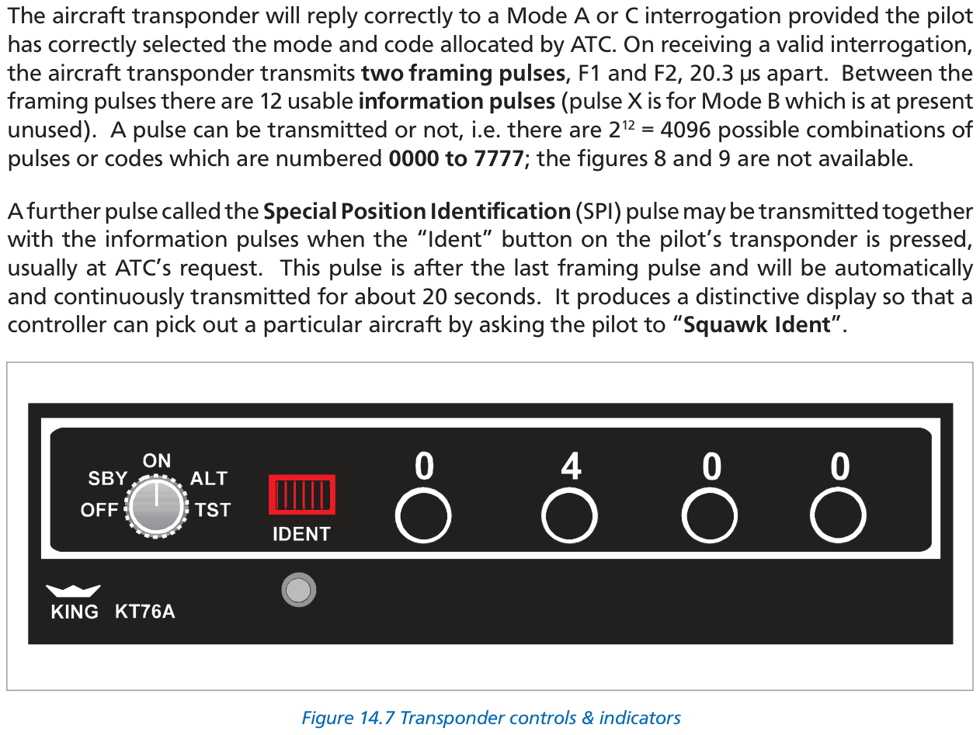
Fig 14.7: Garbling (two aircraft within 1.7 NM cause overlapping replies) and Fruiting (random interrogations cause interference)
⚠ Garbling
- Two aircraft within 1.7 NM of each other appear to be in the same direction from the ground station
- Their replies overlap → garbled, unreadable replies
- Solution: Mode S (selective addressing)
⚠ Fruiting (Phantoms)
- Multiple ground interrogators on same frequency
- Transponder receives interrogation from station B but reply is picked up by station A
- Station A sees a phantom target at incorrect position
- Solution: ISLS (Improved Side Lobe Suppression) — synchronised interrogation timing between stations
7. Mode S
✓ Mode S Key Features
| Feature | Detail |
|---|---|
| Addressing | Each aircraft has a unique 24-bit address (16.7 million combinations) |
| Selective interrogation | Ground station interrogates ONLY the target aircraft → eliminates garbling |
| Data link | Bidirectional: aircraft can downlink data; ATC can uplink instructions |
| Altitude resolution | 25 ft (vs 100 ft for Mode C) |
| ACAS / TCAS | Uses Mode S for aircraft-to-aircraft interrogation to provide collision avoidance |
| ELS | Elementary Surveillance — squawk, flight ID, altitude, emergency |
| EHS | Enhanced Surveillance — adds selected altitude, airspeed, heading (for upper airspace in Europe) |
| ADS-B | Automatic Dependent Surveillance Broadcast — squitter every 0.5 s; position via GPS |
8. SSR Summary
| Parameter | Detail |
|---|---|
| Type | Secondary radar; interrogation–reply |
| Ground Tx | 1030 MHz (UHF) |
| Transponder Tx | 1090 MHz (UHF) |
| Transponder delay | 50 µs |
| Mode A spacing | 8 µs → 4096 codes → identity |
| Mode C spacing | 21 µs → pressure altitude re 1013.25 hPa → 100 ft increments |
| SPI | IDENT pressed → 20 s enhanced blip |
| Garbling | <1.7 NM separation → overlapping replies |
| Fruiting | Phantom returns from multiple interrogators |
| Mode S address | 24 bits → 16.7 million unique addresses |
| Mode S altitude | 25 ft resolution |
9. Practice Questions
Q1. SSR operates on frequencies:
(a) 1030 MHz ground Tx, 1090 MHz airborne Tx
(b) 1090 MHz ground Tx, 1030 MHz airborne Tx
(c) 9375 MHz both
(d) 960 MHz both
Answer: (a)
Ground transmits at 1030 MHz, airborne transponder replies at 1090 MHz.
Ground transmits at 1030 MHz, airborne transponder replies at 1090 MHz.
Q2. Mode C provides ATC with:
(a) aircraft callsign
(b) airspeed
(c) position
(d) pressure altitude
Answer: (d)
Mode C (P1–P3 spacing = 21 µs) provides pressure altitude referenced to 1013.25 hPa in 100 ft increments.
Mode C (P1–P3 spacing = 21 µs) provides pressure altitude referenced to 1013.25 hPa in 100 ft increments.
Q3. Advantage of Mode S over Mode A/C:
(a) no transponder required
(b) not dependent on pressure altimeter
(c) eliminates garbling by selective addressing
(d) uses VHF frequencies
Answer: (d)
Mode S eliminates garbling through selective addressing — each aircraft has a unique 24-bit ICAO address; ground station interrogates only one aircraft at a time.
Mode S eliminates garbling through selective addressing — each aircraft has a unique 24-bit ICAO address; ground station interrogates only one aircraft at a time.
Q4. A transponder code of 7700 indicates:
(a) radio failure
(b) emergency
(c) unlawful interference
(d) conspicuity
Answer: (b)
7700 = Emergency. 7600 = radio failure. 7500 = hijack (unlawful interference).
7700 = Emergency. 7600 = radio failure. 7500 = hijack (unlawful interference).
Q5. The unique identifier used in Mode S is:
(a) a 4-digit octal squawk
(b) the Mode C altitude code
(c) a 24-bit ICAO aircraft address
(d) a 12-bit reply pulse train
Answer: (c)
Mode S uses a 24-bit ICAO address, providing up to 16.7 million unique aircraft identifiers, enabling selective interrogation and data link capability.
Mode S uses a 24-bit ICAO address, providing up to 16.7 million unique aircraft identifiers, enabling selective interrogation and data link capability.
DGCA CPL/ATPL Radio Navigation Study Notes
Chapter 14 — SSR (Secondary Surveillance Radar)
Ghost Aviator | www.ghostaviator.com
For personal study use only.
Chapter 14 — SSR (Secondary Surveillance Radar)
Ghost Aviator | www.ghostaviator.com
For personal study use only.
Study Radio Nav with other student pilots
Join the free Radio Nav group on Telegram. Stuck on a doubt? Type /q and your question, and get an answer from Ghost Aviator's notes.
LIVE BATCH
Study Radio Navigation live with the Captain
Small batch of 10 · live doubt-clearing · 4–6 weeks · ₹12,999 ₹7,999
Reinforce Chapter 14: SSR
Test your knowledge and practice actual exam questions for Radio Navigation.
Planning your Pilot Training in 2026?
Calculate exact flying hours, DGCA exam fees, and living costs with our interactive calculator.