Met Instruments — Master Table (Table 23.1)
This chapter is a concise but critical reference chapter for DGCA examination. The entire chapter is presented as Table 23.1 — a complete summary of meteorological elements, the instruments used to measure them, and their units of measurement. Every row is examinable.
| S.No | Element | Instruments Used | Unit of Measure |
|---|---|---|---|
| 1 | Pressure |
a. Mercury barometer b. Aneroid barometer c. Barograph (Self-recording) |
Hectopascal (hPa) or Millibar (mb) or Inches (in) of mercury |
| 2 | Air Temperature (TT) |
Dry, Max (Mercury) thermometer Min (Alcohol) thermometer |
Degree Celsius (°C) |
| 3 | Dew Point Temperature (TdTd) | Dry & Wet bulb (Mercury) thermometers | Degree Celsius (°C) |
| 4 | Relative Humidity (RH) |
a. Dry & Wet bulb thermometer b. Hygrometers c. Hygrograph (Self-recording) d. Psychrometer |
Percentage (%) |
| 5 | Humidity Mixing Ratio (HMR) | Hygrograph | gm/kg |
| 6 | Precipitation (Rain, Snow) |
a. Raingauge b. Self-recording rain-gauge c. Hyetograph d. Snowgauge |
mm or cm (depth) Amount (by melting for snow) |
| 7 | Surface Wind (Direction & Speed) |
a. Wind Vane (for Direction) b. Anemometer c. Anemograph (Self-recording) |
Direction: Degrees from True North in clockwise direction Speed: Knots (KT) |
| 8 | Cloud Base |
a. Search light / Laser beam b. Ceilometer / Ceilograph c. Ceiling Balloon d. Nephroscope (direction of movement) e. Alidade |
Feet (ft) or m 8 points of compass |
| 9 | Visibility / RVR |
AVRA Transmissometer or Scopograph Forward Scatterometer Manually — Visibility Landmarks |
m or km |
| 10 | Upper Winds |
a. Optical Theodolite b. Hydrogen filled Pilot Balloon c. Radar Wind (RAWIN) |
Direction: in degrees Speed: Knots (KT) or km/hr (KMH) or m per sec (MPS) |
| 11 | Upper Air Pressure, Temperature and Humidity |
Radio Sonde Dropsonde (used in cyclones) |
Hectopascal (hPa) Degree Centigrade (°C) % (Relative Humidity) |
| 12 | Clouds |
Weather Satellites RADAR |
— |
Instrument Classification by Category
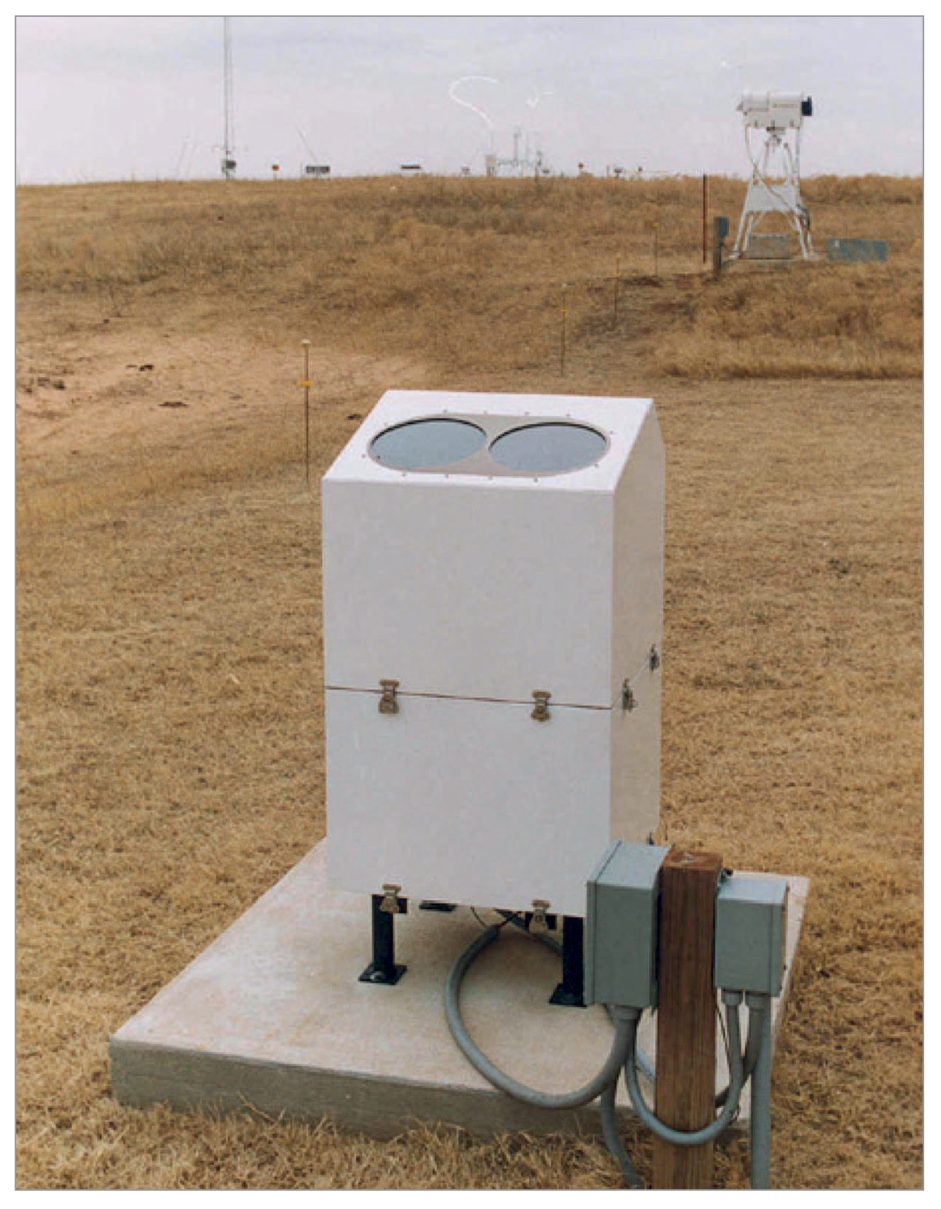
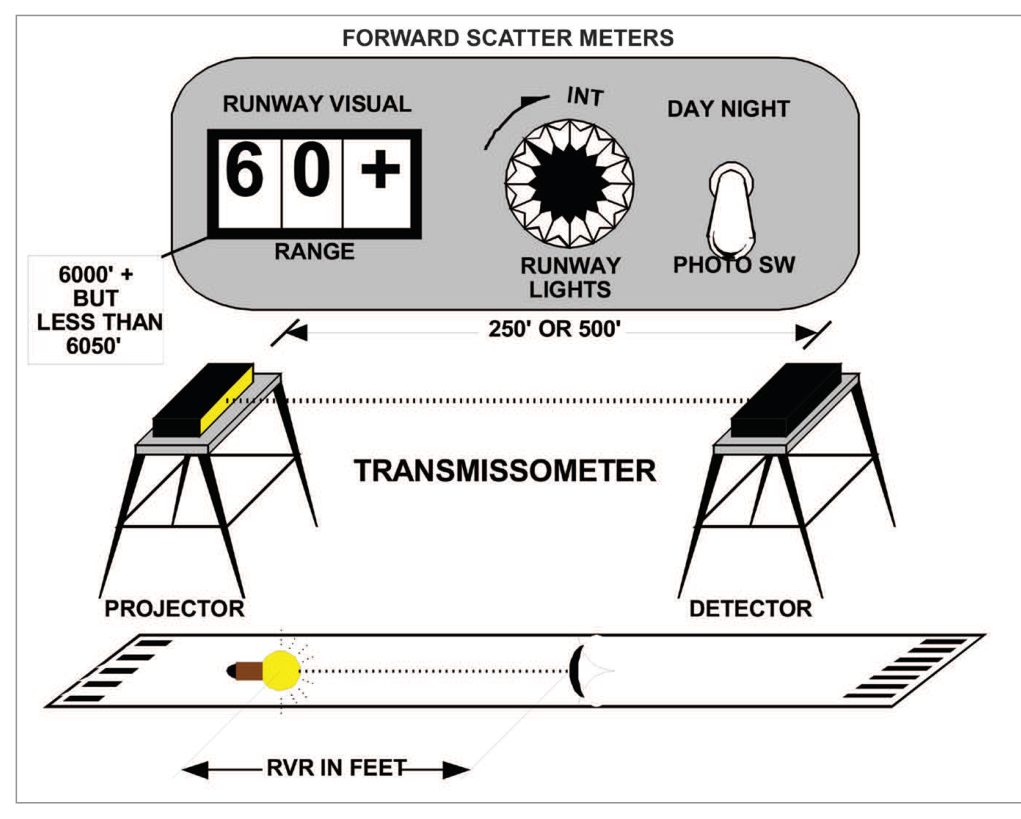
Self-Recording / Automatic Instruments
- Barograph — Pressure (self-recording)
- Hygrograph — Humidity mixing ratio (self-recording)
- Self-recording rain-gauge — Precipitation
- Anemograph — Surface wind speed (self-recording)
- Ceilograph — Cloud base (automated)
- AVRA — Automated Visibility and RVR
- Transmissometer / Scopograph — Visibility / RVR
Upper Air Instruments
- Radiosonde — Measures upper air pressure, temperature, humidity (balloon-borne)
- Dropsonde — Like Radiosonde but dropped from aircraft into cyclones to gather upper air data
- Optical Theodolite — Tracks pilot balloon to determine upper wind direction and speed
- Hydrogen filled Pilot Balloon (PIBAL) — Tracked optically for upper winds
- RAWIN (Radar Wind) — Radar tracking of balloon for upper winds
Cloud Base / Ceiling Instruments
- Search light / Laser beam: Projects beam upward to measure cloud base height
- Ceilometer / Ceilograph: Automated instrument for cloud base measurement
- Ceiling Balloon: Balloon released and timed until it disappears into cloud base
- Nephroscope: Determines direction of cloud movement — 8 points of compass
- Alidade: Sighting instrument for angle/direction of cloud features
Humidity Instruments
- Psychrometer: Dry and wet bulb thermometers — measures relative humidity
- Hygrometer: Measures relative humidity (%)
- Hygrograph: Self-recording hygrometer; also gives Humidity Mixing Ratio (gm/kg)
Pressure Instruments
- Mercury barometer: Standard; measures atmospheric pressure in hPa or inches of mercury
- Aneroid barometer: Uses a sealed metal capsule (no liquid); portable
- Barograph: Self-recording aneroid barometer — continuous pressure trace
Temperature Instruments
- Dry thermometer: Measures ambient (dry bulb) temperature — Mercury type
- Max thermometer: Records maximum temperature — Mercury (has constriction to retain maximum)
- Min thermometer: Records minimum temperature — Alcohol (freezing point much lower)
- Wet bulb thermometer: Wet wick around bulb; combined with dry bulb to find dew point and RH
Quick Revision Summary
- Pressure: Mercury/Aneroid barometer, Barograph → hPa / mb / inches Hg
- Temperature: Mercury (max), Alcohol (min) thermometers → °C
- Dew Point: Dry + Wet bulb thermometers → °C
- Relative Humidity: Psychrometer, Hygrometer, Hygrograph → %
- Humidity Mixing Ratio: Hygrograph → gm/kg
- Precipitation: Raingauge, Hyetograph, Snowgauge → mm or cm
- Surface Wind: Wind Vane (direction), Anemometer (speed), Anemograph → Degrees (True N, CW) / Knots
- Cloud Base: Ceilometer, Search light, Ceiling Balloon, Nephroscope → ft or m / 8 compass points
- Visibility/RVR: AVRA, Transmissometer, Scopograph, Forward Scatterometer → m or km
- Upper Winds: Theodolite, Pilot Balloon, RAWIN → degrees / KT or KMH or MPS
- Upper Air P/T/RH: Radiosonde (balloon), Dropsonde (cyclone aircraft) → hPa / °C / %
- Clouds: Weather Satellites, RADAR
- Min thermometer = Alcohol (Mercury freezes at −39°C, Alcohol remains liquid at much lower temps)
- Dropsonde = used in cyclones (dropped from aircraft — no balloon)
Practice Q&A
Q1. Pressure is measured in units of:
(a) Knots (b) Hectopascal (hPa) or Millibar (mb) (c) Percentage (%)
(a) Knots (b) Hectopascal (hPa) or Millibar (mb) (c) Percentage (%)
✅ Correct Answer: (b) Hectopascal (hPa) or Millibar (mb)
Atmospheric pressure is measured in Hectopascals (hPa), Millibars (mb), or inches of mercury. Note: 1 hPa = 1 mb.
Atmospheric pressure is measured in Hectopascals (hPa), Millibars (mb), or inches of mercury. Note: 1 hPa = 1 mb.
🎓 Standard sea level pressure = 1013.25 hPa = 1013.25 mb = 29.92 inches Hg. The DGCA uses hPa in QNH and altimeter settings.
Q2. Minimum temperature is measured by:
(a) Mercury thermometer (b) Alcohol thermometer (c) Aneroid thermometer
(a) Mercury thermometer (b) Alcohol thermometer (c) Aneroid thermometer
✅ Correct Answer: (b) Alcohol thermometer
The minimum thermometer uses alcohol (not mercury) because alcohol has a much lower freezing point (~−114°C) than mercury (−39°C), allowing measurement of very low temperatures.
The minimum thermometer uses alcohol (not mercury) because alcohol has a much lower freezing point (~−114°C) than mercury (−39°C), allowing measurement of very low temperatures.
❌ (a) Mercury thermometer: Used for Max temperature and Dry/Wet bulb (air temp and dew point). Mercury freezes at −39°C and cannot measure Arctic/polar minimum temperatures. ❌ (c) Aneroid thermometer: Does not exist — aneroid refers to pressure instruments (barometer).
🎓 Min = Alcohol; Max = Mercury. Remember: "A for Alcohol = A for Arctic cold." Alcohol remains liquid at extremely low temperatures.
Q3. Relative Humidity is measured by:
(a) Barograph (b) Hygrometer / Psychrometer (c) Anemometer
(a) Barograph (b) Hygrometer / Psychrometer (c) Anemometer
✅ Correct Answer: (b) Hygrometer / Psychrometer
Relative Humidity (%) is measured by Hygrometers, Hygrograph (self-recording), Psychrometer (dry and wet bulb combination), and Dry & Wet bulb thermometers.
Relative Humidity (%) is measured by Hygrometers, Hygrograph (self-recording), Psychrometer (dry and wet bulb combination), and Dry & Wet bulb thermometers.
🎓 Hygrometer = Humidity. Psychrometer = Dry + Wet bulb thermometers = RH. Hygrograph = self-recording hygrometer = also gives Mixing Ratio in gm/kg.
Q4. Cloud base is measured by:
(a) Hygrograph (b) Ceilometer / Ceilograph / Ceiling Balloon (c) Anemograph
(a) Hygrograph (b) Ceilometer / Ceilograph / Ceiling Balloon (c) Anemograph
✅ Correct Answer: (b) Ceilometer / Ceilograph / Ceiling Balloon
Cloud base instruments include: Search light/Laser beam, Ceilometer/Ceilograph, Ceiling Balloon, Nephroscope (direction of movement), and Alidade. Units: feet or metres; 8 points of compass (for direction).
Cloud base instruments include: Search light/Laser beam, Ceilometer/Ceilograph, Ceiling Balloon, Nephroscope (direction of movement), and Alidade. Units: feet or metres; 8 points of compass (for direction).
🎓 Cloud base = Ceilometer or Ceiling Balloon. For METAR reporting, cloud base is given in hundreds of feet AGL (e.g., BKN030 = broken cloud at 3000 ft).
Q5. Upper air pressure, temperature and humidity are measured by:
(a) Optical Theodolite (b) Radiosonde / Dropsonde (c) AVRA
(a) Optical Theodolite (b) Radiosonde / Dropsonde (c) AVRA
✅ Correct Answer: (b) Radiosonde / Dropsonde
Radiosonde (balloon-borne) measures upper air pressure, temperature, and humidity. Dropsonde is the same but dropped from aircraft — specifically used in cyclones where balloon launching is not practical.
Radiosonde (balloon-borne) measures upper air pressure, temperature, and humidity. Dropsonde is the same but dropped from aircraft — specifically used in cyclones where balloon launching is not practical.
❌ (a) Optical Theodolite: Used to track pilot balloons for upper WIND measurement (direction and speed only). ❌ (c) AVRA: Used for Visibility / RVR measurement at surface level.
🎓 Radiosonde = upper air P/T/RH (all three parameters). Dropsonde = same as Radiosonde but dropped from aircraft into cyclones. Theodolite/RAWIN = upper WINDS only.
Q6. Upper winds are measured by:
(a) Radiosonde (b) Radar Wind (RAWIN) / Optical Theodolite / Pilot Balloon (c) Ceilometer
(a) Radiosonde (b) Radar Wind (RAWIN) / Optical Theodolite / Pilot Balloon (c) Ceilometer
✅ Correct Answer: (b) Radar Wind (RAWIN) / Optical Theodolite / Pilot Balloon
Upper winds are measured by: Optical Theodolite (tracks pilot balloon), Hydrogen-filled Pilot Balloon, and Radar Wind (RAWIN) — radar tracking of balloon. Units: degrees, Knots (KT), km/hr (KMH), or m/sec (MPS).
Upper winds are measured by: Optical Theodolite (tracks pilot balloon), Hydrogen-filled Pilot Balloon, and Radar Wind (RAWIN) — radar tracking of balloon. Units: degrees, Knots (KT), km/hr (KMH), or m/sec (MPS).
🎓 Upper winds: RAWIN, Theodolite, PIBAL. Upper air P/T/RH: Radiosonde/Dropsonde. Don't confuse them! The balloon gives you both — but separate instruments are used for each measurement.
Q7. Visibility / RVR is measured by:
(a) Wind Vane (b) Transmissometer / Scopograph / Forward Scatterometer (c) Nephroscope
(a) Wind Vane (b) Transmissometer / Scopograph / Forward Scatterometer (c) Nephroscope
✅ Correct Answer: (b) Transmissometer / Scopograph / Forward Scatterometer
Visibility and RVR are measured by AVRA, Transmissometer or Scopograph, Forward Scatterometer, or manually using Visibility Landmarks. Units: metres (m) or km.
Visibility and RVR are measured by AVRA, Transmissometer or Scopograph, Forward Scatterometer, or manually using Visibility Landmarks. Units: metres (m) or km.
❌ (a) Wind Vane: Measures wind direction at the surface. ❌ (c) Nephroscope: Measures direction of cloud movement (8 compass points).
🎓 Transmissometer = measures transmission of light through atmosphere = gives RVR. Forward Scatterometer = scatters laser forward into a detector = visibility measurement. Both used at major airports.
Q8. Surface wind direction is reported from True North in which direction?
(a) Anticlockwise (b) Clockwise (c) From South
(a) Anticlockwise (b) Clockwise (c) From South
✅ Correct Answer: (b) Clockwise
Wind direction is reported in degrees from True North in the clockwise direction. For example, 090° = East, 180° = South, 270° = West.
Wind direction is reported in degrees from True North in the clockwise direction. For example, 090° = East, 180° = South, 270° = West.
🎓 Wind direction convention: From True North, measured clockwise. Used in METAR (e.g., "27015KT" = wind from 270° True at 15 knots). This is same as compass bearing convention.
Q9. Humidity Mixing Ratio is measured in:
(a) % (b) gm/kg (c) hPa
(a) % (b) gm/kg (c) hPa
✅ Correct Answer: (b) gm/kg
Humidity Mixing Ratio (HMR) is measured in grams per kilogram (gm/kg) of dry air. It is measured using the Hygrograph. Note: Relative Humidity is measured in % (different parameter).
Humidity Mixing Ratio (HMR) is measured in grams per kilogram (gm/kg) of dry air. It is measured using the Hygrograph. Note: Relative Humidity is measured in % (different parameter).
🎓 Key distinction: Relative Humidity = % ; Mixing Ratio = gm/kg. Both are measures of humidity but in different units and with different meanings. Mixing Ratio does not change with temperature changes alone.
Q10. Dropsonde is used in:
(a) Mountain areas (b) Cyclones (dropped from aircraft) (c) Upper atmosphere research
(a) Mountain areas (b) Cyclones (dropped from aircraft) (c) Upper atmosphere research
✅ Correct Answer: (b) Cyclones (dropped from aircraft)
Dropsonde is a Radiosonde-equivalent instrument that is DROPPED from reconnaissance aircraft into cyclones to gather upper air pressure, temperature, and humidity data where balloon launching is not feasible.
Dropsonde is a Radiosonde-equivalent instrument that is DROPPED from reconnaissance aircraft into cyclones to gather upper air pressure, temperature, and humidity data where balloon launching is not feasible.
🎓 Radiosonde goes UP (balloon); Dropsonde goes DOWN (aircraft drop). Both measure upper air P/T/RH. Dropsonde specifically used in cyclone reconnaissance missions.
Master Reference Table — Full Instrument Summary
| Element | Primary Instruments | Self-Recording Version | Unit |
|---|---|---|---|
| Pressure | Mercury barometer, Aneroid barometer | Barograph | hPa / mb / in Hg |
| Air Temperature | Mercury thermometer (Dry), Mercury (Max), Alcohol (Min) | Thermograph | °C |
| Dew Point (TdTd) | Dry + Wet bulb (Mercury) thermometers | — | °C |
| Relative Humidity | Psychrometer, Dry + Wet bulb, Hygrometer | Hygrograph | % |
| Humidity Mixing Ratio | — | Hygrograph | gm/kg |
| Precipitation | Raingauge, Snowgauge | Self-recording rain-gauge, Hyetograph | mm or cm |
| Surface Wind Direction | Wind Vane | Anemograph | Degrees (True N, CW) |
| Surface Wind Speed | Anemometer | Anemograph | Knots (KT) |
| Cloud Base | Ceilometer, Search light, Ceiling Balloon, Alidade, Nephroscope | Ceilograph | ft or m / 8 points compass |
| Visibility / RVR | AVRA, Transmissometer, Scopograph, Forward Scatterometer | — | m or km |
| Upper Winds | Optical Theodolite, Pilot Balloon (PIBAL), RAWIN | — | Degrees / KT or KMH or MPS |
| Upper Air P/T/RH | Radiosonde (balloon), Dropsonde (cyclone) | — | hPa / °C / % |
| Clouds | Weather Satellites, RADAR | — | — |
Mnemonics
| Mnemonic | Meaning |
|---|---|
| "Min = Alcohol (A for Arctic)" | Minimum thermometer uses Alcohol (low freezing point) |
| "Radiosonde Up, Dropsonde Down" | Radiosonde = balloon; Dropsonde = dropped from aircraft (cyclones) |
| "RAWIN = Radar Wind" | Upper wind measurement by radar tracking of balloon |
| "Hygrograph = HMR (gm/kg)" | Hygrograph gives Humidity Mixing Ratio in gm/kg |
| "Psychrometer = Dry + Wet = RH%" | Psychrometer uses wet and dry bulb thermometers to find RH |
| "Transmissometer = Visibility" | Measures transmission of light = visibility/RVR |
| "Nephroscope = Cloud Direction" | Nephroscope measures direction of cloud movement (8 compass points) |
| "Barograph = Pressure graph" | Self-recording pressure trace; aneroid based |