Hypoxia
by Ghost Aviator
Human Performance & Limitations · Module C — The Thin AirHypoxia
Chapter 6 — The single most-tested block in the paper, and a killer that gives no warning: the four types of hypoxia, its insidious stages, and the altitude thresholds every pilot must know.

§ 10HYPOXIA
10.1 Why Hypoxia Matters to a Pilot
- The body's organs and tissues may be deprived of the oxygen they need because of illness or disease.
- But the pilot must know that oxygen deprivation or hypoxia can be caused by breathing air at low pressures at high altitude.
- Inattentiveness,
- Poor judgment, and
- Uncoordinated movement.
10.2 Stages & Clinical Course — from "tipsy" to lethal
If the lack of oxygen to the brain is limited to a very brief period of time, coma may be reversible with varying levels of return to function, depending on the extent of injury. Sometimes seizures may occur, which may be continuous with no stop between them — a condition called STATUS EPILEPTICUS.
Serious oxygen deprivation can kill a pilot within minutes.
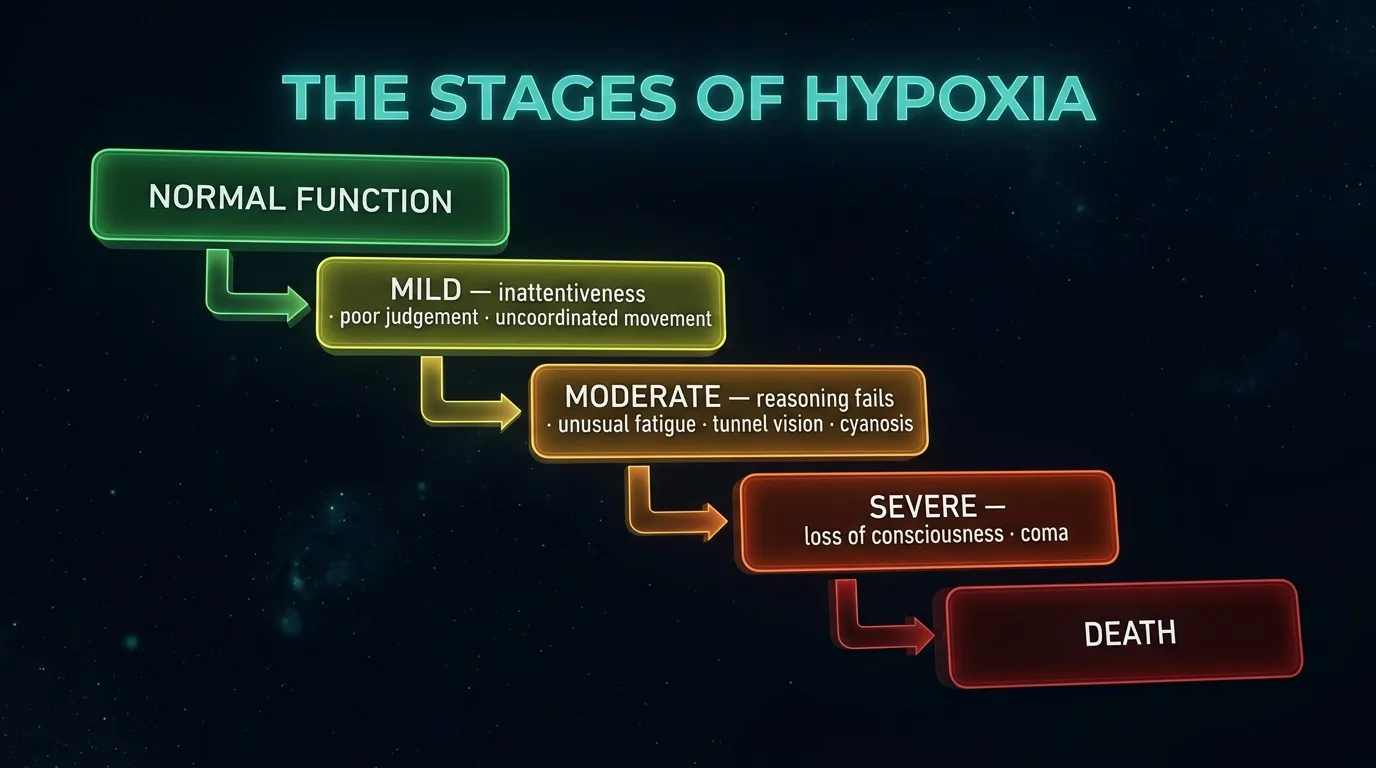
"Insidious" means it sneaks up on you. You will not realise you are hypoxic — that is the entire problem. Your buddy in the right seat may notice it before you do.
10.3 The FOUR Types of Hypoxia
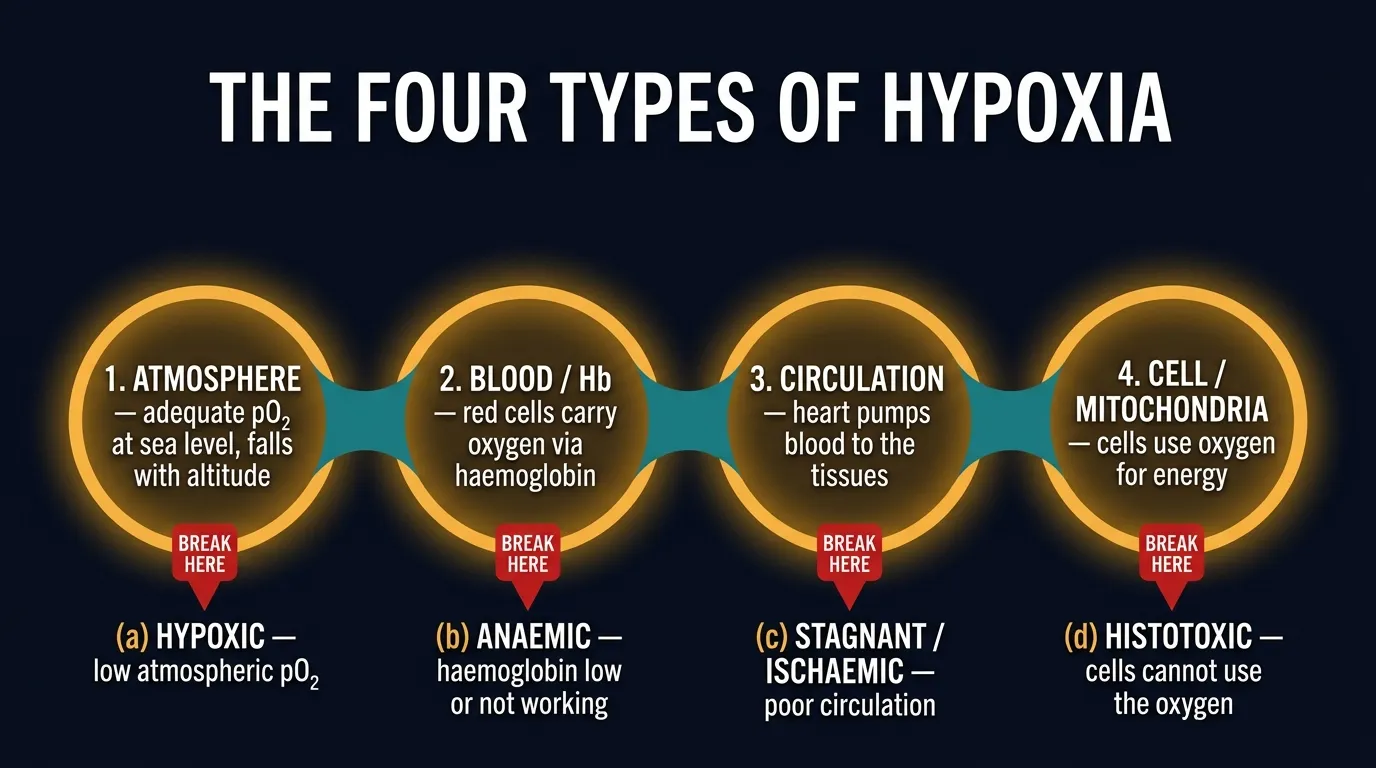
Hypoxic Hypoxia
Cause: low oxygen levels in the bloodstream.
The pilot's type: in pilots, this most often occurs with exposure to altitude — hypobaric hypoxia. At low altitudes the partial pressure of oxygen is adequate to maintain brain function at peak efficiency. Atmospheric pressure and the partial pressure of oxygen both decline at higher altitudes.
Anemic Hypoxia
Cause: blood cannot carry enough oxygen even though atmospheric oxygen may be plentiful. Oxygen in blood is carried by haemoglobin, which is found in red blood cells. When the RBC count decreases, or the haemoglobin does not function properly, less oxygen can be carried by the blood.
Occurs in: heavy bleeding · some cancers · sickle-cell anemia · carbon monoxide poisoning, to name a few. Symptoms: breathlessness, fatigue, chest pain — and they worsen at higher altitudes, as the effects of hypoxia and anemia are additive.
Ischemic / Stagnant Hypoxia
"Ischemia" = inadequate supply of blood. Ischemic hypoxia occurs when there is inadequate blood flow to body tissues.
Occurs in:
- Constriction of blood vessels (e.g. fingers and toes exposed to cold).
- Low blood pressure / low cardiac output such as fainting.
- Exposure to high sustained accelerations like excessive G-forces (stagnant hypoxia).
Oxygen therapy is not very helpful in this form. The best remedy is to correct the underlying cause.
Histotoxic Hypoxia
Cause: the inability of the cells of the body to use the oxygen available. The oxygen is there in the blood, in the tissues — but the cells can't metabolise it.
Rare in pilots, but can occur with:
- Cyanide poisoning,
- Chemical poisoning,
- Intoxication with certain drugs.
Can also be caused by HIGH BLOOD ALCOHOL LEVELS. (Direct link to §14 in Part 4.)
10.4 Causes · Symptoms · Immediate Actions — Master Table
The DGCA syllabus consolidates Hypoxia management into one master tabulation of all causes, all symptoms, and the immediate actions if hypoxia is suspected. This is reproduced verbatim below.
| Hypoxia Causes | Symptoms | Immediate Actions if Hypoxia is suspected |
|---|---|---|
|
|
|
- PROVIDE OXYGEN — don the mask, 100 % flow, regulator to "EMERGENCY" if available.
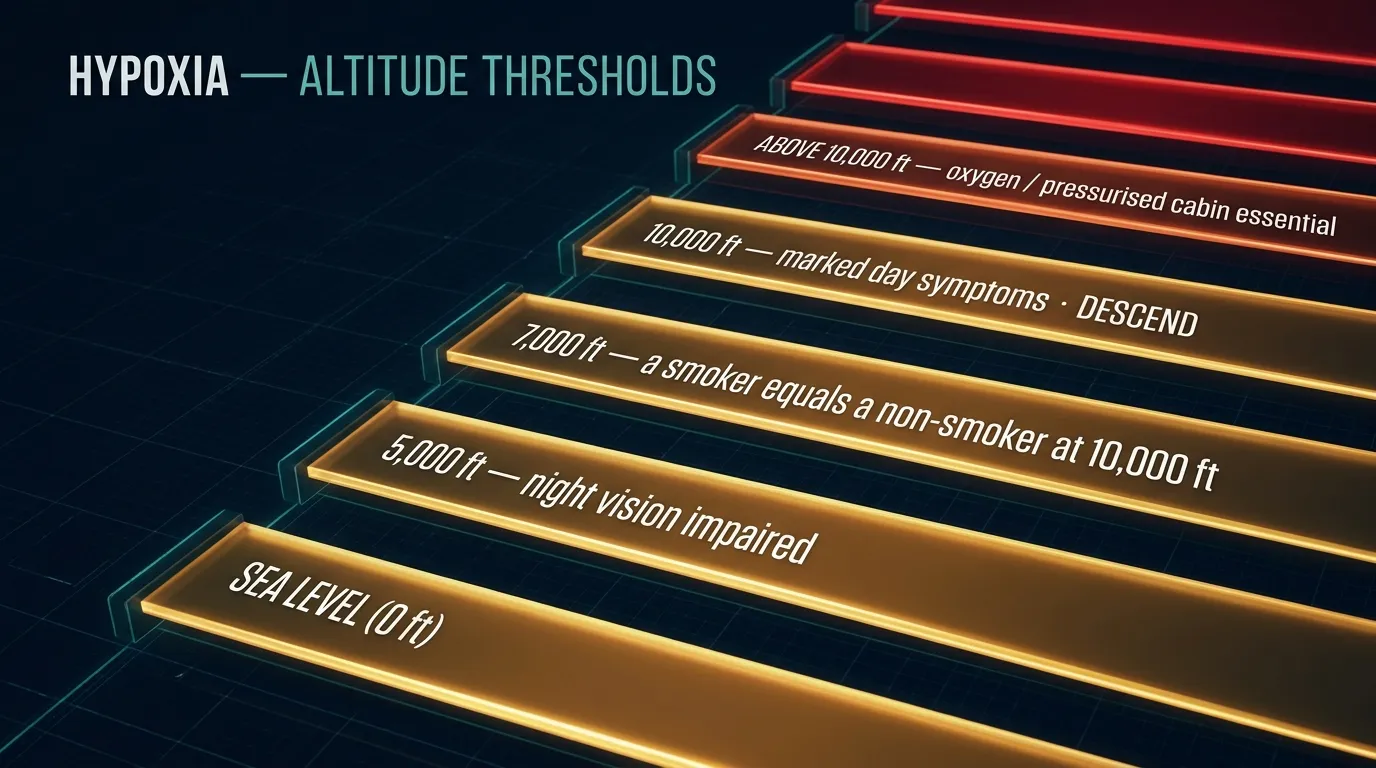
- DESCEND BELOW 10,000 ft (or below MSA — Minimum Safe Altitude — if MSA is higher than 10,000 ft).
10.5 Altitude Thresholds & Night Vision
Reinforce Chapter 6: Hypoxia
Test your knowledge and practice actual exam questions for Human Performance & Limitations.