Breath & Blood
by Ghost Aviator
Human Performance & Limitations · Module B — The Living MachineBreath & Blood
Chapter 5 — How the body takes in oxygen and moves it: the respiratory system and gas exchange, the heart and circulation, and blood pressure.
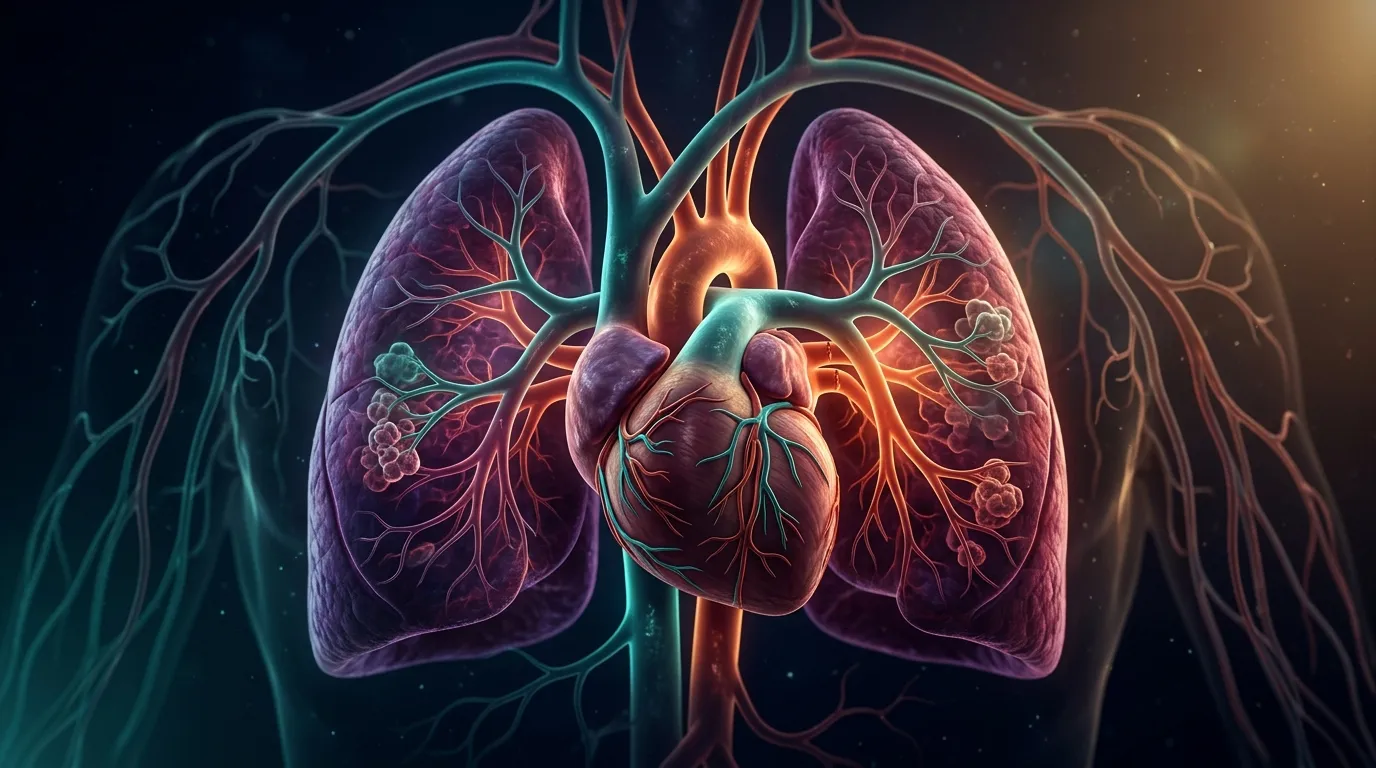
§ 8The Respiratory System
The respiratory process consists mainly of:
- the diffusion of oxygen through the respiratory membranes into the blood,
- transportation to the cells,
- diffusion into the cells, and
- elimination of carbon dioxide from the body.
8.1 The Pathway of Air — Nose to Alveoli
As you breathe air in through your nose or mouth, it travels along this path:
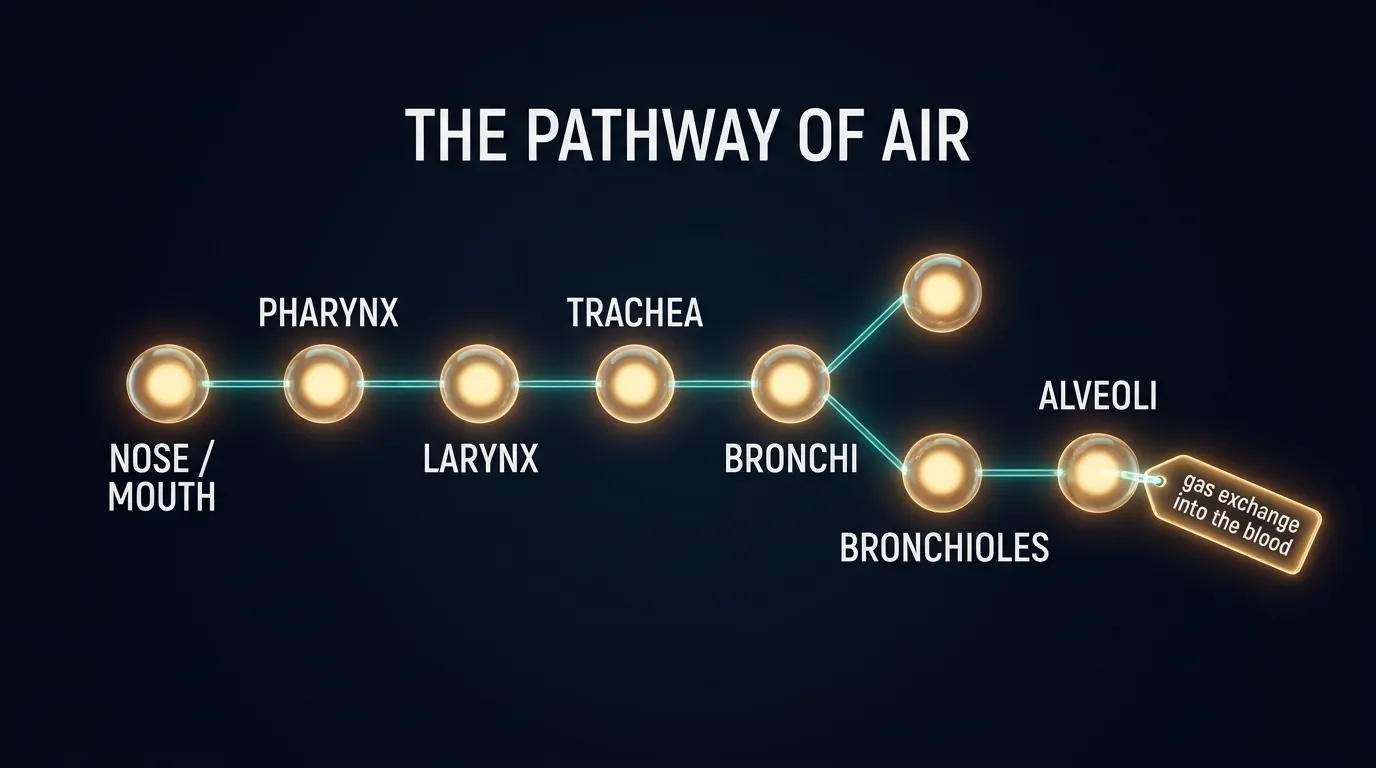
- A — Nasal cavity
- B — Pharynx
- C — Larynx (houses the vocal cords)
- D — Trachea
- E — Alveoli
- F — Bronchial tree
- G — Diaphragm
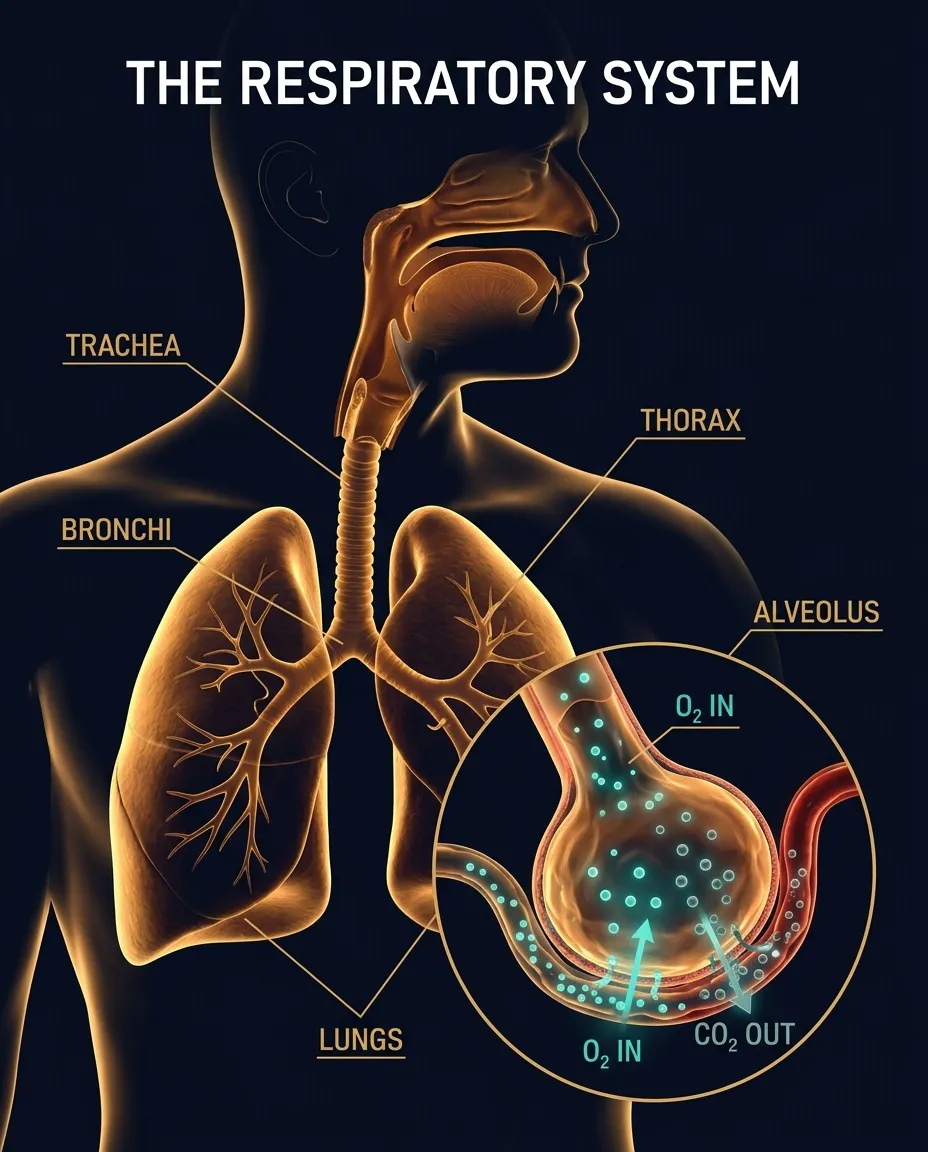
8.2 What Happens Inside the Alveolus — Gas Exchange
- Within each air sac, the oxygen concentration is high, so oxygen passes or diffuses across the alveolar membrane into the pulmonary capillary.
- At the beginning of the pulmonary capillary, the haemoglobin in the red blood cells has carbon dioxide bound to it and very little oxygen.
- The oxygen binds to haemoglobin, and the carbon dioxide is released.
- Carbon dioxide is also released from sodium bicarbonate dissolved in the blood of the pulmonary capillary.
- The concentration of carbon dioxide is high in the pulmonary capillary, so CO₂ leaves the blood and passes across the alveolar membrane into the air sac.
- This exchange of gases occurs rapidly (fractions of a second).
- The carbon dioxide then leaves the alveolus (tiny air sacs of the lungs which allow for rapid gaseous exchange) when you exhale, and the oxygen-enriched blood returns to the heart.
8.3 External vs Internal (Tissue) Respiration
External Respiration
External Respiration takes place through the lungs and refers to:
- The absorption of Oxygen from the air into the blood.
- The excretion of Carbon Dioxide from the blood to the air.
Internal / Tissue Respiration
Internal or Tissue Respiration refers to the transfer of Oxygen from the blood to the tissues of the body. At the same time as this occurs, the tissues give up Carbon Dioxide to the blood.
8.4 Breathing
It is NOT oxygen that triggers your urge to breathe — it is rising CO₂. This is the core mechanism behind Hyperventilation (over-breathing → CO₂ washes out → urge to breathe drops → tingling, dizziness) which is dealt with separately in Part 3.
§ 9The Circulatory System
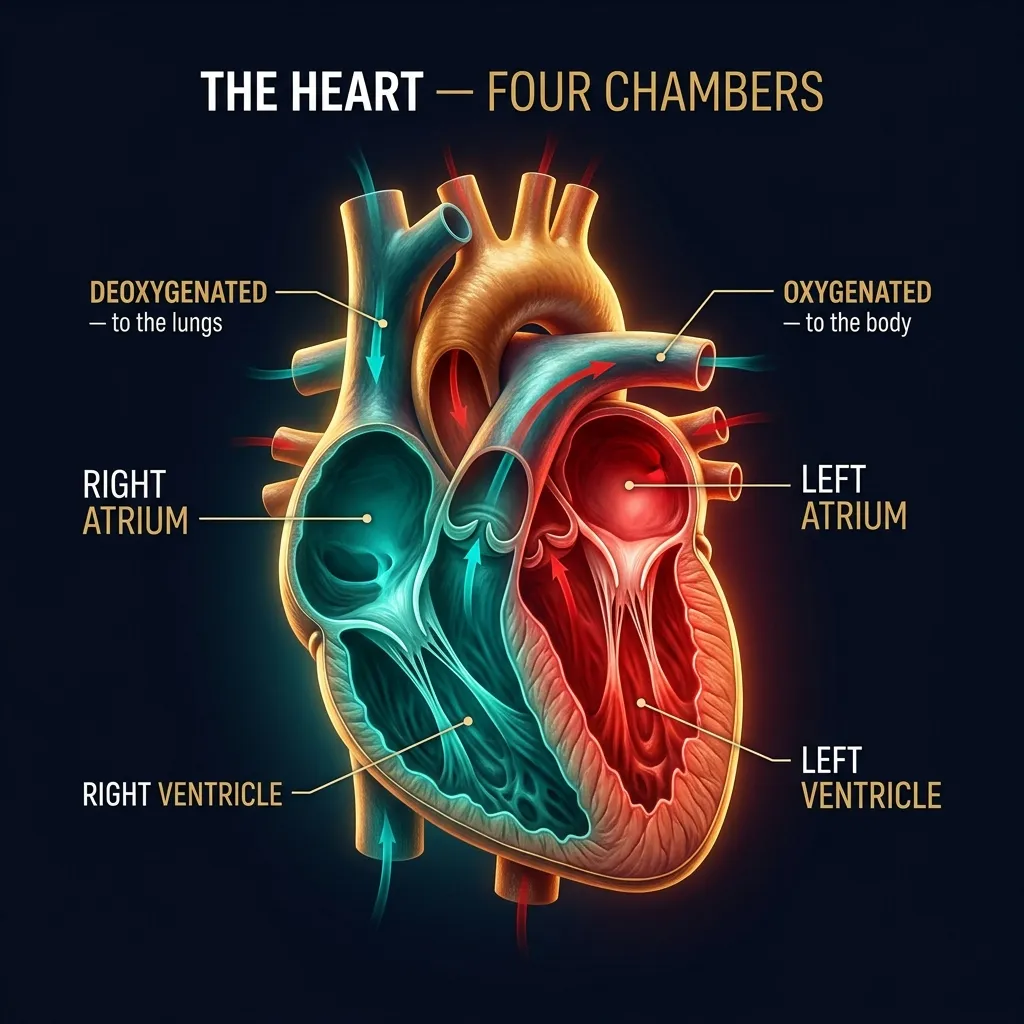
9.1 The Heart
- Intakes de-oxygenated blood through the veins.
- Delivers it to the lungs for oxygenation.
- Then pumps it into the various arteries to be transmitted where it is needed throughout the body for energy.
- Heart Rate = 72 beats per minute
- Stroke Volume = 70 ml
9.2 How the Heart Works — Systole & Diastole
The two-stage contraction of systole
- Stage 1: The right and left atria contract at the same time, pumping blood to the right and left ventricles.
- Stage 2: The ventricles contract together to propel blood out of the heart.
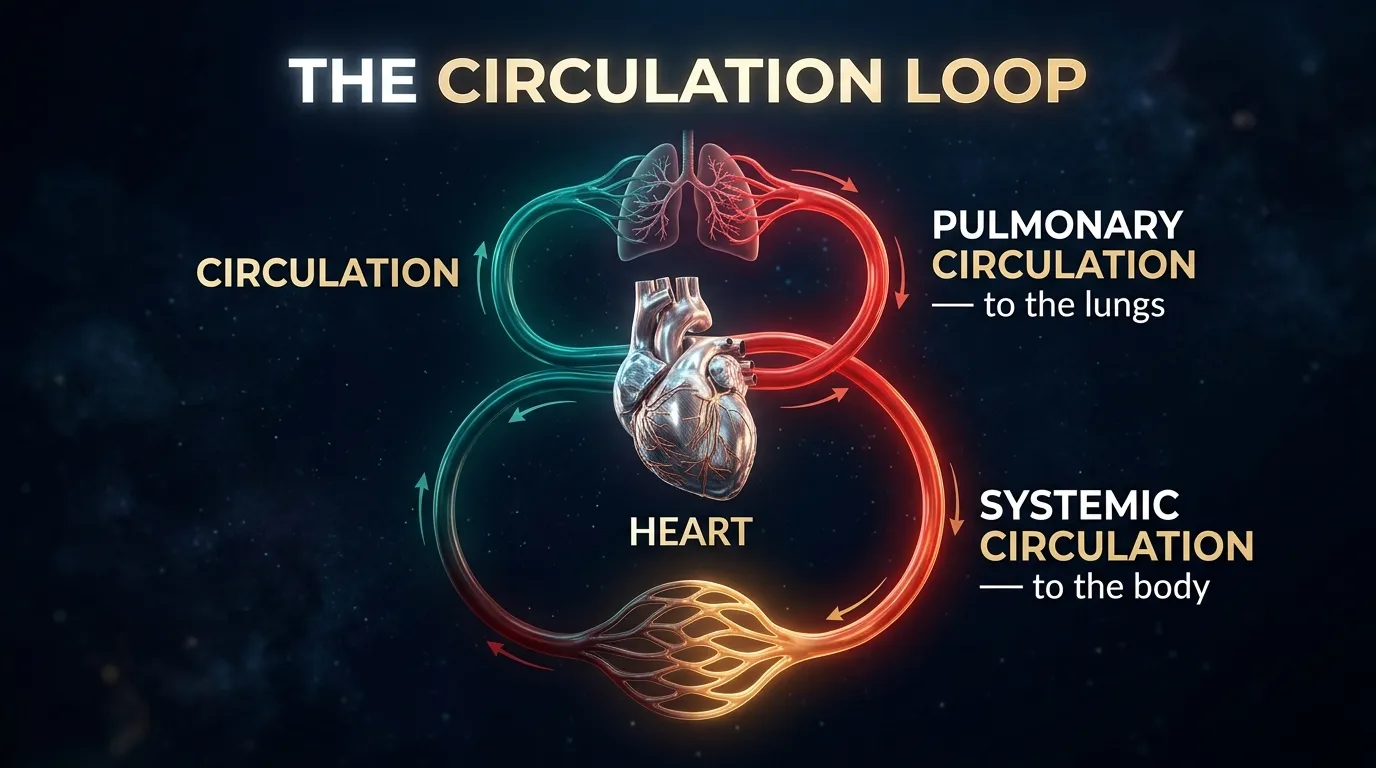
The two-sided traffic plan
Right Side of the Heart
Collects oxygen-poor blood from the body and pumps it to the lungs, where it picks up oxygen and releases carbon dioxide.
Left Side of the Heart
Collects oxygen-rich blood from the lungs and pumps it to the body, so that the cells throughout your body have the oxygen they need to function properly.
9.3 Pulse Rate
- Exercise
- Emotional inputs
- Disease
9.4 Composition & Function of the Blood
- Plasma: Nearly everything that blood carries — including nutrients, hormones and waste — is dissolved in plasma, which is mostly water.
- Formed elements: Cells and parts of cells that also float in plasma.
Formed elements — the three cell types
| Element | What it is / does | Notes |
|---|---|---|
| White Blood Cells (WBCs) | Part of the immune system | White corpuscles produce antibodies to fight bacteria. |
| Platelets | Help form clots | Smallest of the blood cells; assist in the blood-clotting process. |
| Red Blood Cells (RBCs) | Carry oxygen & carbon dioxide | Numerous — make up more than 90 % of the formed elements in the blood. Virtually everything about them helps them carry oxygen more efficiently. |
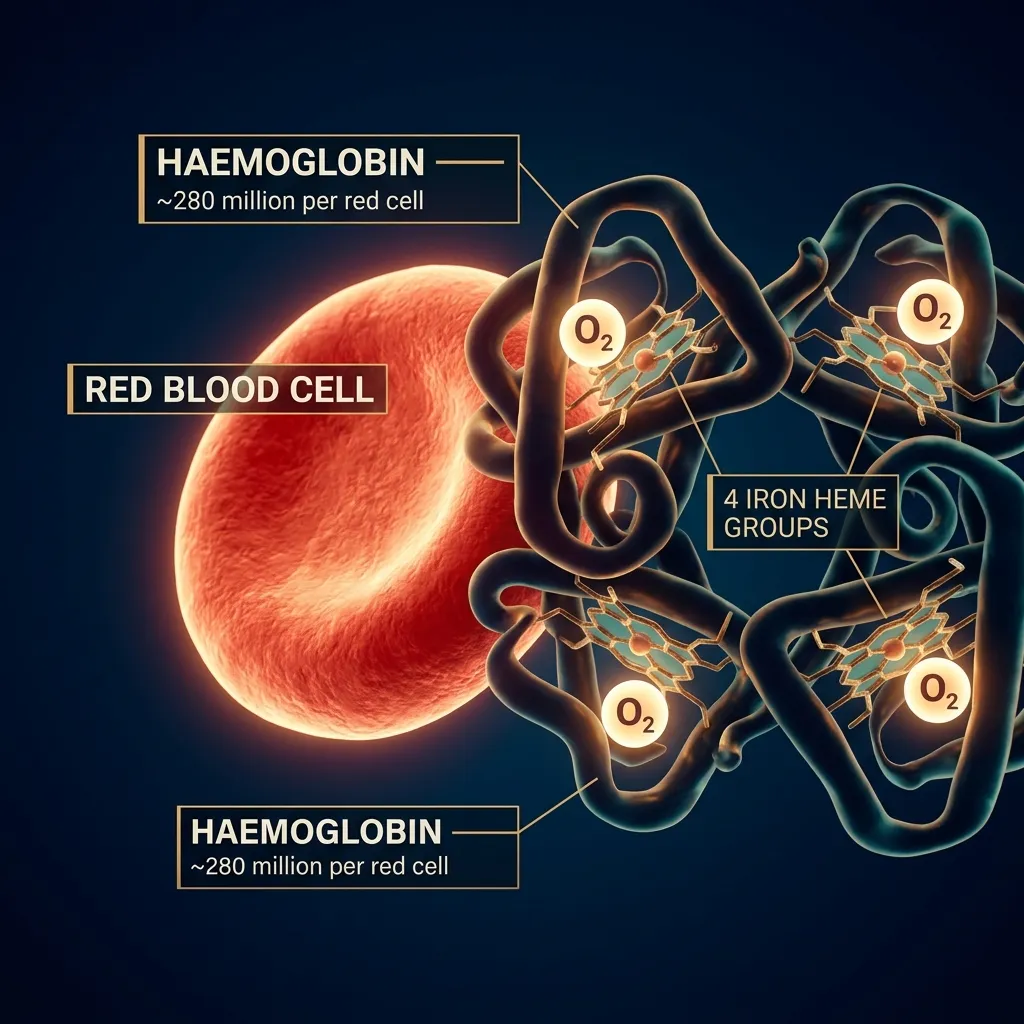
Inside a Red Blood Cell — Haemoglobin (Hb)
- A protein component called GLOBIN.
- FOUR pigments called HEMES.
- The hemes use IRON to bond to oxygen.
If you lose a lot of blood…
- Helps restore normal blood pressure.
- Lets the remaining red blood cells continue to carry oxygen.
- Sometimes is enough to keep the body going until it can produce new blood cells and other blood elements.
The principal functions of the blood — full DGCA list
| # | Function | Mechanism |
|---|---|---|
| 1 | Carry oxygen to, and carbon dioxide from, the various tissues and organs of the body. | Haemoglobin in RBCs |
| 2 | Carry nutrients to tissues and remove waste products from these tissues. | Dissolved in plasma |
| 3 | Carry chemical messengers, such as hormones including ADRENALINE, to regulate the actions and secretions of various organs. | Plasma transport |
| 4 | Transport cells which can attack and destroy invading micro-organisms, enabling the body to resist disease. | WBCs / antibodies |
| 5 | Assist in temperature control of the body. | Vasodilation/constriction |
9.5 Failures or Malfunctions of the Circulatory System
- The main component of the system, the heart and the blood vessels, may develop a fault.
- The blood may become unable to carry enough Oxygen for the need of the organs and tissues of the body.
Angina & Heart Attack
Causes of angina and heart attack
- Most heart attacks are caused by a blood clot that blocks one of the coronary arteries.
- The coronary arteries bring blood and oxygen to the heart. If the blood flow is blocked, the heart starves for oxygen and heart cells die.
- A clot most often forms in a coronary artery that has become narrow because of the build-up of a substance called PLAQUE along the artery walls.
- Sometimes, the plaque cracks and triggers a blood clot to form.
- Occasionally, sudden overwhelming stress can trigger a heart attack.
Risk factors for angina and heart attack — the full DGCA list
| Risk Factor | Why it matters |
|---|---|
| Bad genes (hereditary factors) | Family history is non-modifiable but flagged in flight-medical examinations. |
| Being male | Higher statistical risk than females (until menopause for women). |
| Diabetes | Damages blood-vessel linings and accelerates plaque build-up. |
| Getting older | Arterial elasticity falls; plaque accumulation rises. |
| High blood pressure | Damages arterial walls — central to plaque mechanism. (See §14 in next part.) |
| Smoking | Reduces O₂-carrying capacity 5–8 %, raises BP, accelerates atherosclerosis. (§12 — next part.) |
| Too much fat in your diet | Raises LDL cholesterol — primary feedstock for plaque. |
| Unhealthy cholesterol levels — especially HIGH LDL ("bad") cholesterol and LOW HDL ("good") cholesterol | Direct correlation with coronary artery narrowing. |
| Lack of exercise | Increases all of the above; lowers cardiac reserve. |
| Stress | Sustained adrenaline release damages the heart and vessels. |
| Obesity | Independent risk factor + driver of diabetes, BP, lipids. |
| Alcohol | Raises BP, damages heart muscle, raises triglycerides. (§13 — next part.) |
Insufficiency of Oxygen — the second failure mode
9.6 Self-Check & Memory Aids — Part 2
Numbers you must know cold
DGCA-style probe questions
- State the three main divisions of the Nervous System. Which one controls the heart, lungs and gut without conscious effort?
- Trace the path of air from the nose to the alveoli — name every structure.
- What is the difference between External and Internal Respiration?
- What is the normal adult respiration rate, and what is the primary regulator of breathing?
- Define cardiac output. Compute it for HR 72 bpm, SV 70 ml.
- What is the difference between Systole and Diastole? Describe the two-stage contraction.
- State the two main components of blood and the three types of formed elements.
- How many haemoglobin molecules are inside each RBC? How many hemes per Hb?
- List the five principal functions of blood.
- What are the two principal failure modes of the circulatory system? Name the medical term for a heart attack.
- List at least eight risk factors for angina/heart attack relevant to a DGCA medical.
- What is plaque, and why does it matter to coronary arteries?
§ 15Blood Pressure
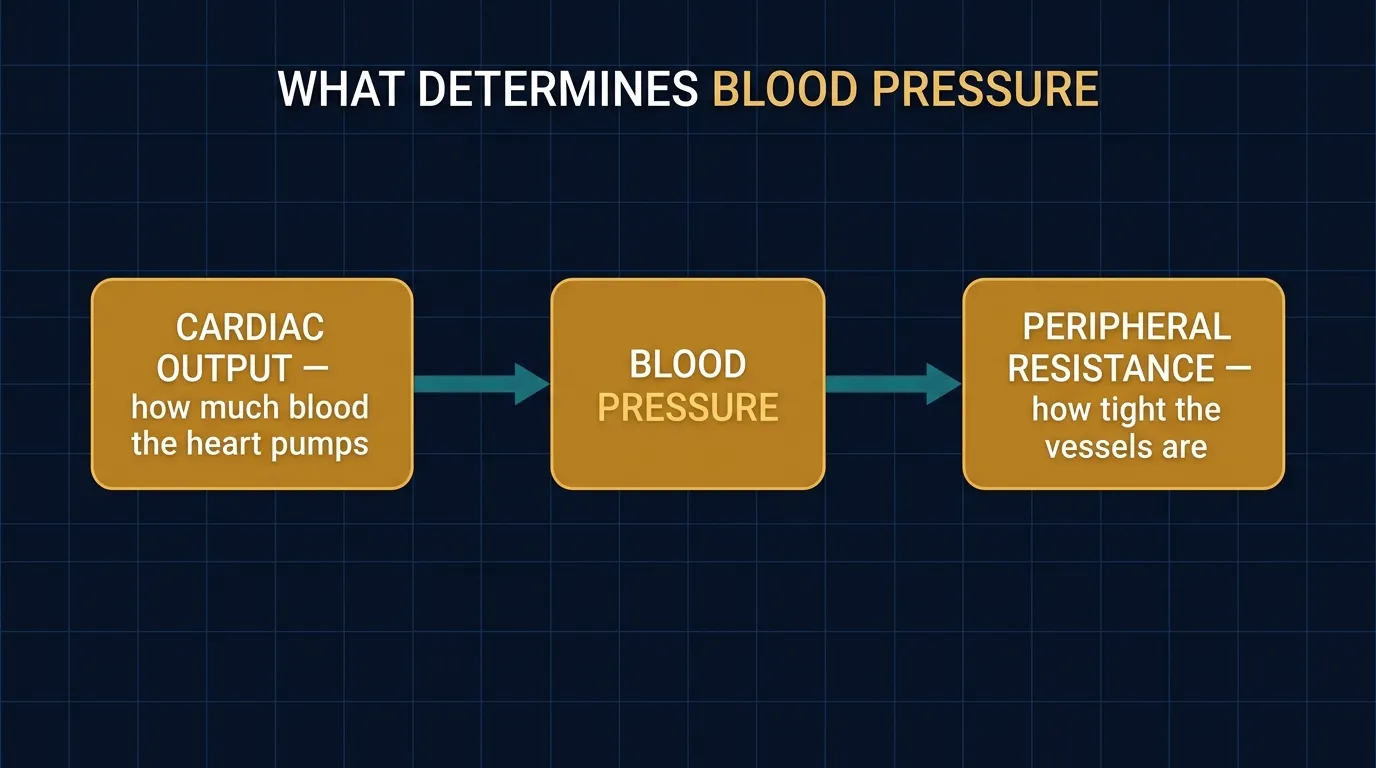
15.1 What Determines Blood Pressure
- The cardiac output,
- The resistance of the capillaries (peripheral resistance),
- The elasticity of the arterial walls, and
- The blood volume and viscosity.
15.2 Definitions — pressure on the arteries
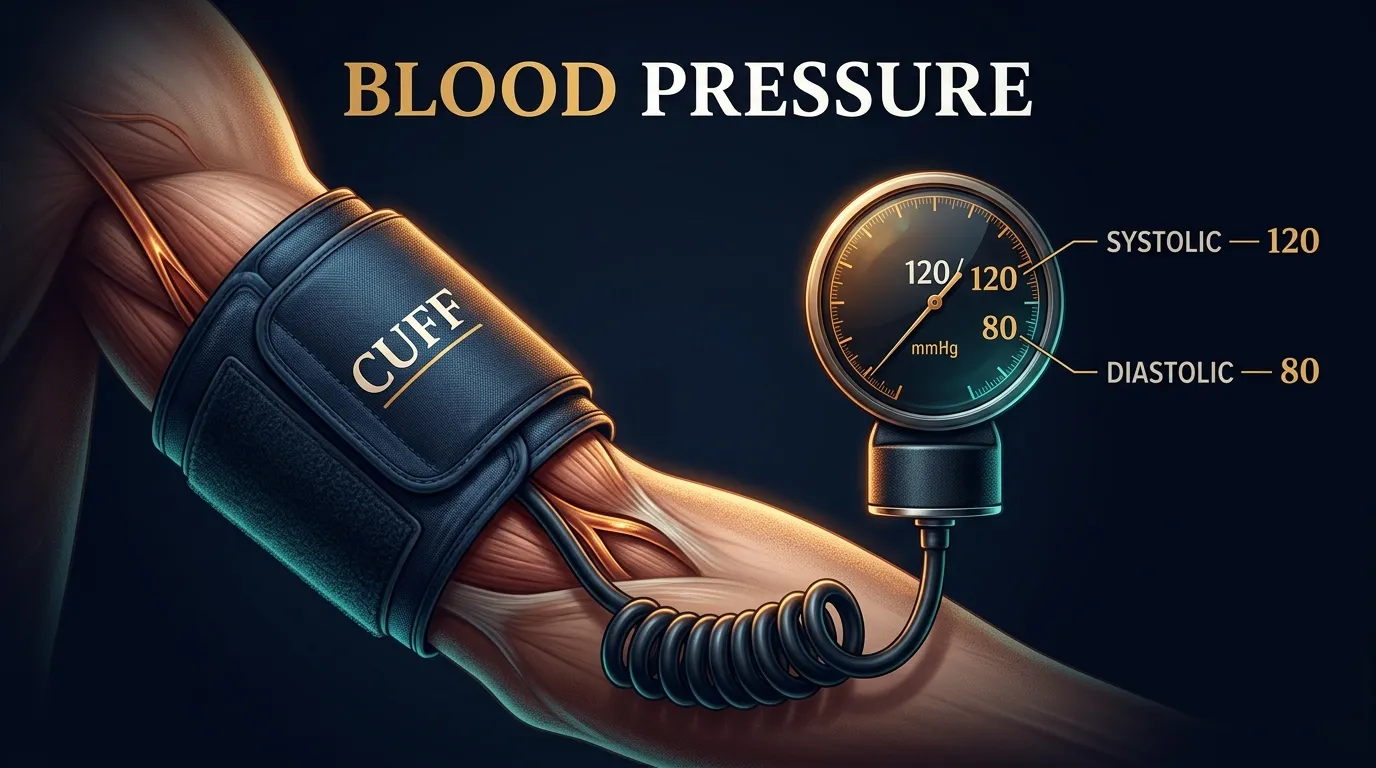
- Blood pressure is the pressure exerted by blood on the walls of the main arteries.
- The blood-pressure which is measured during flight medical checks is the pressure in the artery of the upper arm (representing the pressure at heart level).
- The permanent pressure against the arterial wall is called DIASTOLIC pressure.
- The increased pressure occurring with each beat of the heart is called the SYSTOLIC pressure.
SYSTOLIC PRESSURE
The increased pressure occurring with each beat of the heart.
This is the higher number in the BP reading — generated during ventricular contraction (systole, §9.2). It is the pressure peak as blood is ejected from the left ventricle into the aorta.
DIASTOLIC PRESSURE
The permanent pressure against the arterial wall.
This is the lower number — the resting pressure between heartbeats, when the heart muscle relaxes (diastole) and refills with blood. It represents the baseline strain on the arteries.
15.3 120/80 — the Normal Benchmark
The notation reads "120 over 80" — meaning systolic 120 mmHg, diastolic 80 mmHg. This is the figure that DGCA aero-medical examiners measure against at every Class-1 and Class-2 medical.
15.4 High Blood Pressure (Hypertension) — Causes & Pilot Implications
This single sentence is the most important takeaway from §15. The DGCA aero-medical examiner will defer or restrict a pilot's medical certificate the moment hypertension is detected and not adequately controlled.
Causes of Blood Pressure (Hypertension) — full DGCA list
| # | Cause | Pilot-Specific Note |
|---|---|---|
| 1 | Stress | Sustained ANS / adrenaline activation. Pilots are exposed to chronic occupational stress — duty rosters, weather, currency requirements. |
| 2 | Smoking | Direct link to §13. Nicotine constricts vessels; CO damages endothelium. |
| 3 | Poor diet (excess fat or salt) | Salt → fluid retention → ↑ blood volume. Fat → plaque → ↑ peripheral resistance. |
| 4 | Obesity | Greater body mass requires more cardiac output; metabolic syndrome adds insulin resistance. |
| 5 | Lack of exercise | Deconditioned heart, stiffer vessels, higher resting BP. |
| 6 | Age | Arterial elasticity falls with age (recall §9.5 risk-factor list). Non-modifiable. |
| 7 | Narrowing of the arteries | Atherosclerosis — plaque-narrowed vessels create higher peripheral resistance. Same plaque that causes angina/MI. |
- §9.1 / 9.2: cardiac output = HR × stroke volume — directly drives systolic pressure.
- §9.5: hypertension is one of the 12 risk factors for angina / heart attack.
- §13.3: smoking causes circulatory problems and accelerates plaque.
- §14.5: alcohol contributes to liver/heart/brain damage.
BModule B — Numbers to Know
| Parameter | Exact Value | Where |
|---|---|---|
| Normal adult respiration rate | 14 – 18 breaths/min | §8.4 |
| Primary regulator of breathing rate | Blood CO₂ level | §8.4 |
| Resting pulse (healthy) | 60 – 80 bpm | §9.3 |
| Reference heart rate (for CO calc) | 72 bpm | §9.1 |
| Stroke volume (reference) | 70 ml | §9.1 |
| Cardiac output at rest | ≈ 5 L/min | §9.1 |
| RBCs as % of formed elements | > 90 % | §9.4 |
| Haemoglobin molecules per RBC | ≈ 280 million | §9.4 |
| Hemes per Hb molecule | 4 | §9.4 |
| Metal that bonds O₂ to heme | Iron | §9.4 |
| Protein component of Hb | Globin | §9.4 |
| Heart attack medical term | Myocardial Infarction | §9.5 |
| "Bad" cholesterol | LDL (high = bad) | §9.5 |
| "Good" cholesterol | HDL (high = good) | §9.5 |
Reinforce Chapter 5: Breath & Blood
Test your knowledge and practice actual exam questions for Human Performance & Limitations.