The Eye
by Ghost Aviator
Human Performance & Limitations · Module E — The SensesThe Eye
Chapter 11 — The pilot's primary instrument: how the eye focuses light like a camera, the retina's rods and cones, and the sharpness (visual acuity) the examiner tests.
§ 29THE EYE
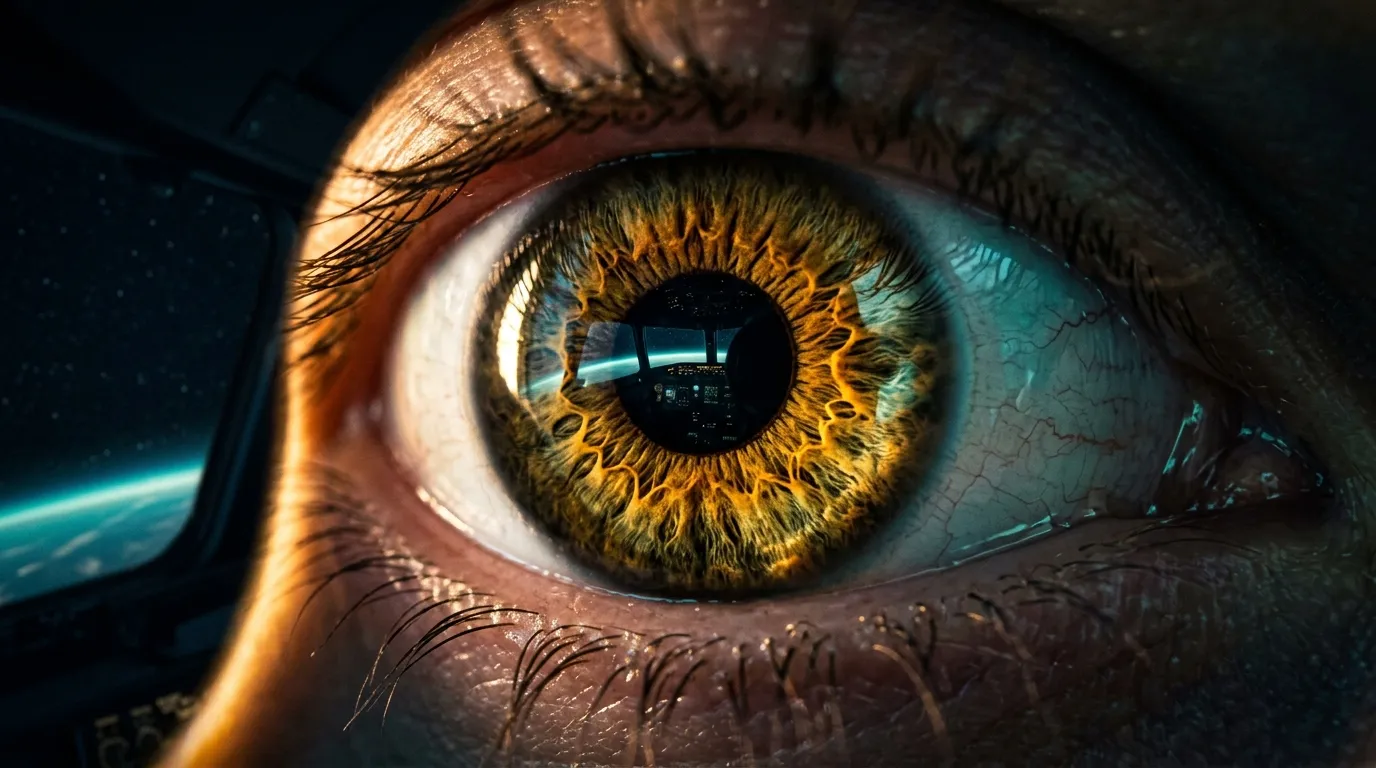
Its basic structure is similar to a camera with an aperture (Iris), a lens (lens) and a light sensitive screen (Retina).
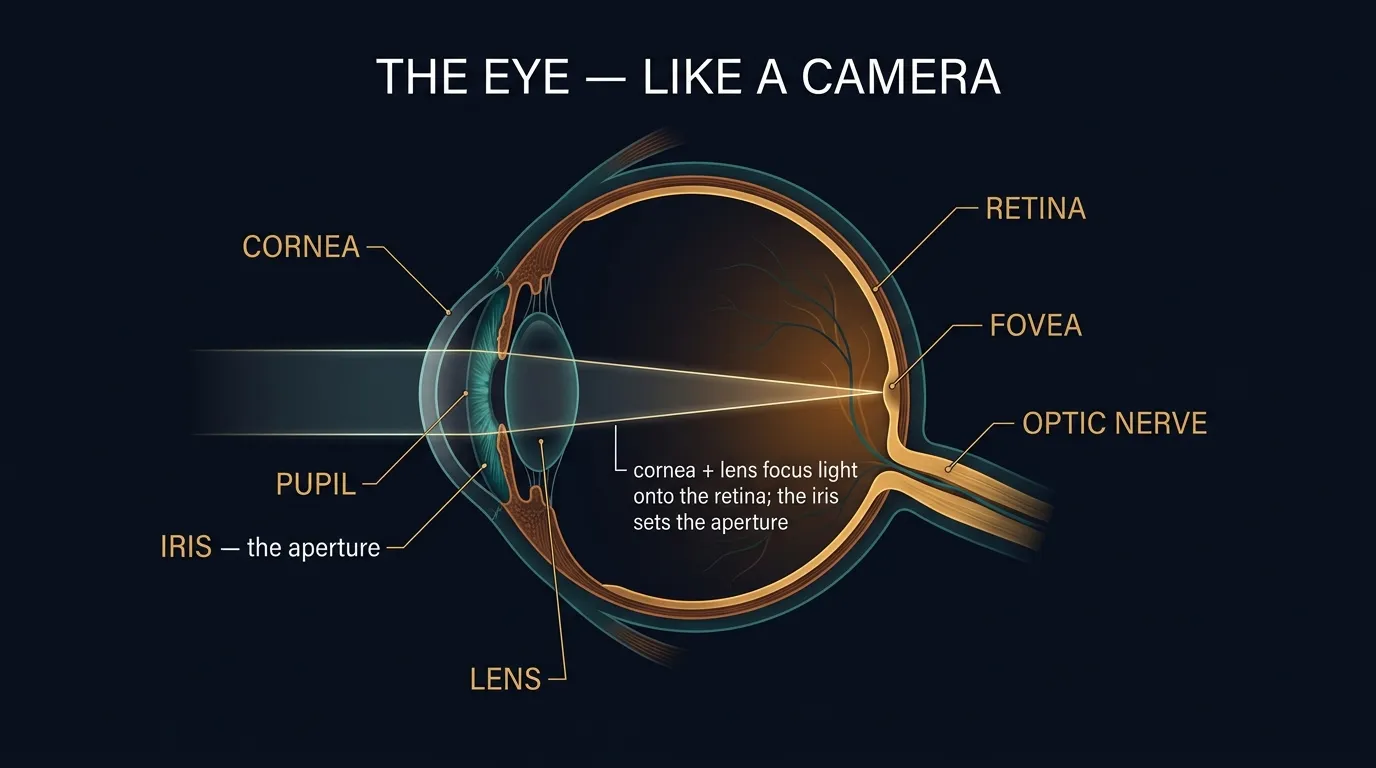
29.1 The Cornea, Iris & Pupil, Lens
29.2 The Retina — Rods, Cones, and the Fovea
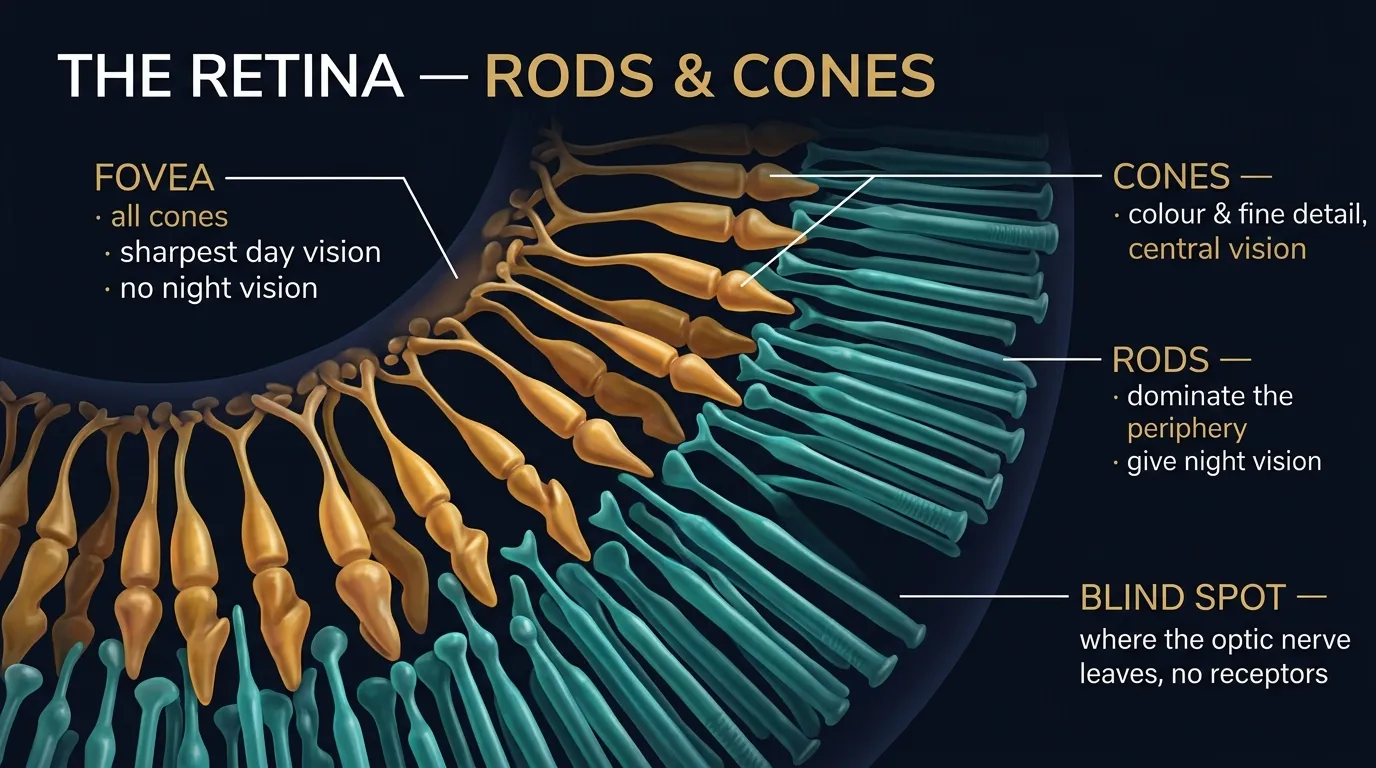
- About 100 million rods
- About 6 million cones
The Rods
The Rods can only detect black and white but are much more sensitive at lower light levels.
Rods are responsible for our PERIPHERAL VISION.
- Located in the peripheral retina
- ~ 100 million in number
- Sensitive in dim light → night vision
- No colour information — monochrome
- Slow dark-adaptation (~ 30 min)
The Cones & The Fovea
The central part of the retina is called the FOVEA. The fovea centralis is a small, central pit composed of closely packed cones in the eye.
This is the area with the best day vision and NO night vision at all.
Any object that needs to be examined in detail is automatically brought to focus on the fovea. This is called "Central Vision". The rest of the retina fulfils the function of attracting our attention to movement and change.
29.3 Eye Movement & Binocular Vision
A further advantage of binocular vision is that the blind spot of one eye is covered by the other eye. Depth perception when objects are close is achieved through binocular vision.
29.4 Visual Acuity
29.5 Accommodation & Reading Glasses
§ 30Limitations of Acuity — Sharpness of Central Vision
| # | Factor | Pilot Note |
|---|---|---|
| 1 | Angular distance from the fovea | Acuity is maximum on the fovea, drops sharply off-axis. |
| 2 | Physical imperfections within the visual system | Refractive errors, cataract, retinal disease. |
| 3 | Age | Presbyopia, lens stiffening, declining contrast sensitivity. |
| 4 | Hypoxia | Retina has very high O₂ demand — first system to suffer (§10). |
| 5 | Smoking | CO + nicotine reduce retinal perfusion (§13). |
| 6 | Alcohol | Histotoxic mechanism degrades cells including retinal photoreceptors (§14). |
| 7 | Amount of light available | Photopic / mesopic / scotopic — acuity scales with luminance. |
| 8 | Size and contours of an object | Large object with clear contour = easier; small or amorphous = harder. |
| 9 | Distance of the object from the viewer | Resolvable detail falls off with distance. |
| 10 | Contrast of an object with its surrounding | Low contrast = hard to see (e.g. white aircraft in cloud). |
| 11 | Relative motion of a moving object | A constant-bearing target on collision course is hardest to detect. |
| 12 | Drugs or medication | Many OTC and prescription meds cause blurred vision or accommodation problems. |
Reinforce Chapter 11: The Eye
Test your knowledge and practice actual exam questions for Human Performance & Limitations.