Stress, Arousal & Fatigue
by Ghost Aviator
Human Performance & Limitations · Module I — Rhythms & ResilienceStress, Fatigue & Arousal
Chapter 23 — The well-being of operational personnel: arousal and performance, the sources and effects of stress, environmental tolerances, managing stress, life-event scoring, and the danger of acute and chronic fatigue.

22. Stress Tolerance, Fatigue & Arousal — Well-Being of Operational Personnel
Three of the many factors which may influence the well-being of operational personnel are:
- Stress and fatigue
- Body rhythm disturbance
- Sleep deprivation or disturbance
Other factors affecting physiological or psychological well-being include: temperature, noise, humidity, light, vibration, workstation design and seat comfort.
22.1 Stress, Arousal and Performance
The different stress levels generated within individuals by a particular stressor will differ. A moderate level of stress may improve performance. Stress promotes an increase in physical strength rather than promoting mental performance.
- The response of a person to the event or circumstances to which he is exposed is known as arousal.
- Arousal is a measure of a person's readiness to respond effectively to a given stress factor.
- Personality, character, training and experience will influence levels of arousal in a given individual.
22.2 The Effects of Stress
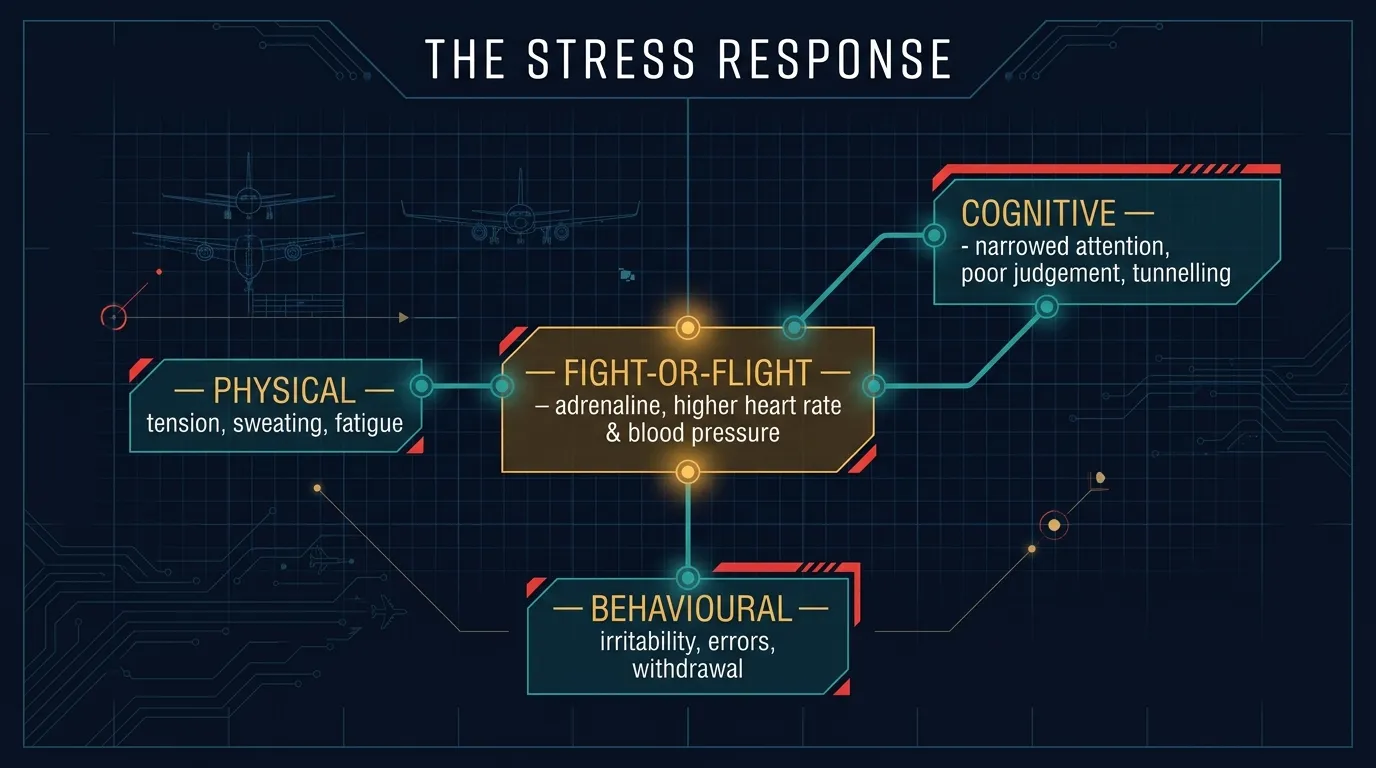
In an active, outward-going, highly trained person, too little stimulation or stress arousal will lead to the onset of boredom and even drowsiness. An introspective, under-confident person, if highly aroused, might be unable to function at all — even in circumstances that he is competent to deal with.
22.3 Stress Factors (Stressors)
Stress factors are cumulative. Stress occurs under various conditions:
- Pilot must revise his plan of action and does not immediately have a solution
- Inexperienced pilots when situational demands exceed their individual capabilities
- Pilot is convinced he will not be able to find a solution to the problem
- Physiological factors — hunger, thirst, pain, lack of sleep, fatigue
22.4 Environmental Tolerances
Temperature, pressure, humidity, noise, time of day, light and darkness can all be reflected in performance and also in well-being. Heights, enclosed spaces, and a boring or stressful working environment can also influence performance.
22.5 Managing Stress
Recognising stress, accepting it and developing a coping strategy is essential for stress management. Training and experience help to ward off stress and high levels of arousal. Successful completion of a stressful task will reduce the amount of stress experienced when a similar situation arises in the future.
22.6 Life Stresses — Psychological Scoring
Pilots suffering from life stress should be aware that this can affect their concentration and performance when at the controls of an aircraft. The descending order in which the factors affect a person:
Death of spouse/child → Divorce → Marital separation → Death of a close family member → Injury / illness → Marriage → Loss of job → Retirement → Pregnancy → Sexual problems → Birth → Change of financial status → Siblings leaving home → Change of eating habits → Change of residence → Loan/debt/mortgage → Vacations → Minor violations of law.
| Life Event | Score |
|---|---|
| Death of a spouse or partner | 100 |
| Divorce | 73 |
| Marital separation | 65 |
| Death of a close family member | 63 |
| Personal injury or illness | 53 |
| Loss of job | 47 |
| Retirement | 45 |
| Pregnancy | 40 |
| Sexual problems | 40 |
| Son or daughter leaving home | 29 |
| Change of residence | 20 |
| Bank loan or credit card debt | 17 |
| Vacation | 13 |
| Minor law violation | 11 |
| Cumulative Score | Interpretation |
|---|---|
| < 60 | Free of life stress |
| 60 – 80 | Normal life stress |
| 80 – 100 | High life stress |
| > 100 | Under serious life stress |
Note: such schemes need to be treated with caution because of wide individual variability.
22.7 Indications of Stress
Stress causes: mental blocks, confusion, channelized attention, resignation, frustration, rage, deterioration in motor coordination, high pitch voice and fast speaking.
22.8 Tiredness and Fatigue
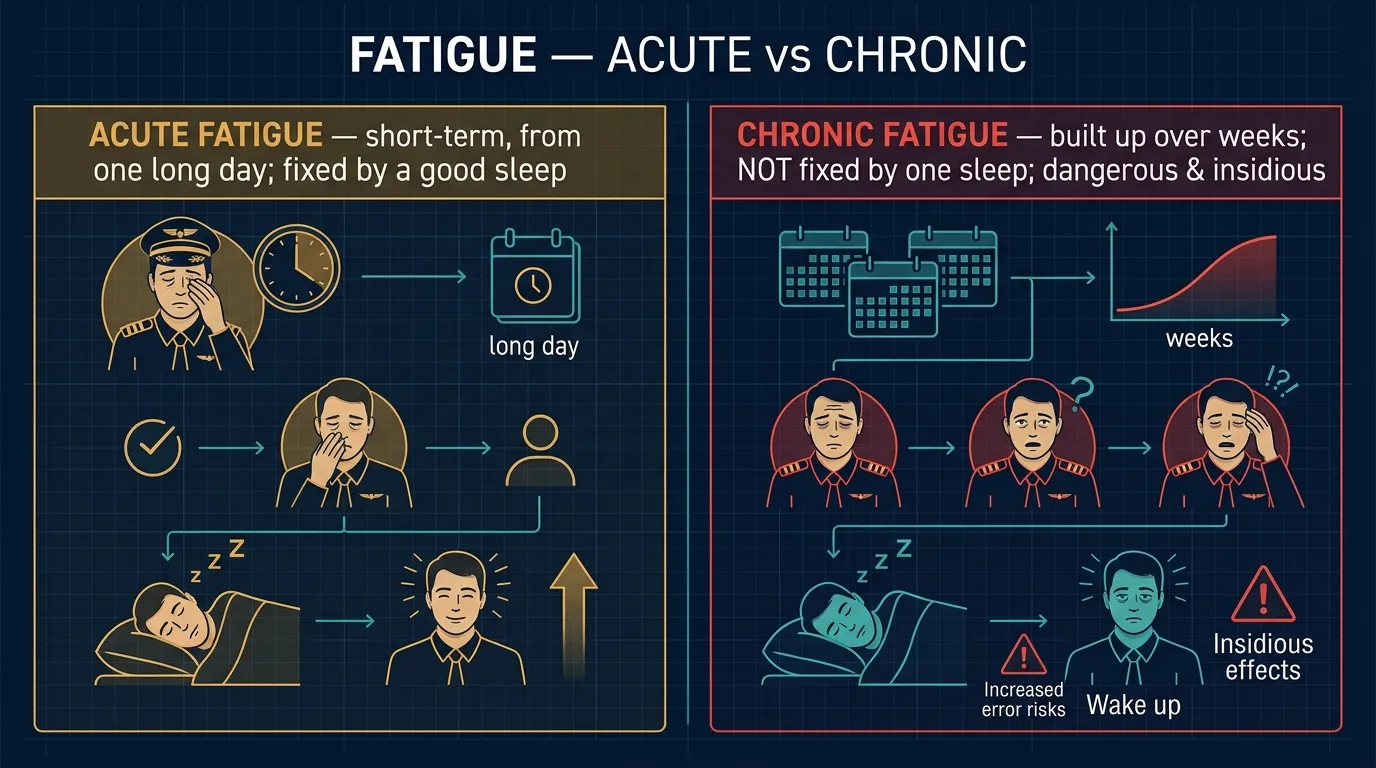
Tiredness and fatigue, though related concepts, differ in their long-term physical effect on the body. To deal with normal tiredness it is sufficient to ensure that periods of activity and periods of restful sleep comply with the normal pattern for a person's age and physical condition.
Ordinary tiredness results from normal physical and/or mental exertion over a normal waking period. If a person is tired, a good night's sleep is the only requirement for that person to be fit the following morning.
- The effects of fatigue can be insidious.
- They can creep up slowly on the sufferer.
- The sufferer may be unwilling to recognize or admit that he is suffering from fatigue.
- Tiredness and fatigue can kill, but fatigue is harder to recognize.
Causes of Fatigue
- Long-term ill health, either physical or mental
- Regular sleep deprivation, for whatever reason
- High levels of stress and/or anxiety over a prolonged period
- A disturbed body cycle (e.g. jet lag, changing work shift patterns)
- Long-term difficulties in personal or work-based relationships
- A stressful living and/or working environment (e.g. high levels of noise, or unreasonable physical or mental demands)
Symptoms of Fatigue
- Memory lapses
- Frequent mistakes in speech and actions
- Rapid changes of mood
- Diminished awareness
- Tiredness
- Lack of coordination
Minimum Self-Help Program
- Accept the fact that you are fatigued
- Eat a balanced diet and healthy food
- Try to take the stress out of your life
- Make sure that you get regular, undisturbed sleep
- Avoid alcohol and caffeine
- Always consult a doctor
22.9 Arousal
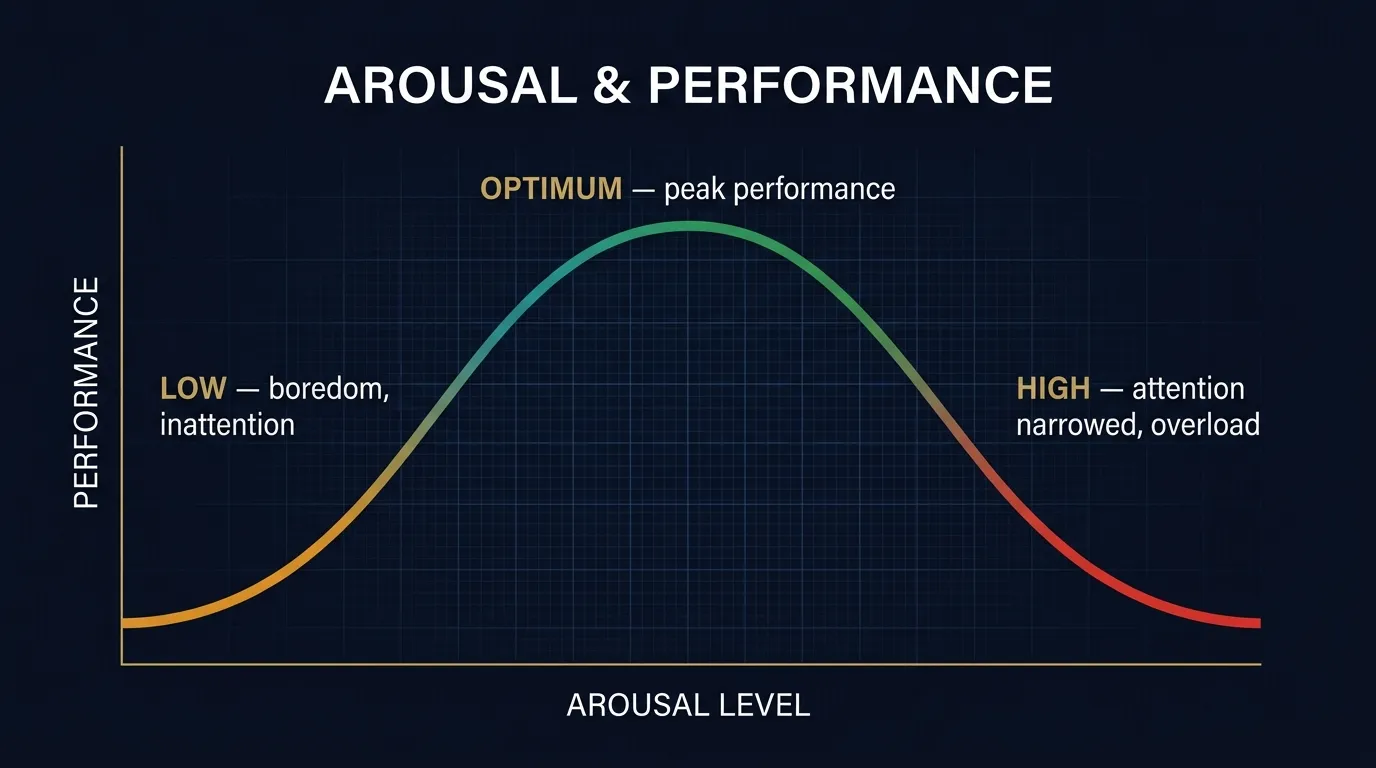
Arousal is a major aspect of many learning theories and is closely related to other concepts such as anxiety, attention, agitation, stress and motivation.
| Arousal Level | Effect |
|---|---|
| Low Arousal | In cruise, attention can wander; information missed or misinterpreted |
| Optimum Arousal | Central Decision Maker at its most efficient. Lower for difficult/cognitive tasks; higher for tasks requiring endurance and persistence |
| High Arousal (Overload) | Real danger of attention becoming narrowed |
Reinforce Chapter 23: Stress, Arousal & Fatigue
Test your knowledge and practice actual exam questions for Human Performance & Limitations.