Information Processing
by Ghost Aviator
Human Performance & Limitations · Module H — The Mind AloftInformation Processing
Chapter 19 — How the pilot's mind takes in the world and acts on it: what aviation psychology is, why human error is inevitable, mental workload, and the information-processing model from sensory input to response.

1. Introduction to Aviation Psychology
Aviation Psychology is a specialty in applied psychology that focuses on understanding human behaviour, emotions and mental states as they relate to the operation and control of aviation systems and their influence on the safety and efficiency of flight.
The aim of aviation psychology is to understand and to predict the behaviour of individuals in an aviation environment. Its study is aimed at improving safety, efficiency and comfort.
Practitioners of aviation psychology bring the tools and techniques of psychology to bear in order to describe, predict, understand and influence the aviation community to achieve those aims.
2. Human Error & Human Reliability
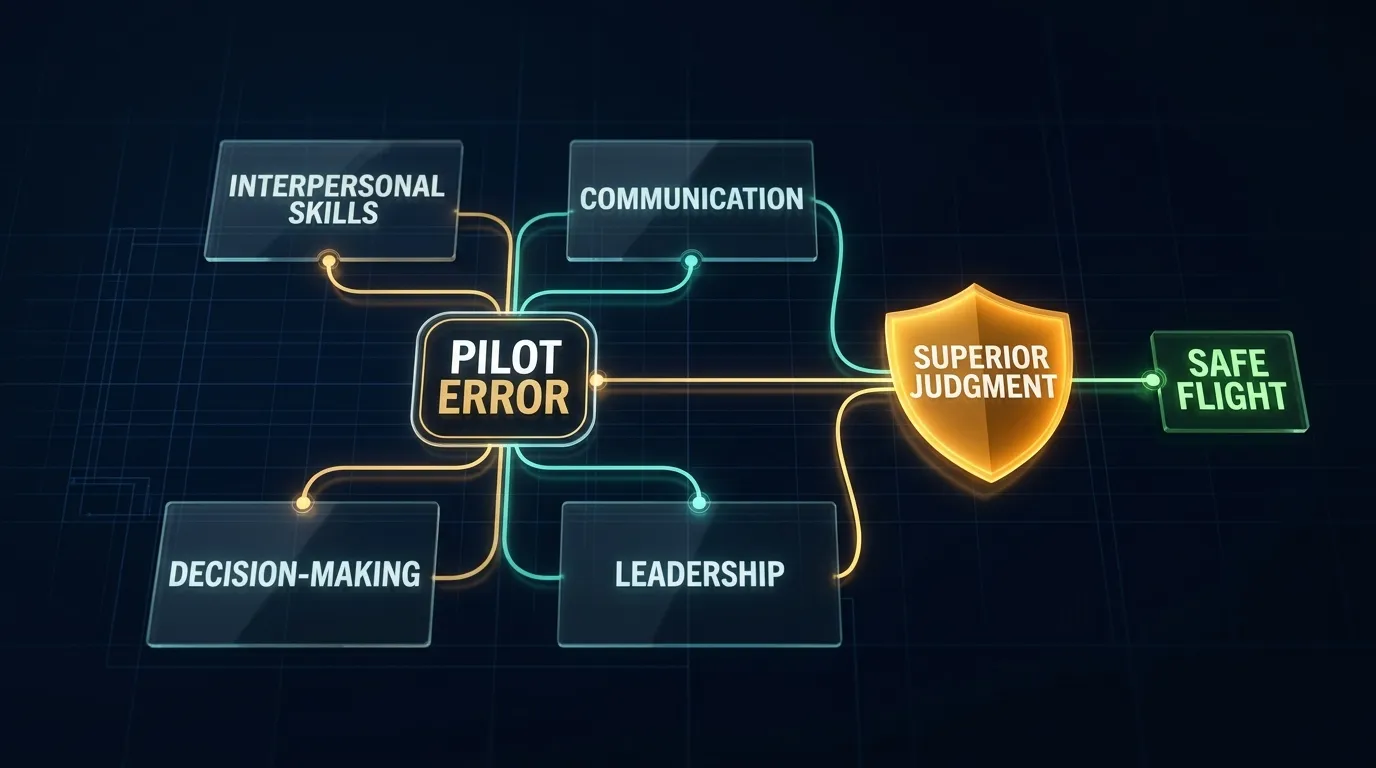
It has long been accepted that human errors are inevitable. The majority of pilot-related errors are considered to be failures of:
- Interpersonal skills
- Communications
- Decision-making
- Leadership
This does not mean that the frequency of error cannot be reduced, or that the effects cannot be avoided or mitigated.
3. Workload
Workload = the amount of mental effort needed (and expended) to process information. Here we discuss cognitive (mental) workload, as opposed to physical workload. Workload is linked to almost all other areas within cognition and performance, particularly attention, vigilance, fatigue, decision-making and multi-tasking.
3.1 Four General Task Factors Affecting Workload
- 'Difficulty' of the task
- Number of tasks running in parallel (concurrently)
- Number of tasks in series (switching from task to task)
- The time available for the task (speed of task)
Indirect factors also play a role: duration of task, fatigue and level of arousal.
3.2 Symptoms of Increasing Workload
- Attention and task focusing
- Task shedding and re-prioritization
- Implications for Situation Awareness
- Increased use of decision short-cuts and less scrutiny or review
- Increased fatigue and chance of error
The area that deals with all such activity is called the working memory ('Information Processing').
4. Information Processing — A Functional Model
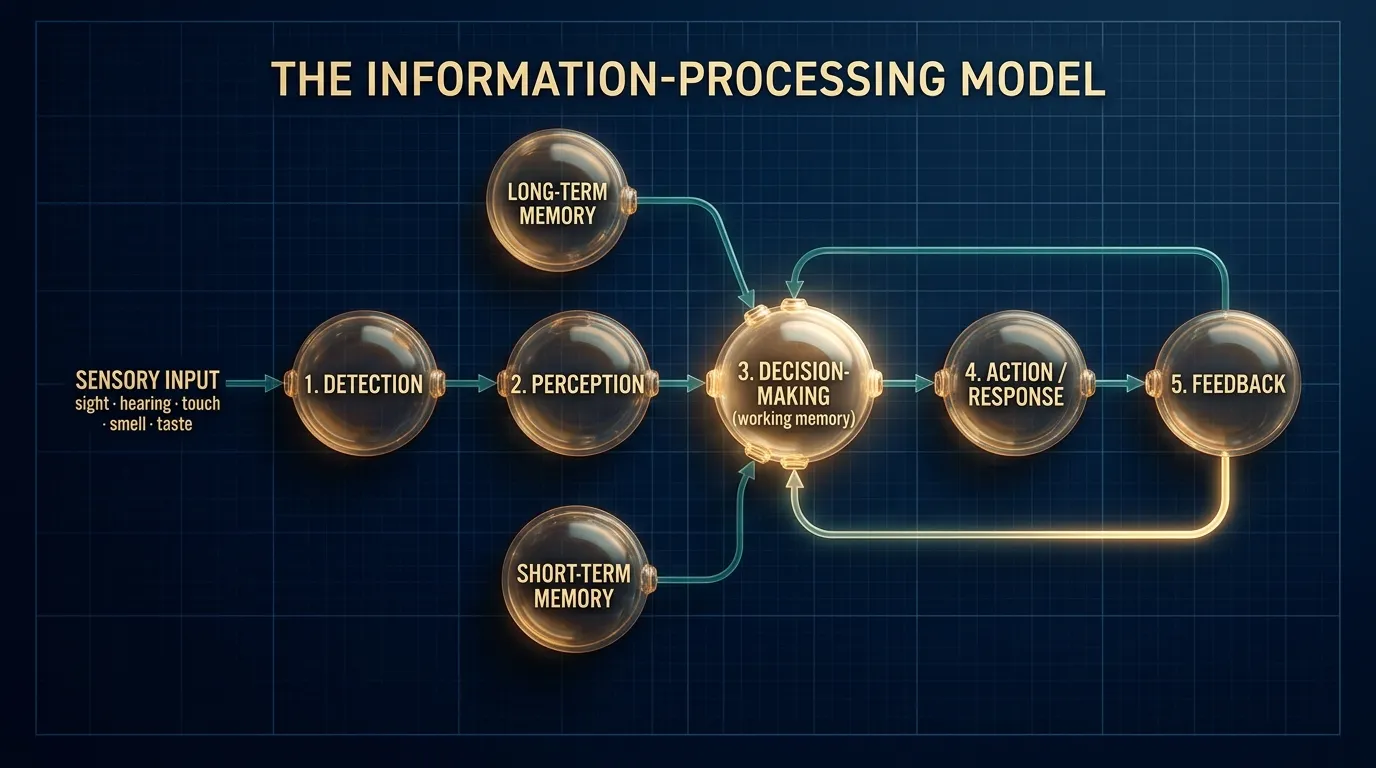
We receive information from the world around us through our senses: sight, hearing, touch, smell and taste. The "Gestalt laws" formulate basic principles governing how objects are mentally organised and perceived.
4.1 The Five Stages of Reasoning
- Detection
- Perception
- Decision Making
- Action (responses are selected and executed)
- Feedback
4.2 The Brain — Central Decision Maker & Response Selection
Once information has been perceived a decision must be made as to the response. Information is continuously entered into and withdrawn from both long-term and short-term memories to assist the decision process. The decision involves input, processing, actions and feedback. The information comes from many sources and requires conscious processing in working memory. A problem at any stage of information processing could affect the outcome.
To carry out multi-tasks we must learn skills through Motor Programmes.
4.3 Stimuli
The senses provide stimuli to our brain which has the ability to retain them for a short time, from the time they arrive. We may not have the processing capacity to deal with them all.
Reinforce Chapter 19: Information Processing
Test your knowledge and practice actual exam questions for Human Performance & Limitations.