The Human Factor
by Ghost Aviator
Human Performance & Limitations · Module 0 — The Threshold The Human Factor
Chapter 1 — Every other subject teaches you the machine. This one teaches you the pilot flying it: the one component that cannot be re-certified, swapped out, or rebooted at altitude.
1What Human Performance & Limitations Is
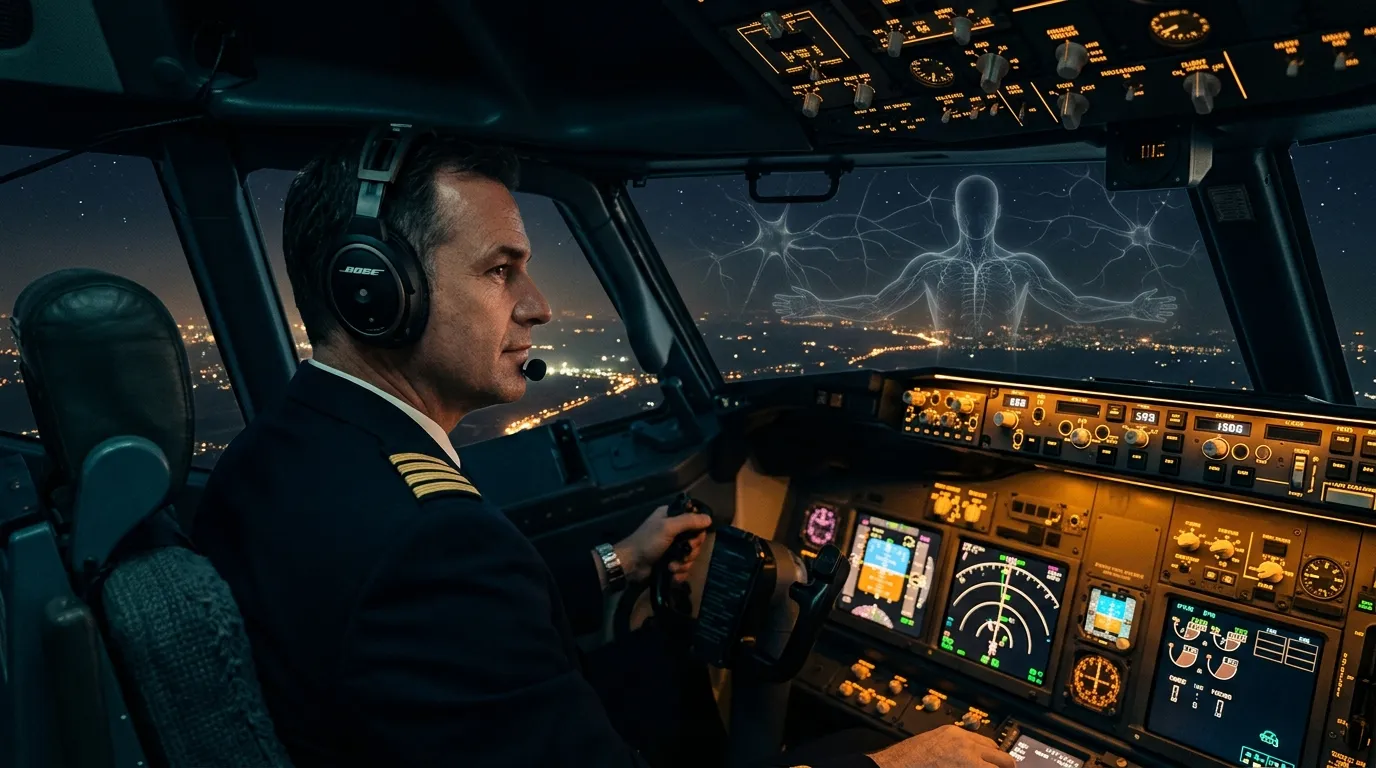
Human Performance & Limitations (HPL) is the applied study of human behaviour, physiology and psychology as they relate to the operation of an aircraft, and of how those human factors influence the safety and efficiency of flight. It takes the tools of medicine and psychology into the cockpit for one reason only: to understand the pilot well enough to keep the pilot alive.
The aim of the subject is to understand and predict the behaviour of a person in the aviation environment, so that we can improve safety, efficiency and comfort. A practitioner works through four actions — fix them in memory now, because the whole subject is built on them.
2Why the Human Fails
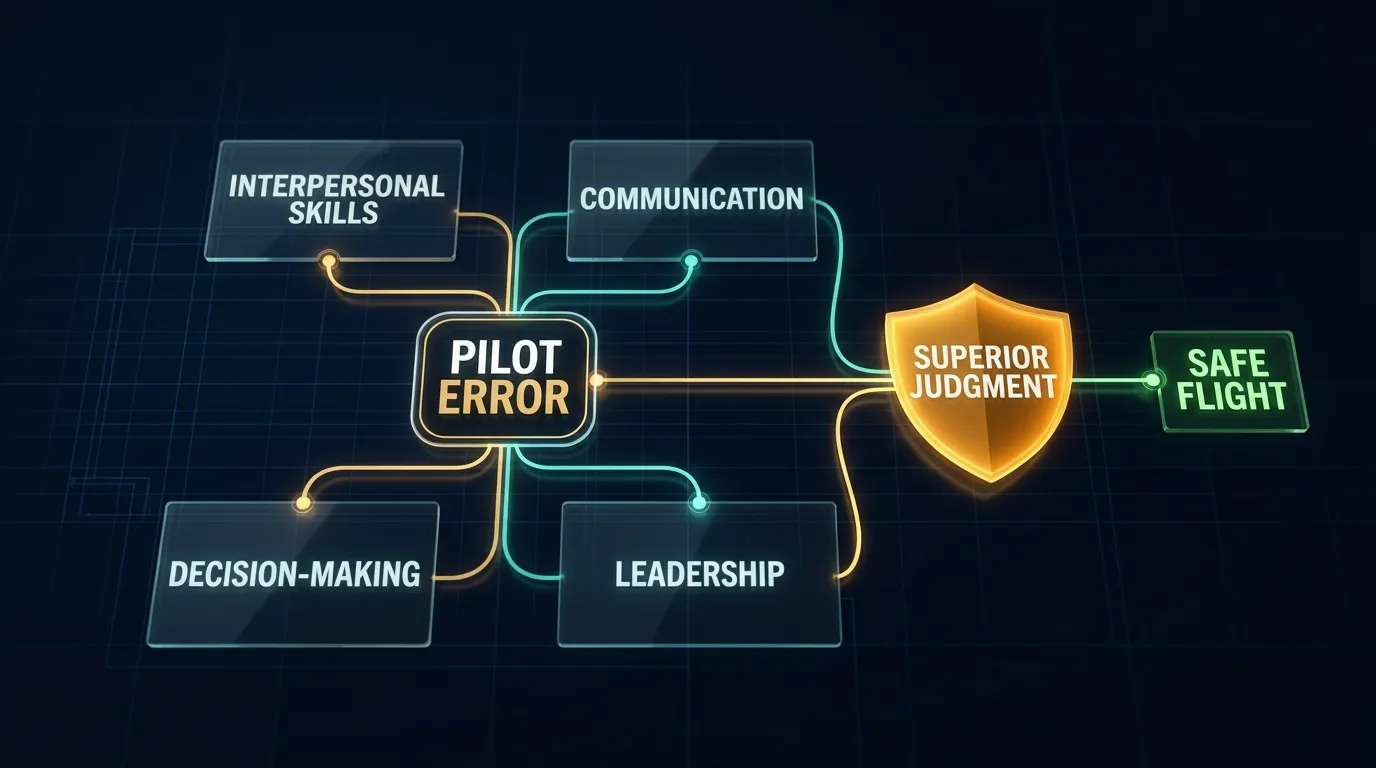
Start from an uncomfortable truth the examiner expects you to state plainly: human error is inevitable. It is not the mark of a bad pilot; it is a property of being human. The professional's task is therefore not to never err — that is impossible — but to reduce the frequency of error, and to trap and mitigate the errors that do occur before they reach the ground.
Most pilot-related errors are not failures of stick-and-rudder skill. They are failures in four areas: interpersonal skills, communication, decision-making, and leadership.
3The SHELL Model — Where the Pilot Meets the System
No pilot flies in isolation. You sit at the centre of a system, connected to the machine, the paperwork, the world outside, and the other people in the loop. The SHELL model is the standard way of picturing those connections. Its central insight: accidents rarely happen inside a component — they happen at the joints between them, where the human interface is imperfect.

| Interface | What it is | Where it bites in the cockpit |
|---|---|---|
| Liveware – Software | The pilot and the non-physical system: procedures, checklists, SOPs, symbology, charts. | A confusing checklist, an ambiguous chart symbol, a badly worded procedure. |
| Liveware – Hardware | The pilot and the machine: controls, displays, seats, switches. | A switch shaped like its neighbour; a display read wrong in a hurry. |
| Liveware – Environment | The pilot and the world, inside and out: weather, cabin altitude, noise, heat, plus the organisation's rules and pressures. | Glare, hypoxia, time pressure from the schedule. |
| Liveware – Liveware | The pilot and other people: the other crew member, ATC, cabin crew, engineers. | A missed read-back; an authority gradient too steep to question the Captain. |
4The Dirty Dozen — Twelve Ways the Trap Is Set
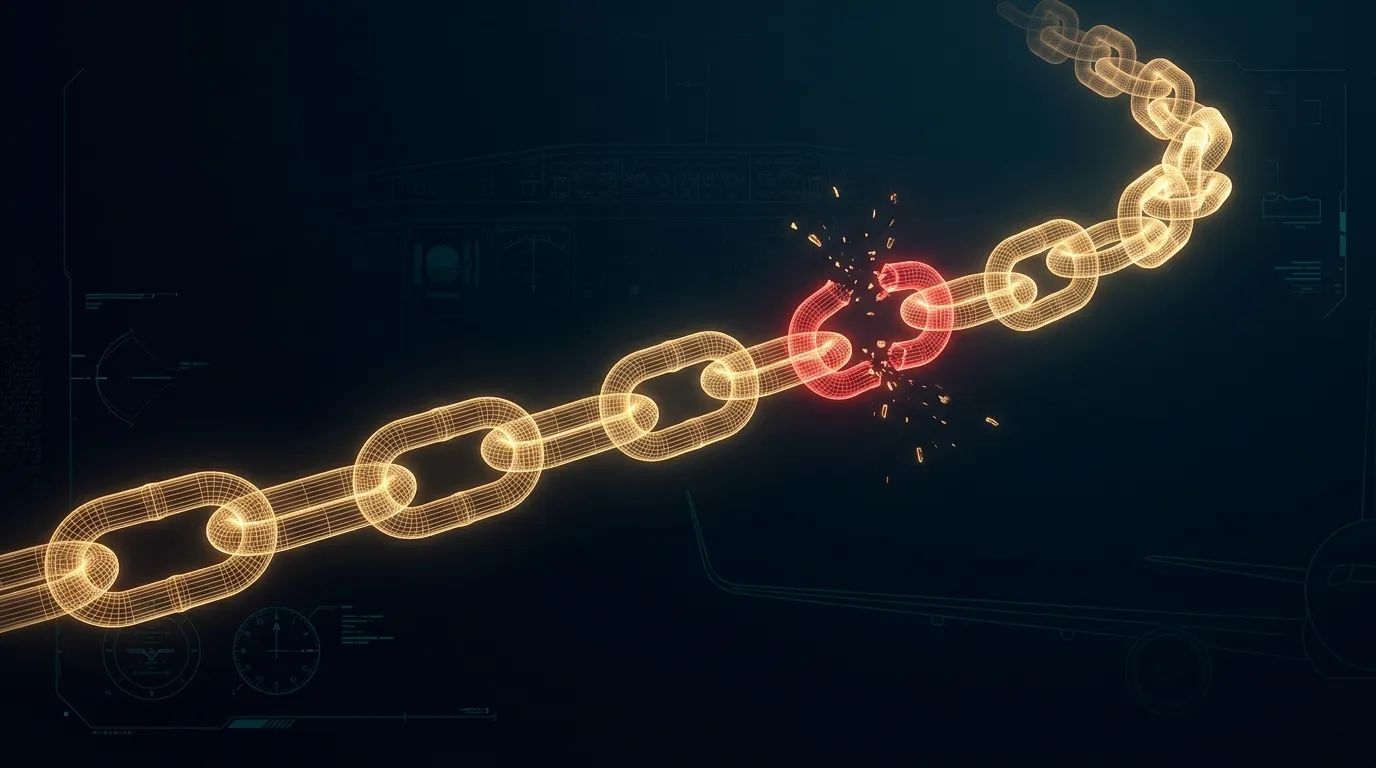
If the SHELL model shows you where error lives, the Dirty Dozen shows you how it is invited in — the twelve most common human preconditions that precede an error. For each there is a safety net. Learn them as pairs.
| The precondition | The safety net |
|---|---|
| 1. Lack of communication | Use read-backs; say the whole message and confirm it was received. |
| 2. Complacency | Expect to find a fault; never sign off on "it's always been fine". |
| 3. Lack of knowledge | Don't guess — ask, or open the book. This is why the book exists. |
| 4. Distraction | When interrupted, go back three steps before carrying on. |
| 5. Lack of teamwork | Brief, share the plan, agree who does what. |
| 6. Fatigue | Know the symptoms in yourself; rest is a duty, not a luxury. |
| 7. Lack of resources | Have the right parts, charts, fuel and people before you commit. |
| 8. Pressure | Refuse self-imposed haste; a delay is cheaper than an accident. |
| 9. Lack of assertiveness | Speak up. "I am not happy with this" is a complete sentence. |
| 10. Stress | Recognise it, manage it, ask for help — don't fly through it silently. |
| 11. Lack of awareness | Think one step ahead; ask "what if?" before it happens. |
| 12. Norms | Just because "everyone does it" does not make it safe or legal. |
5How to Use This Book
This book is built to be studied, not just read. Every chapter follows the same rhythm — learn the rhythm and you move fast.
| You will see… | It means… |
|---|---|
| Blue box | A core definition or principle to anchor on. |
| Amber box | An exam tip or a mnemonic — the thing the examiner actually asks. |
| Red box | A danger, a killer item, or a number that must be memorised exactly. |
| Green box | A standard operating procedure — what a professional actually does. |
| Cinematic plate | A full diagram — anatomy, cockpit or process — built to make the mechanism unforgettable. |
| Self-check | End-of-chapter questions and mnemonics. Answer before you reveal. |
- Weeks 1–2: the air & the body — atmosphere, gas laws, the body's systems (Modules A–B).
- Weeks 3–4: the assaults of altitude — hypoxia, pressure, poisons (Modules C–D).
- Weeks 5–6: the senses & their deceptions — eye, ear, illusions, G (Modules E–F).
- Week 7: fitness to fly & the mind aloft — health, psychology, stress (Modules G–I).
- Week 8: the Exam Arsenal — master tables, mnemonics, mock papers (Module J).
6Self-Check & Memory Aids
- State the four action verbs that describe the aim of aviation psychology.
- Human error is inevitable — name the four areas from which most pilot error originates.
- Name the four interfaces of the SHELL model, and state which component sits at the centre and why.
- What are the "Dirty Dozen"? Give any six, with the safety net for each.
- Quote the Golden Maxim on superior judgment.
Reinforce Chapter 1: The Human Factor
Test your knowledge and practice actual exam questions for Human Performance & Limitations.