Part III (i) Transmitting technique · transmission of letters, numbers & time · standard words & phrases · test procedures
Learning objectives — by the end of this chapter you will be able to…
- Apply good transmitting technique (RSVP) and the listen-before-transmit discipline.
- Spell using the ICAO phonetic alphabet, with correct emphasis.
- Transmit numbers, frequencies, levels, headings, wind and pressure correctly, and apply the number rules.
- Transmit time in UTC.
- Use the standard words and phrases with their exact single meanings.
- Carry out a radio check and report readability on the 1–5 scale.
13.1 Transmitting technique (RSVP)
13.2 The phonetic alphabet
13.3 Transmission of numbers
13.4 The number rules
13.5 Levels, headings, wind & pressure
13.6 Time
13.7 Standard words & phrases
13.8 Radio check & readability
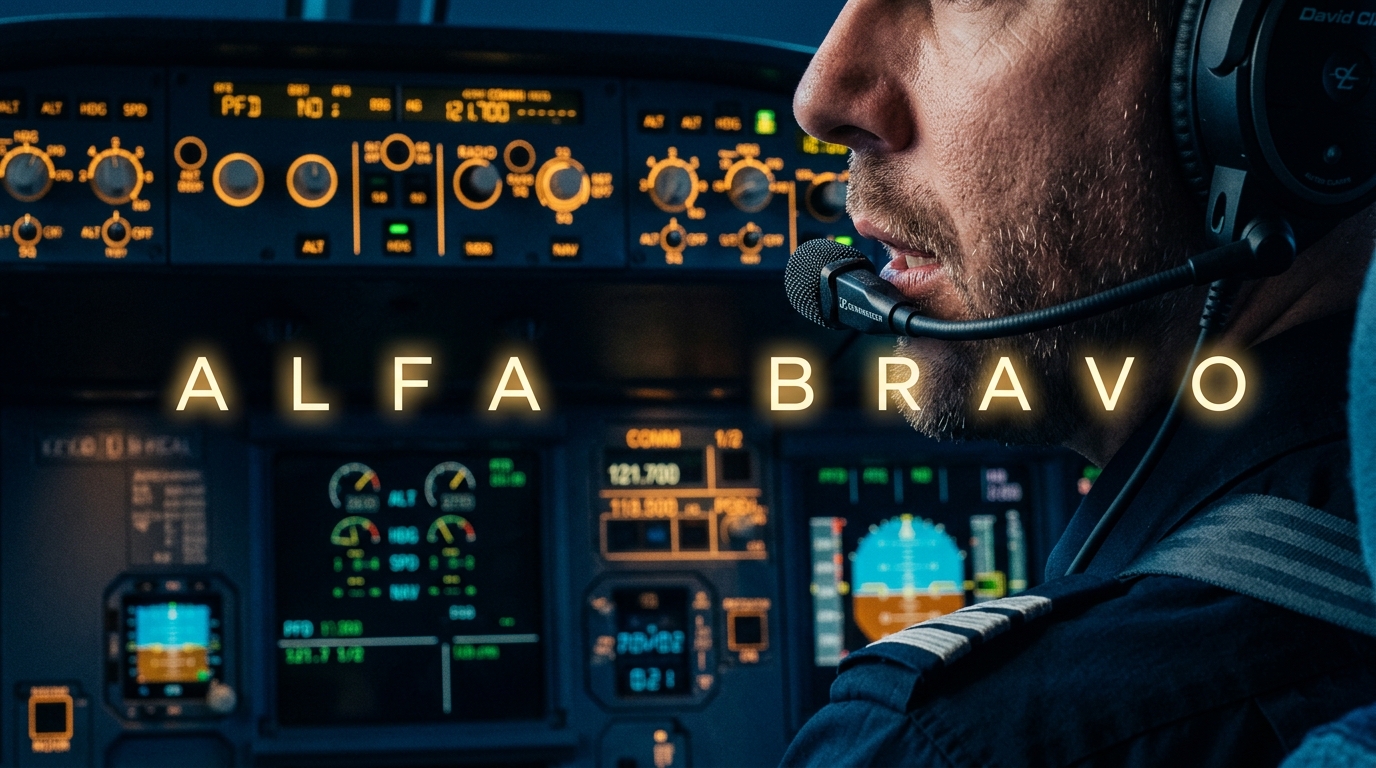
13.1 Transmitting technique (RSVP)
A transmission heard wrongly is worse than no transmission at all. The whole craft of radio is making yourself understood the first time on a noisy, shared channel. Before keying the microphone, listen out to be sure you won't block another station, then think what you will say.
- R — Rhythm: speak in a steady, even cadence; group the message into natural chunks.
- S — Speed: slightly slower than normal conversation, especially for numbers.
- V — Volume: constant, normal level; don't shout or trail off.
- P — Pitch: keep it level; a slightly higher, clear pitch carries better than a mumble.
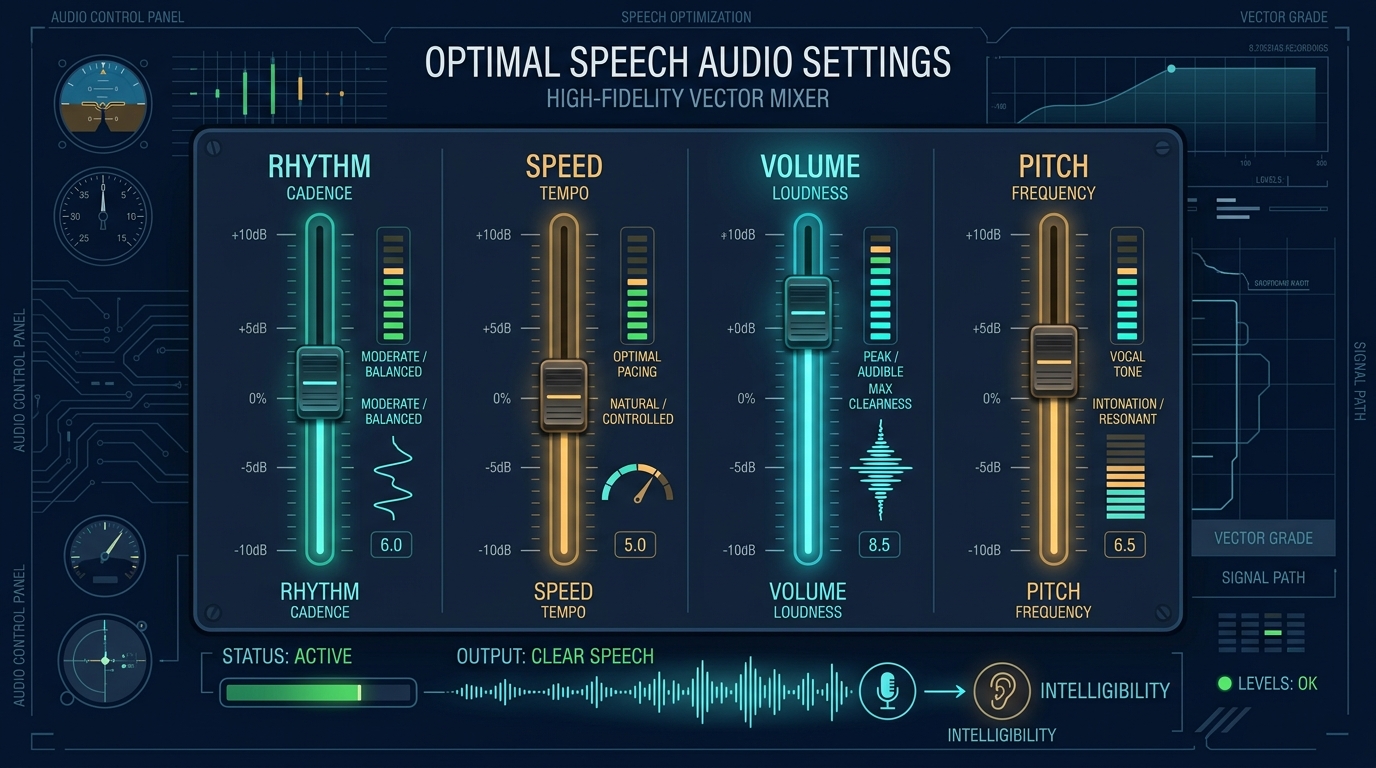
The examiner is judging exactly this. The most common practical fails are too fast, swallowed numbers, and forgetting to release the PTT. Slow down on figures and pause a beat after keying so the first word isn't clipped.
13.2 The phonetic alphabet
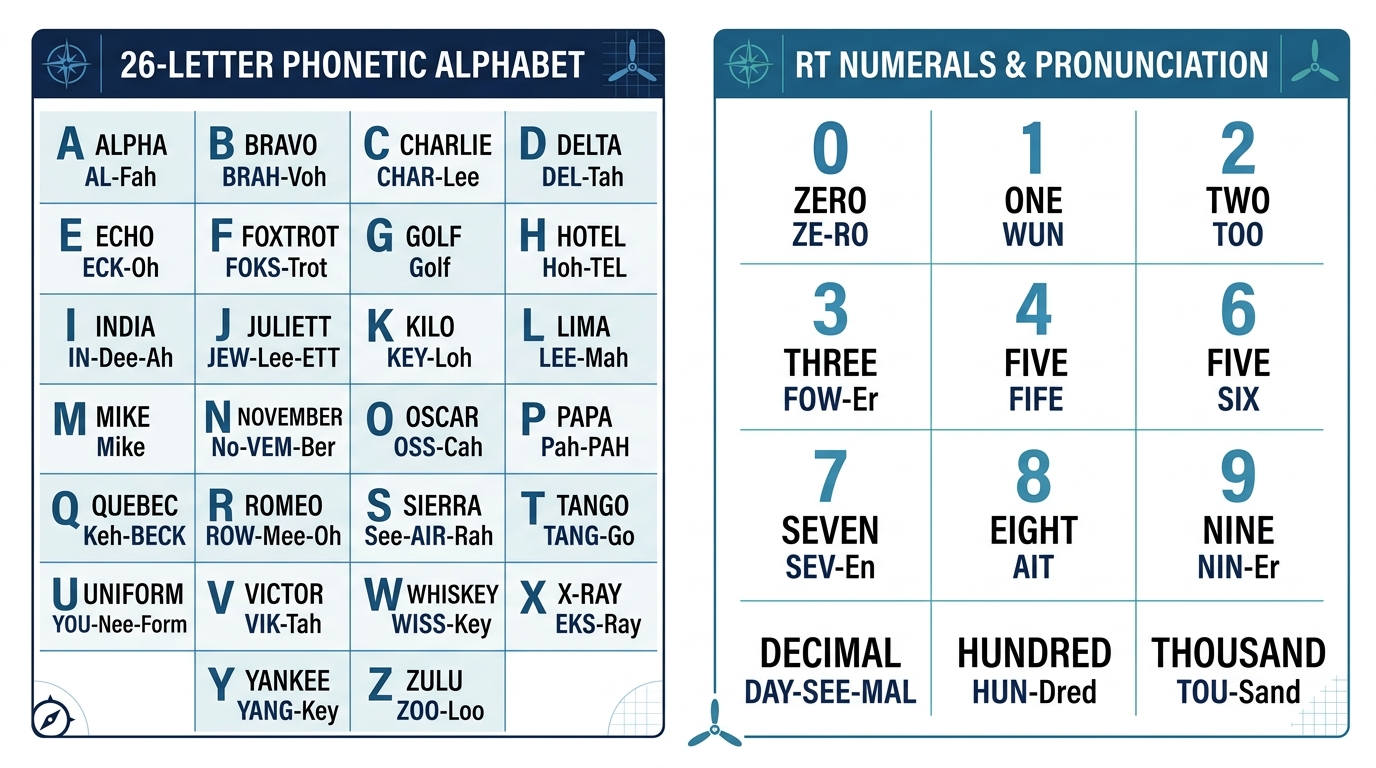
Each letter is spoken as a whole word chosen to sound unlike every other — so "B" and "D", or "M" and "N", can never be confused. The bold syllable is stressed.
| Letter | Word | Letter | Word | Letter | Word |
|---|---|---|---|---|---|
| A | AL-fa | J | JU-li-ETT | S | Si-ER-ra |
| B | BRA-vo | K | KI-lo | T | TANG-go |
| C | CHAR-lie | L | LI-ma | U | U-ni-form |
| D | DEL-ta | M | MIKE | V | VIC-tor |
| E | ECH-o | N | No-VEM-ber | W | WHIS-key |
| F | FOX-trot | O | OS-car | X | X-ray |
| G | GOLF | P | Pa-PA | Y | YANG-key |
| H | Ho-TEL | Q | Ke-BECK | Z | ZOO-loo |
| I | IN-di-a | R | RO-me-o |
Watch the unusual spellings: Alfa (not Alpha), Juliett (double-t), Whiskey, X-ray. Pronounce the stressed syllable: AL-fah, BRAH-VOH, CHAR-lee, KEY-LOH, etc. Examiners often ask you to spell your own registration.
13.3 Transmission of numbers
| Numeral | Pronounced | Numeral | Pronounced |
|---|---|---|---|
| 0 | ZE-RO | 5 | FIFE |
| 1 | WUN | 6 | SIX |
| 2 | TOO | 7 | SEV-en |
| 3 | TREE | 8 | AIT |
| 4 | FOW-er | 9 | NIN-er |
| Decimal | DAY-SEE-MAL | Hundred / Thousand | HUN-dred / TOU-SAND |
Three (TREE), five (FIFE), nine (NIN-er) and decimal (DAY-SEE-MAL) are deliberately altered so they cannot be confused with similar-sounding words or other languages. Use them exactly.
13.4 The number rules
Rule 1 — digit by digit. Most numbers are transmitted by pronouncing each digit separately: aircraft call signs, headings, wind, pressure settings, transponder codes, frequencies, and flight levels.
Rule 2 — whole hundreds & thousands. Whole hundreds and whole thousands are transmitted by pronouncing each digit in the number of hundreds/thousands followed by HUNDRED or THOUSAND — used for altitudes, heights, cloud heights and visibility.
13.5 Levels, headings, wind & pressure
| Item | How to say it | Example |
|---|---|---|
| Flight level | "Flight level" + each digit | FL280 → "flight level two eight zero" |
| Altitude / height | Whole thousands/hundreds | 3,500 ft → "three thousand five hundred feet" |
| Heading | "Heading" + 3 digits | 080 → "heading zero eight zero" |
| Wind | Direction (3 digits) + speed | "wind two seven zero degrees, one zero knots" |
| Pressure (QNH) | "QNH" + each digit (units optional) | 1013 → "QNH one zero one three" |
| Frequency | Each digit incl. "decimal" | 121.500 → "one two one decimal five" |
Heading 270 → "heading two seven zero" (digit by digit). Squawk 4321 → "squawk four three two one".
Altitude 2,500 ft → "two thousand five hundred". Flight level 100 → "flight level one zero zero" (digit by digit — note the difference).
Frequency 118.500 → "one one eight decimal five". QNH 1009 → "QNH one zero zero nine".
A controller passing "descend flight level one zero zero, QNH one zero zero nine" expects an exact read-back. The discipline of digit-by-digit numbers is what prevents a "level 100" being flown as "level 1000".
13.6 Time
Aviation uses Coordinated Universal Time (UTC), spoken "Zulu". Time is normally given as the minutes of the hour only (e.g. "at three five"), unless there is any chance of confusion, when the full hour and minutes are given (e.g. "one three three five"). Each digit is pronounced separately.

It is 1335 UTC. Normal: "time three five". If confusion is possible (e.g. near the hour): "time one three three five".
13.7 Standard words & phrases
| Word / phrase | Single meaning |
|---|---|
| AFFIRM | Yes |
| NEGATIVE | No / not correct / not available |
| ROGER | I have received all of your last transmission (NOT "yes") |
| WILCO | I understand your message and will comply |
| STANDBY | Wait, I will call you |
| SAY AGAIN | Repeat all (or the specified part) of your last transmission |
| READ BACK | Repeat all of this message back to me exactly |
| CORRECTION | An error has been made; the correct version is … |
| DISREGARD | Ignore that transmission |
| CONFIRM | Have I correctly received …? / Confirm you have received … |
| MONITOR | Listen out on (frequency) |
| REQUEST | I should like to know … / I wish to obtain … |
| OUT | This exchange is ended; no reply expected |
A favourite: ROGER means "received", not "yes" and not "I will comply". If asked a yes/no question, answer AFFIRM or NEGATIVE; if instructed to do something, answer WILCO. "Over and out" is wrong — they are mutually exclusive; in modern RT you usually just end naturally.
13.8 Radio check & readability
1 Unreadable · 2 Readable now and then · 3 Readable but with difficulty · 4 Readable · 5 Perfectly readable.
☆ Numbers to memorise
| Fact | Value |
|---|---|
| RSVP | Rhythm · Speed · Volume · Pitch |
| Altered numerals | 3 = TREE · 5 = FIFE · 9 = NIN-er · decimal = DAY-SEE-MAL |
| Rule 1 | Digit by digit: call signs, headings, wind, QNH, squawk, frequency, flight levels |
| Rule 2 | Whole hundreds/thousands: altitude, height, cloud, visibility |
| Time | UTC (Zulu); minutes only, or full hours+minutes if confusion |
| ROGER / WILCO | Received / will comply (ROGER ≠ yes) |
| AFFIRM / NEGATIVE | Yes / No |
| Readability | 1 unreadable → 5 perfectly readable |
Part A — MCQs (click an option to check)
Part B — Oral / viva (tap to reveal model answers)
60-SECOND REVISION CARD
- RSVP: Rhythm, Speed (slower for numbers), Volume, Pitch. Listen out, press & pause, release fully.
- Phonetics: Alfa…Zulu (watch Alfa, Juliett, Whiskey, X-ray). Numerals: TREE, FIFE, NIN-er, DAY-SEE-MAL.
- Rule 1 digit-by-digit (call signs, headings, wind, QNH, squawk, freq, FL); Rule 2 hundreds/thousands (altitude/height/cloud/vis).
- Time = UTC (Zulu), minutes only normally. ROGER=received · WILCO=will comply · AFFIRM/NEGATIVE=yes/no.
- Readability 1–5; radio check on initial contact.