Human Performance & Limitations · Module G — The Fit AviatorDrugs & Self-Medication
Chapter 18 — The last word on fitness: the self-medication clearance rule, caffeine, anaesthetics and analgesics — and the final environmental hazards of hypothermia, toxic substances and dangerous cargo.
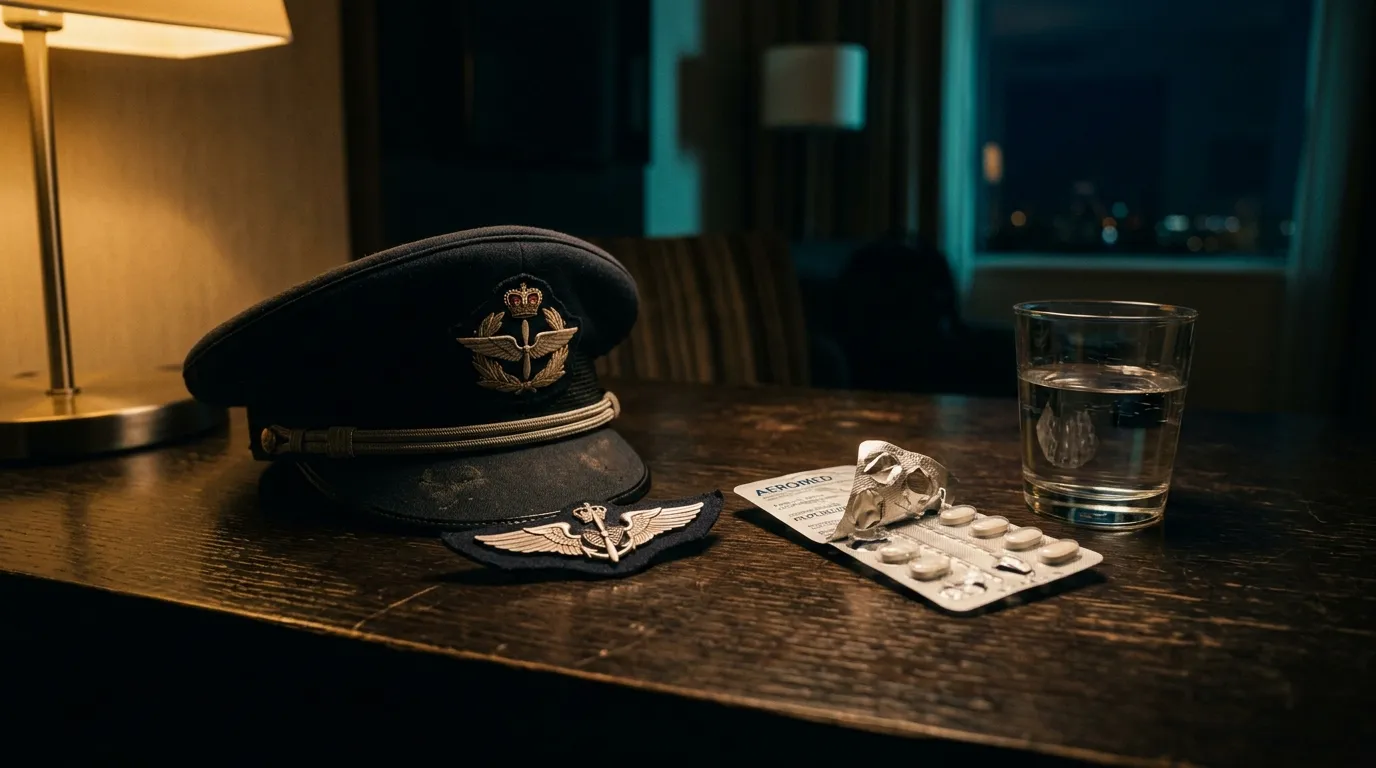
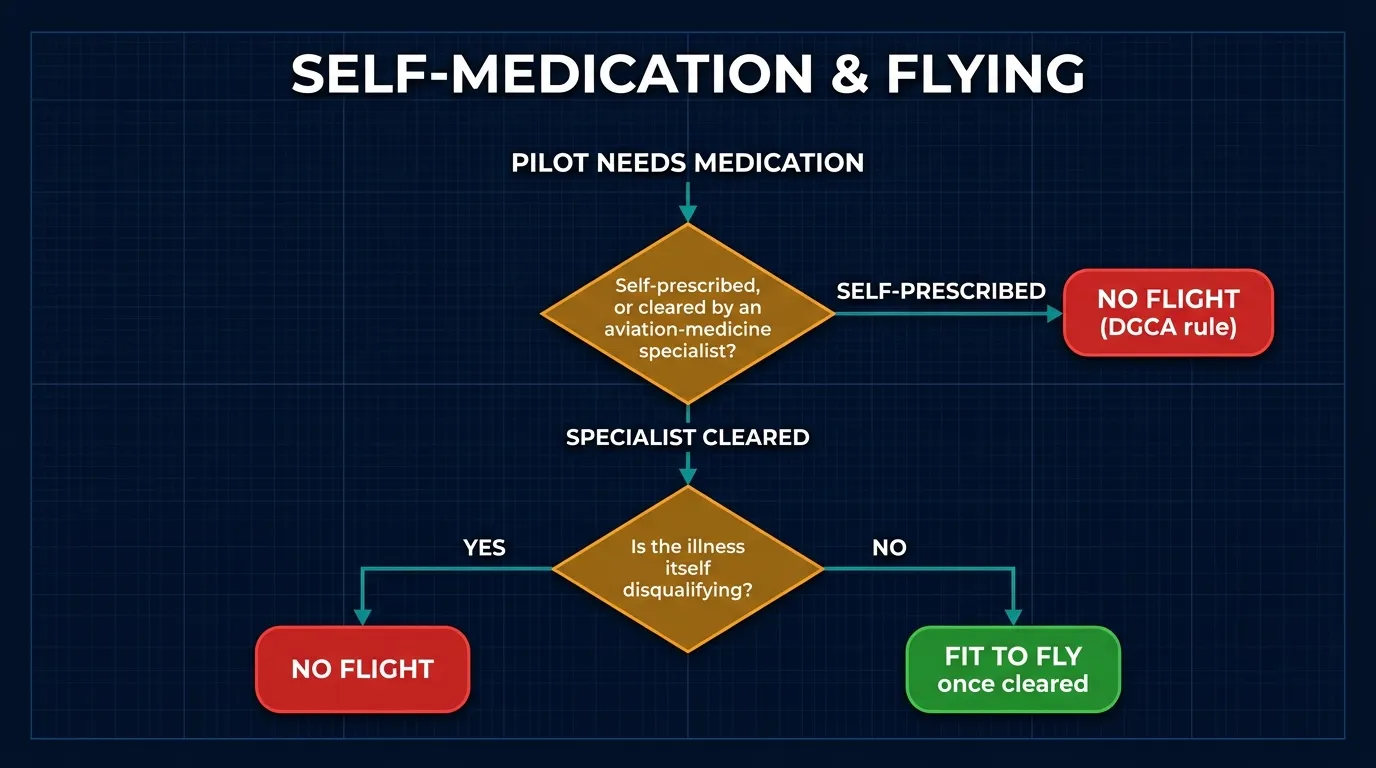
Plate 18.0 — The golden rule of self-medication: if you are ill enough to need the drug, you may be ill enough to be unfit to fly.
§ 76DRUGS AND SELF-MEDICATION
76.1 The Aviation-Medicine-Specialist Clearance Rule
DGCA-quoted — the absolute ruleIt is absolutely essential that pilots DO NOT FLY as part of the operating crew of an aircraft when taking drugs or medication, UNLESS THEY HAVE BEEN CLEARED TO DO SO BY AN AVIATION MEDICINE SPECIALIST.
DGCA-quoted — risks of self-prescribed medication
A pilot who flies on self-prescribed medication runs the risk of:
Suffering side effects, and
Faces the hazards associated with the underlying illness in the in-flight environment which can make the symptoms of any illness much more debilitating than they might be on the ground.
76.2 Four Reasons Medicines Have Flight-Qualification Consequences
DGCA-quoted — verbatim four reasons
The consumption of medicines or other substances may have consequences on qualification to fly for the following reasons:
The disease requiring a treatment may be cause for disqualification.
Flight conditions may modify the reactions of the body to a treatment.
Drugs may cause adverse side effects impairing flight safety.
The effects of medicine do not necessarily immediately disappear when the treatment is stopped.
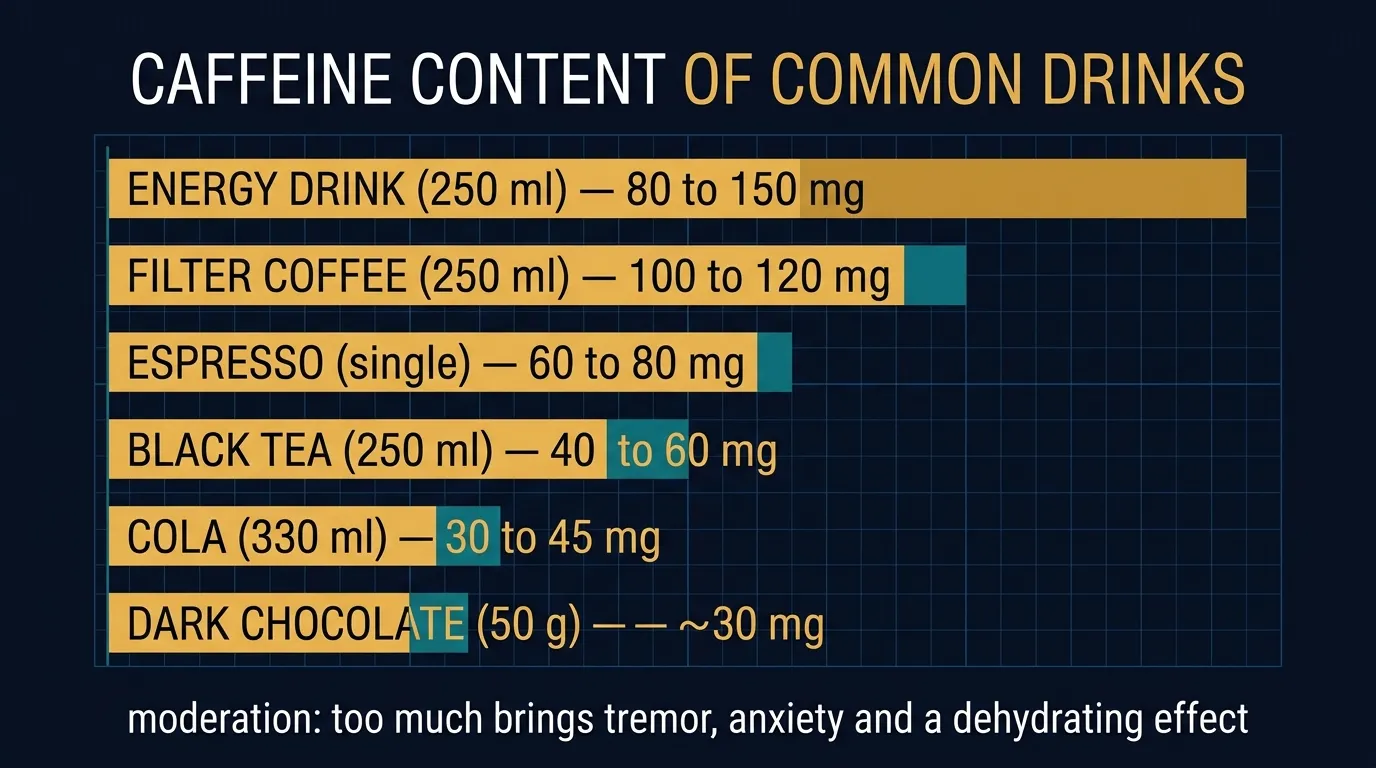
Figure 18.2 — Caffeine: a useful stimulant in moderation, but too much brings tremor, anxiety and a diuretic (dehydrating) effect.
DGCA-quoted — caffeine as a drugCaffeine is probably the most widely used drug in the world. It can easily lead to ADDICTION.
Caffeine is present in coffee, tea, cocoa, chocolate, and fizzy drinks such as cola.
DGCA-quoted — recommended maximum daily intakeThe recommended maximum caffeine intake per day is approximately 250 – 300 mg corresponding to 2 – 3 cups of coffee.
Approximate caffeine content of common beverages
Beverage
Caffeine (mg)
Notes
Filter coffee (250 ml cup)
~ 100 – 120 mg
2–3 cups → DGCA daily max
Espresso (single shot, 30 ml)
~ 60 – 80 mg
—
Black tea (250 ml cup)
~ 40 – 60 mg
Lower than coffee
Cocoa / hot chocolate
~ 5 – 15 mg
Plus theobromine
Cola (330 ml can)
~ 30 – 45 mg
—
Energy drink (250 ml)
~ 80 – 150 mg
Often exceeded
Dark chocolate (50 g)
~ 30 mg
—
250–300mgDGCA max recommended daily caffeine
2–3Cups of coffee = approximate DGCA limit
⚠Caffeine is addictive — DGCA word
Why the DGCA bothers to set a caffeine limit
Caffeine is a CNS stimulant. In moderate doses it sharpens alertness — useful on long sectors. In excess it:
Increases heart rate and blood pressure (interacts with §15 hypertension & §43 cardiovascular reserve under G).
Is a diuretic (interacts with §23 humidity / §73 dehydration).
Disrupts sleep — undermining the very alertness it was meant to provide; classic withdrawal cycle.
Causes tremor & anxiety at high doses — degrades fine motor control.
The "2-3 cups" guidance is the dose that keeps you alert without these costs.
§ 78Anaesthetics & Analgesics
DGCA-quoted — no-fly periodsA pilot should NOT fly for at least:
12 hours after a LOCAL anaesthetic, and
48 hours following a GENERAL anaesthetic.
The more potent forms of ANALGESICS (pain killers) may produce a significant deterioration in human performance.
12hrAfter LOCAL anaesthetic — no fly
48hrAfter GENERAL anaesthetic — no fly
⚠Strong analgesics — performance deterioration
Cross-link — adds to the "wait-before-flying" master table
You now hold these wait-before-flying numbers in long-term memory:
12 hr — after rapid decompression (§20.4); after local anaesthetic (§78)
24 hr — after alcohol (§14.1); after diving (§21)
48 hr — after blood donation (§17); after general anaesthetic (§78)
48–72 hr — after major dental work (§72.2)
The DGCA examiner pulls these numbers in MCQs — match the event to the number.
§ 79Hypothermia
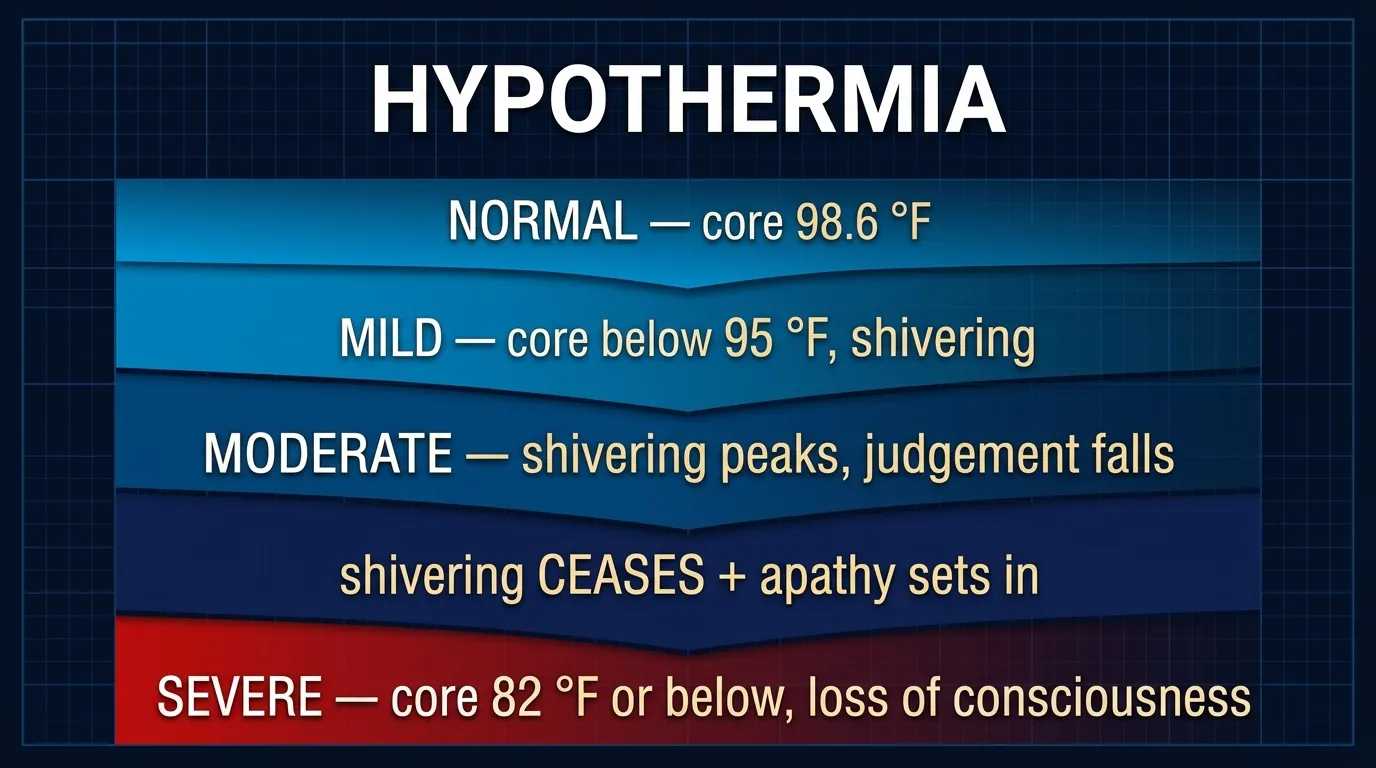
DGCA-quoted — temperature thresholds (in Fahrenheit, source PDF)Normal body temperature averages 98.6 °F.
With hypothermia, the core temperature drops below 95 °F.
In SEVERE hypothermia, core body temperature can drop to 82 °F or lower.
98.6 °FNORMAL
37 °C — baseline core temperature
< 95 °FHYPOTHERMIA
≈ 35 °C — onset of impaired ability
≤ 82 °FSEVERE
≈ 28 °C — life-threatening
DGCA-quoted — what hypothermia doesHypothermia AFFECTS PHYSICAL AND MENTAL ABILITIES.
Shivering makes it possible to combat the cold to a certain extent but USES UP A LOT OF ENERGY.
In a PROLONGED exposure, shivering will tend to CEASE, and be followed by the ONSET OF APATHY.
Hypothermia is a potentially LIFE-THREATENING condition that needs EMERGENCY MEDICAL ATTENTION.
Figure 18.3 — Hypothermia: as core temperature falls, shivering gives way to confusion, then loss of consciousness.
Operational relevance — survival in cold ditching / mountain crash
For commercial pilots flying over cold water (North Atlantic, Bering Sea) or high-terrain routes, hypothermia is the second-most-common post-ditching cause of death (after drowning). Survival suits, life rafts with thermal protection, and immersion-suit drills exist precisely because cold water kills faster than the absence of food or water. The "cessation of shivering + apathy" is the danger sign that mild hypothermia is becoming severe.
§ 80Toxic Hazards
DGCA-quoted — openingEven MILD toxic effects can degrade a pilot's performance and lead to an accident.
Prolonged exposure to toxic influences can damage a person's general health.
Anyone who has been exposed to any toxic hazard should seek MEDICAL ASSISTANCE AS SOON AS POSSIBLE.
DGCA-quoted — six toxic-hazard sources (verbatim)
The following materials may produce toxic hazards:
Furnishings and Baggage.
Acetone and Turpentine.
Fuels, Lubricants and propellants.
Anti-icing Fluid.
Fire Extinguishing Agents.
Battery Fumes.
Toxic-hazard sources in aviation — DGCA list with context
#
Source
Typical Toxin / Mechanism
1
Furnishings and Baggage
Off-gassing of plastics, adhesives, treated fabrics — VOCs, formaldehyde. Also packaged chemicals in baggage holds that leak in flight.
2
Acetone and Turpentine
Solvents — CNS depressants on inhalation. Respiratory irritation, headache, dizziness.
Glycols (mono-/di-ethylene glycol) — toxic if ingested, irritant if inhaled as mist.
5
Fire Extinguishing Agents
Halons / their replacements — high concentrations displace oxygen, can produce hypoxia (§10). Some thermal decomposition products are corrosive.
6
Battery Fumes
Sulphuric acid vapours (lead-acid), or KOH (Ni-Cd), or lithium-fire smoke. Strong respiratory irritants, possibly corrosive.
§ 81Dangerous Cargo
DGCA-quoted — verbatimPilots must be aware that they must NOT carry certain defined items on board their aircraft. Such items are referred to as DANGEROUS CARGO because of the possibility that their discharge, spillage or breakage may endanger the aircraft and/or crew in flight or on the ground.
The regulatory backbone — DGR / ICAO TI / 49 CFR 175
The Indian DGCA enforces dangerous-goods carriage rules in line with ICAO Technical Instructions for the Safe Transport of Dangerous Goods by Air and the IATA Dangerous Goods Regulations (DGR). The nine UN dangerous-goods classes are:
Explosives (ammunition, fireworks)
Gases (compressed, liquefied, dissolved — including aerosols)
Flammable liquids (fuel, paint, solvents)
Flammable solids · spontaneously combustible · dangerous when wet
(For full HPL/exam preparation, learn these nine classes — DGCA RTR & DGR examinations routinely ask which class a given item belongs to and whether it is forbidden, restricted, or permitted in checked/cabin baggage.)
Why this section ends Chapter 26
The chapter has built up systematically: atmosphere → body systems → environmental stressors → orientation & illusions → fitness & diet → drugs & toxins → dangerous cargo. The last paragraph closes by reminding the pilot that the threat to the aircraft does not come only from the pilot's own body, but also from what is loaded into the cabin and cargo holds. The pilot's command authority extends to ensuring forbidden items are not on board — the pre-flight cargo manifest is a flight-safety document, not paperwork.