Human Performance & Limitations · Module G — The Fit AviatorFitness & Nutrition
Chapter 16 — The body a pilot brings to work: individual physical characteristics, exercise and body weight (BMI), sound nutrition and food hygiene, and the traps of hypoglycaemia and gastric distress.
DGCA-quotedDifferences among individuals are remarkable. Besides obvious physical differences (e.g., height, weight, age, sex, build, sitting height, functional reach, leg length, shoulder width, strength, co-ordination etc.), people also differ with respect to other traits like:
Auditory threshold,
Understanding,
Vestibular (ear senses),
Smell, touch, kin aesthetic (body feelings),
G-tolerances, etc.
These traits are relatively stable over time, they differ across individuals, and they influence human behavior.
DGCA-medical implication
This is the underpinning for cockpit ergonomics and pilot-selection standards: minimum/maximum sitting heights, reach envelopes for switches and rudder pedals, vision and hearing standards, etc. Each pilot is a different statistical sample — and the certification rules are designed so that the typical trained pilot can comfortably operate the aircraft, while extreme outliers may be screened out at the medical or flight-school stage.
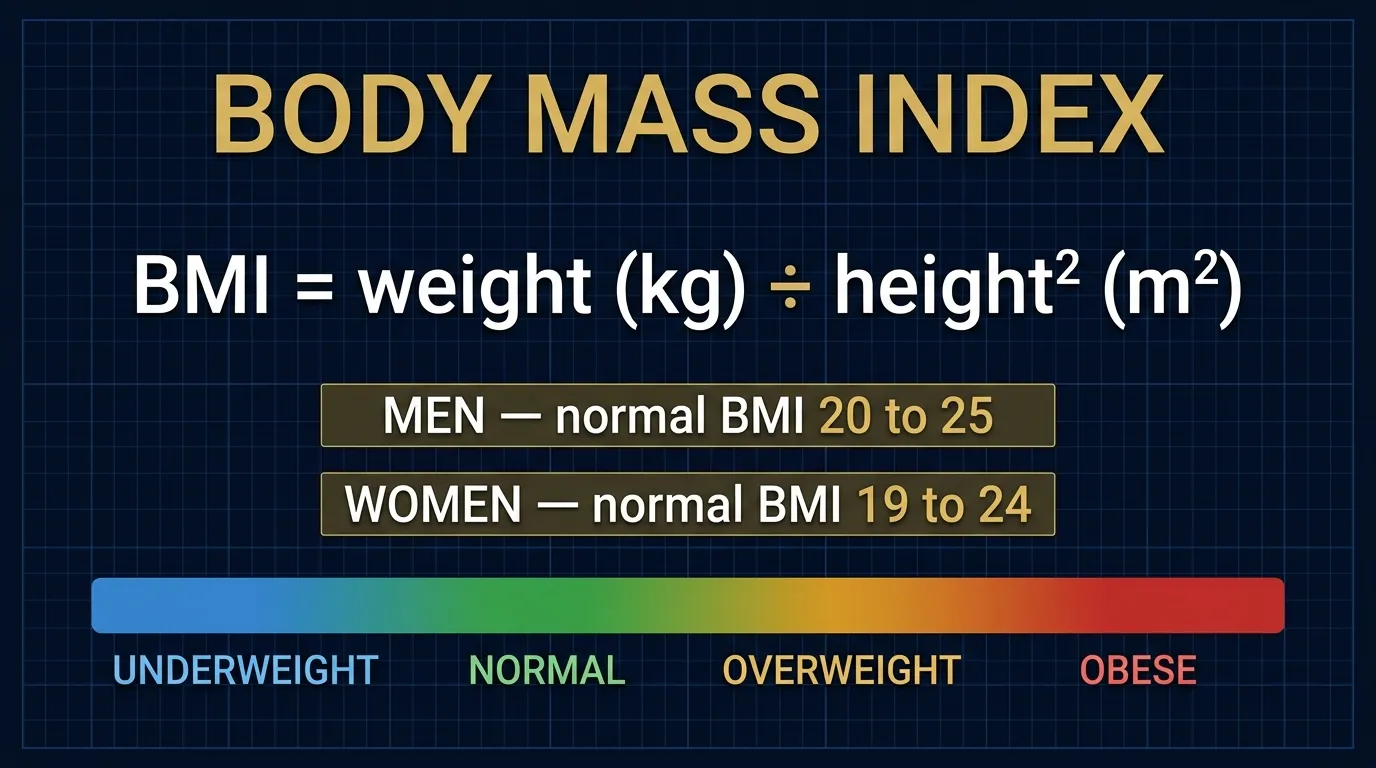
Figure 16.1 — Body Mass Index (BMI = weight ÷ height²) and its categories, from underweight to obese.
67.1 Body Mass Index (BMI)
DGCA-quoted — definition & formulaA person's Body Mass Index, or BMI, is simply a measure of a person's weight in relation to his height.
Body mass Index (BMI) = Weight (kgs) / Height² (m).
DGCA-quoted — normal BMI rangesNormal BMI for MEN is 20 to 25 and WOMEN 19 to 24.
BMI = kg/m²Weight in kg ÷ height in m squared
20–25Normal BMI for MEN
19–24Normal BMI for WOMEN
Worked example
A pilot weighs 75 kg and is 1.78 m tall. BMI = 75 / (1.78)² = 75 / 3.168 ≈ 23.7. Within normal range for men (20–25). ✓
67.2 Exercise Prescription & "No appetite suppressants"
DGCA-quoted — exercise prescriptionRegular exercise is beneficial to general health, but the most efficient way to lose weight is by reducing CALORIC CONSUMPTION.
To reduce the risk of coronary artery disease, exercise should be done to DOUBLE the resting heart rate for at least 20 minutes, three times a week.
DGCA-quoted — appetite suppressants prohibitedPilots should NOT try to lose weight by taking appetite suppressants.
Best way to lose weight
Reduce calories
Exercise — target HR
2× resting
Exercise — duration
≥ 20 minutes
Exercise — frequency
3 × per week
Appetite suppressants for pilots
Prohibited
67.3 Effects of Being Badly Overweight — 13 DGCA-quoted conditions
DGCA-quoted — verbatim list
Being badly overweight INCREASES a pilot's susceptibility to the following conditions:
Heart attack.
Hypertension.
Hypoxia at lower altitudes than normal.
General circulation problems.
Gout (swollen joints).
Osteoarthritis (a form of arthritis characterized by gradual loss of cartilage of the joints).
Diabetes.
The inability to tolerate G forces.
Problems with joints and limbs.
Decompression sickness.
Heavy sweating.
Chest infections.
Varicose veins (a vein that has become swollen and knotted as a result of faulty valves).
Cross-links — obesity is the pilot's "common enemy"
Note how this single list lights up almost every previous part of the chapter:
The DGCA examiner treats obesity as a multiplier of every other risk discussed in the chapter — which is why BMI screening is built into every Class-1 / Class-2 medical.
§ 68Nutrition and Food Hygiene
DGCA-quoted — the empty-stomach ruleNever fly on an empty stomach. A balanced diet is the foundation of good health.
68.1 Sources of Carbohydrates
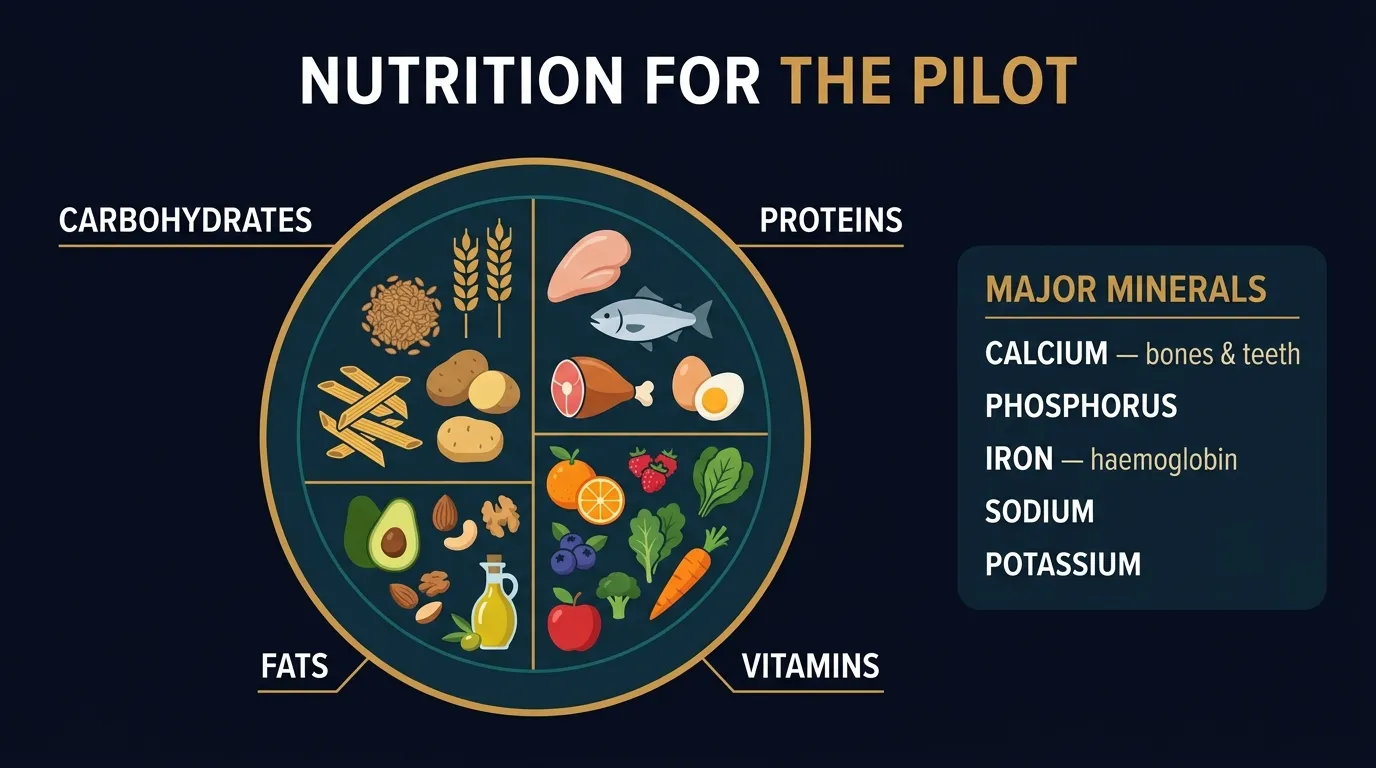
DGCA-quotedSources of carbohydrates include:
Grains,
Vegetables,
Nuts, and
Fruit.
68.2 Vitamins
DGCA-quotedVitamins are organic substances required by the body to function properly. They help process other nutrients to form blood cells.
68.3 Minerals — the Three Majors
DGCA-quotedMinerals are essential to many vital body processes — from building strong bones to transmitting nerve impulses.
Figure 16.2 — Nutrition essentials: the major minerals — calcium (bones & teeth), phosphorus, iron, sodium and potassium — and a balanced pilot's diet.
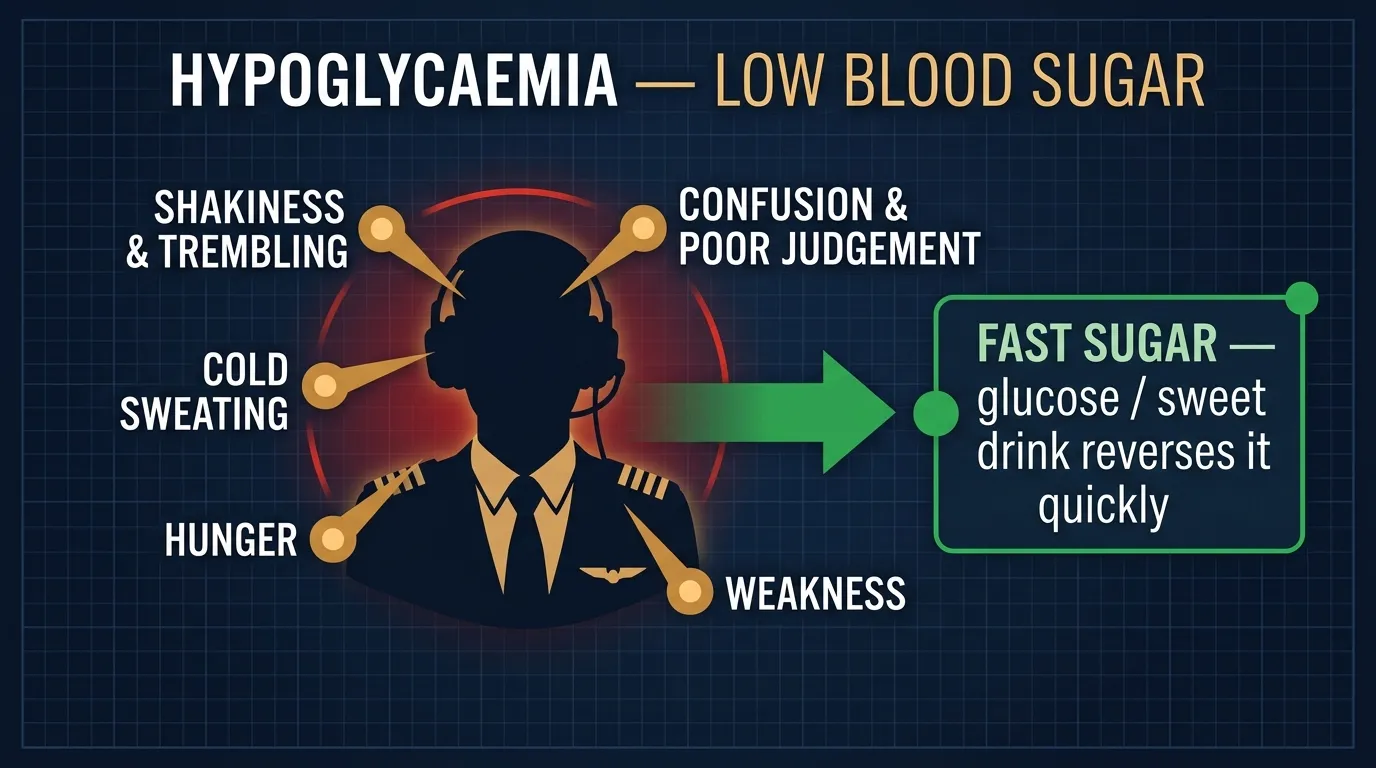
Figure 16.3 — Hypoglycaemia: low blood sugar brings shakiness, sweating and confusion — reversed quickly with fast sugar.
DGCA-quoted — the brain needs fuelJust as the brain needs oxygen to function, it also needs fuel to combine with the oxygen and produce energy. That fuel is blood glucose, which is carried by the bloodstream and easily passes the blood–brain barrier.
DGCA-quoted — the brain cannot store glucoseGlucose is a simple sugar and serves as an immediate source of energy for cells.
The brain CANNOT STORE GLUCOSE and requires a CONTINUOUS SUPPLY to function properly.
All foods containing carbohydrates will raise blood glucose levels.
DGCA-quoted — what hypoglycemia does to the pilotFailure to eat properly may result in a shortage of glucose (hypoglycemia), which will produce DECREMENTS IN COGNITIVE FUNCTIONING.
Research has proved that hypoglycemia significantly compromises performance, resulting in LONGER RESPONSE TIMES and LOWER SCORES on cognitive tests.
Practical pilot rule
This is the physiological basis of the "Never fly on an empty stomach" rule (§68). A pilot who skipped breakfast — or who is on a crash diet — is operating with reduced cognitive performance. This becomes one of the DGCA-listed causes of subtle incapacitation (§27.3 — "Temporary hypoglycemia" is listed verbatim).
§ 70Gastric Distress and Contaminated Foodstuffs
70.1 Four Major Causes of Food Contamination
DGCA-quoted — verbatimMajor causes of food contamination are:
Unhygienic (i.e. unclean) food preparation.
Under cooked or stale meats.
Unwashed salads, fruit or vegetables.
Seafood and locally made ice-creams and mayonnaise.
70.2 Gastroenteritis — Pilot Fitness Rule
DGCA-quoted — pilot unfit even with medicationPilots suffering from Gastroenteritis are NOT FIT TO FLY, even though they may be taking medicine which is relieving the symptoms.
Due to pressure differential, TRAPPED GASES ESCAPE AT HIGH ALTITUDES resulting in extreme discomfort and sickness.
Why altitude makes gastroenteritis worse — Boyle's Law again
Recall Boyle's Law from Part 1 — gas volume increases as pressure decreases. Gut gases that are tolerable at sea level can expand by ~2× by cabin altitude of 18,000 ft (where atmospheric pressure has halved, §19.2). For a gastroenteritis patient already producing excess gas, this expansion → severe abdominal pain, nausea, vomiting, sudden bowel motion — all of which incapacitate the pilot in the cockpit. Anti-diarrhoeal medication may mask the bowel symptoms on the ground but does nothing to prevent the gas-expansion mechanism in flight.