Human Performance & Limitations · ReferenceGlossary, Index & References

The back matter: a glossary of the terms used throughout the book, an alphabetical index by chapter, the references consulted, and a word about the author.

Glossary of Terms

Alveolus
The tiny air sac in the lung, one cell thick, where oxygen and carbon dioxide are exchanged with the blood. (Ch 5)
Armstrong's Line
~63,000 ft, the altitude at which body fluids boil at body temperature because ambient pressure equals their vapour pressure. (Ch 3)
Autokinetic effect
The illusion that a single fixed light in the dark is moving. (Ch 14)
Barodontalgia
Tooth pain caused by gas trapped under a filling or in decay expanding as cabin pressure falls. (Ch 17)
Barotrauma (otic / sinus)
Injury from a pressure difference that cannot equalise — commonly the middle ear or sinuses on descent. (Ch 13, 17)
Baroreceptor reflex
The body's automatic correction of blood pressure via sensors in the carotid artery and aorta. (Ch 8)
Circadian rhythm
The body's ~24-hour internal clock of alertness and temperature; disrupted by jet lag and night duty. (Ch 24)
CRM (Crew Resource Management)
The use of all available resources — people, procedures, equipment — to manage a flight safely. (Ch 22)
Dark adaptation
The eye's adjustment to darkness: cones in ~7 minutes, full rod sensitivity in ~30. (Ch 12)
Decompression sickness (DCS / the bends)
Nitrogen bubbles forming in blood and tissue when pressure falls (Henry's Law). (Ch 8)
Dirty Dozen
The twelve common human preconditions for error. (Ch 1)
Eustachian tube
The passage that equalises middle-ear pressure with the surroundings. (Ch 13)
Fovea
The central pit of the retina, all cones — sharpest day vision, no night vision. (Ch 11)
G-LOC
G-induced loss of consciousness, the end of the positive-G cascade (grey-out → black-out → G-LOC). (Ch 15)
Haemoglobin
The iron-bearing molecule in red cells that carries oxygen; ~280 million per red cell, four O₂ per molecule. (Ch 5)
Hypoxia
A deficiency of oxygen reaching the tissues; four types — hypoxic, anaemic, stagnant, histotoxic. (Ch 6)
ISA
International Standard Atmosphere: 1013.25 hPa and +15 °C at sea level, lapse 1.98 °C/1000 ft to 36,090 ft. (Ch 2)
Load factor
The ratio of lift to weight, felt as "G"; 1.41 G at 45° of bank in a level turn. (Ch 15)
Presbyopia / Myopia / Hypermetropia
Age-related loss of focus / short-sight / long-sight. (Ch 11–12)
SHELL model
Human-factors model with Liveware (the human) at the centre, interfacing Software, Hardware, Environment and Liveware. (Ch 1)
Somatogravic illusion
Acceleration felt as a nose-up pitch (deceleration as nose-down). (Ch 14)
TUC
Time of Useful Consciousness — the working time after oxygen is lost; halved by rapid decompression. (Ch 8)
Vestibular system
The inner-ear balance organs: three semicircular canals (rotation) and otoliths (linear acceleration). (Ch 13)
WOCL
Window of Circadian Low, ~03:00–05:00, the period of lowest alertness. (Ch 24)

Index

Numbers refer to chapters.

A
Alcohol — 9, 15
Alveolus — 5
Anaemic hypoxia — 6
Armstrong's Line — 3
Arousal — 20, 23
Attention — 20
Autokinetic effect — 14
Automation — 22
B
Barodontalgia — 17
Baroreceptor reflex — 8
Barotrauma — 13, 17
Black-hole approach — 14
Blood pressure — 5
BMI — 16
Boyle's Law — 2
C
Caffeine — 18
Carbon monoxide — 7
Circadian rhythm — 24
Colour blindness — 12
Cones & rods — 11
CRM — 22
D
Dalton's Law — 2
Dark adaptation — 12
Decompression / DCS — 8
Dehydration — 17
Dirty Dozen — 1
E
Ear — 13
Eustachian tube — 13
Eye — 11
F–G
Fatigue — 23
Fovea — 11
G-force / G-LOC — 15
Gas laws — 2
H
Haemoglobin — 5, 7
Hearing loss — 13
Hypoglycaemia — 16
Hypothermia — 18
Hypoxia — 6
Hyperventilation — 7
I–L
Illusions — 14
Information processing — 19
ISA — 2
Leans, the — 14
Load factor — 15
M–N
Memory — 20, 21
Mental health — 24
Nervous system — 4
Nutrition — 16
O–R
Oxygen, partial pressure — 3
Physiological zones — 3
Reaction time — 21
Respiratory system — 5
S
SHELL model — 1, 19
Sinus blockage — 17
Sleep (NREM/REM) — 24
Smoking — 9
Somatogravic illusion — 14
Spatial disorientation — 14
Stress — 23
T–V
TUC — 8
Vestibular system — 13
Vibration — 10
Vigilance — 20
Vision & speed — 12

References & Further Reading

These are the standard authorities against which the facts in this book are checked. Always defer to the current official edition.

About the Author

Capt. Pankaj Pahil is a pilot, flight instructor and ground instructor with seventeen years in aviation. He founded Ghost Aviator to give every student pilot in India correct, free, and beautifully-made DGCA exam preparation — question banks, notes, mock tests and live ground classes in Air Regulations, Meteorology and Air Navigation. This book is part of that mission.

Ghost AviatorIndia's most comprehensive DGCA exam preparation platform — built by pilots, for pilots. Free self-study for every student pilot, always. ghostaviator.com
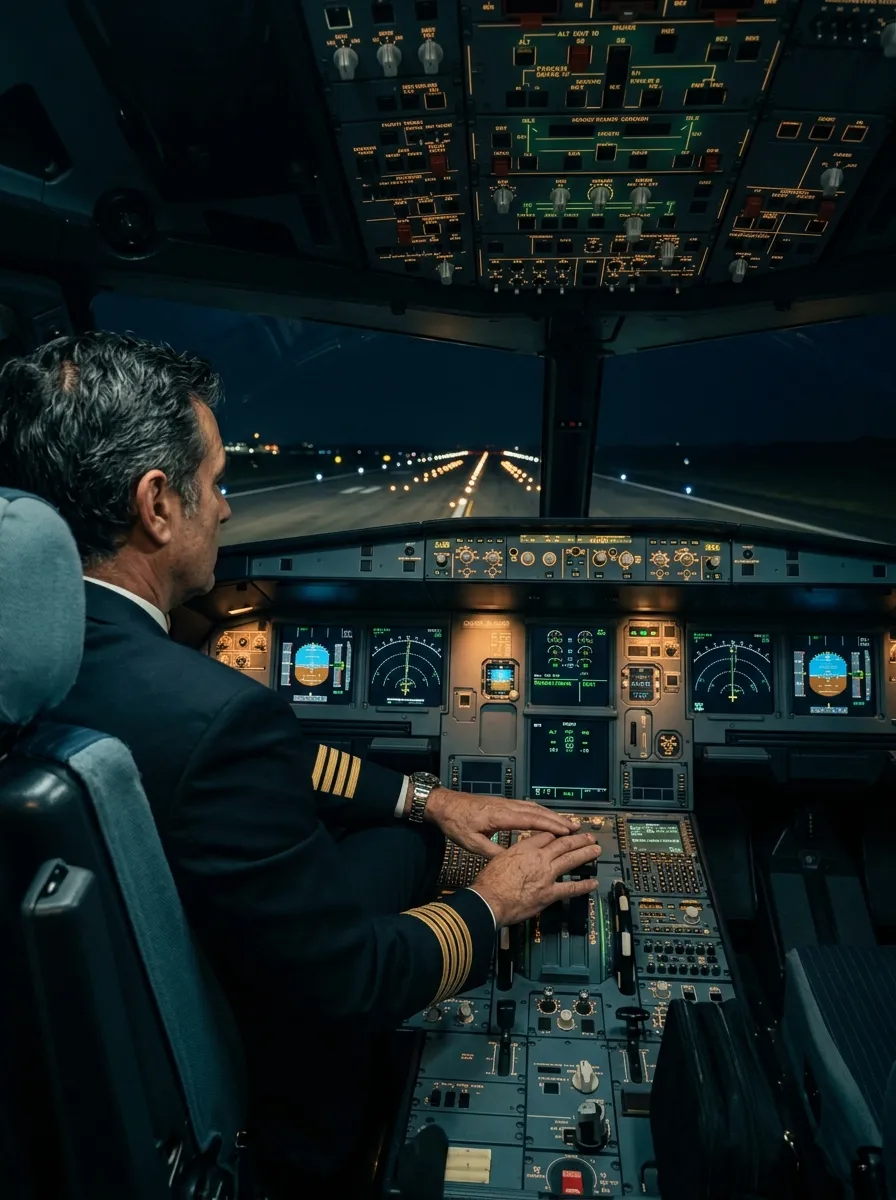
The guardian aviator — closing plate

“Know your own limits as well as you know your aircraft's — and you will always have somewhere to go.”

— Capt. Pankaj Pahil · Ghost Aviator

Capt. Pankaj Pahil